Wednesday, March 23, 2011

"How can Satan cast out Satan?" - (Fukushima Radioactive Influence)

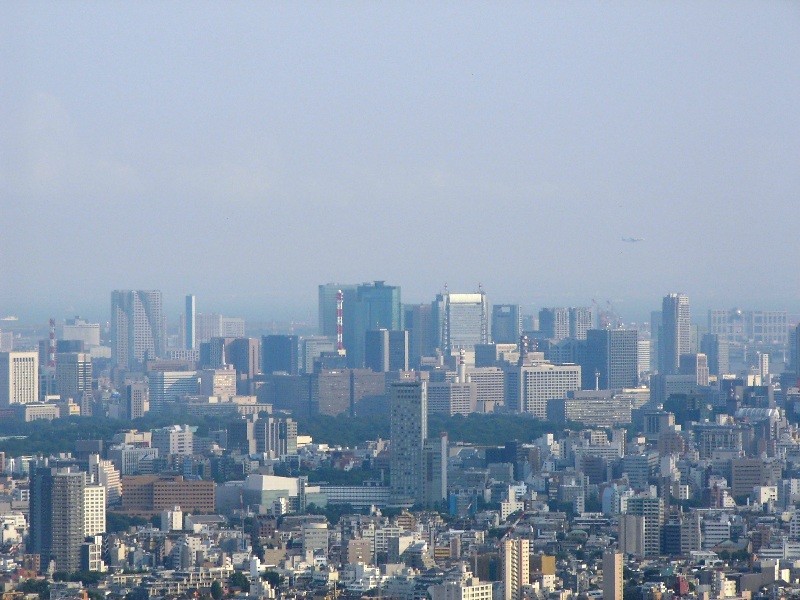
Tokyo toward the Northwest
Tokyo Haneda Airport on Tokyo Bay


Fukushima Radioactive Influence


It is estimated that the damage from the 3/11 Great Disaster could lower Japan's growth by 0.5 per cent.

Among 127 million population, evacuees are about 300,000 mostly in three prefectures of the Tohoku rehion: Iwate, Miyagi, and Fukushima.

However, the tragedy in the Fukushima No.1 Nuclear Power Plant located 250 kilometers northeast of Tokyo has a grave psychological influence on 30 million people living in the Kanto Plain around Tokyo Prefecture.

Yet, it is just 12 days after the tragic day of March 11, 2011.


(In addition, IRSN, a French agency, presented a radioactive diffusion simulation:
http://www.youtube.com/watch?v=qHbQZQygrag&feature=share

It is truly alarming for Tokyo citizens; yet, reality can be a little different in terms of wind flowing and intensity of radioactive materials.)


PART 23-15:

Toyota is to continue the stop of plant operation till March 26; Honda till March 27.


PART 23-14:

163,000 Bq/Kg of radioactive Cesium 137 was found at a point 40 km north of Fukushima No.1 Plant; 1600 times larger than a normal value.

However, radioactive cesium is believed to be less menacing than radioactive iodine.


PART 23-13:


The 3/11 Tohoku-Kanto earthquake and tsunami disaster of Japan is estimated to cost up to $309 billion.

http://www.theaustralian.com.au/business/news/japan-quake-to-cost-up-to-309bn-govt/story-e6frg90f-1226026913493


PART 23-12:

Fukushima 50 video, showing Tokyo Fire Department crews being engaged in discharging water in the Fukushima Plant. They laied hoses from the sea to nuclear reactor unit buildings on May 18 and 19.

http://video.jp.msn.com/watch/video/%E5%8E%9F%E7%99%BA%E3%81%A7%E3%81%AE%E6%B4%BB%E5%8B%95%E6%98%A0%E5%83%8F%E3%82%92%E5%88%9D%E5%85%AC%E9%96%8B-%E6%9D%B1%E4%BA%AC%E6%B6%88%E9%98%B2%E5%BA%81/afl5f3cc


PART 23-11:

Around 5 p.m. of today, the 3rd reactor unit of the Fukuhsima Daiichi Plant discharged dark smoke, while some staff were working in its Central Control Room being powered up through the power grid.


PART 23-10:

The Kanamchi filtration plant gathered rainwater yesterday as it rained well around Tokyo; So contamination was concentrated, into water supply.

However, the radioactive level is not so alarming to Tokyo citizens except infants.


PART 23-9:

Only having 3 tons of milk and eating 84 kilograms of spinach at one time will result in a trouble, if they are from Fukushima Prefecture.

PART 23-8:

There is no Japanese law that specifis the duration limit of service for a nuclear power plant; it is 40 years (+ 20 years extensible) in the US.


PART 23-7:

Tokyo tap water is found to include radioactive materials at a level harmful to infants.

WHO sets the drinking contamination level at 10 becquerel/kg; Japan sets it at 300 Bq/kg for grownups and 100 Bq/kg for infants.


PART 23-6:

Japanese banks have decided to provide 1 trillion yen to Tokyo Electric Power Corporation as support for recovery from the disaster.

"1 trillion yen" is almost $12.5 billion now.


PART 23-5:

Fukushima Daiichi nuclear reactors were designed by U.S. GE in 1960's. No anti-earthquake functions were incorporated into original design; the Japanese electric company did not correct it much.

At best it was designed to withstand a 4.5-meter high tsunami, though the Fukushima No.1 Plant was attacked by 14 meter-high tsunami.

As it was supposed to be used for 10 years or so, the precaution against a disaster of a scale observed once a thousand years was not applied.


PART 23-4:

Some tremor occurred several times in Fukushima Prefecture early this morning of Wednesday.


PART 23-3:

In a village partly within a 30km range from the Fukushima Daiichi (No.1) Nuclear Power Plant, 3000 villagers remain but other 3000 have left; 350 Army troops are now stationed.


PART 23-2:

In Miyagi Prefecture, the number of property crimes in the wake of the disaster is about 80; Sendai City, the capital of the prefecture, alone has one million population.


PART 23-1:

The number of locations on roads broken or damaged is 1700 in the disaster-affected area of northeast Japan.


*** *** *** ***


Geo-thermal generation is one of the most promising alternatives to the nuclear power generation.

Country...Geo-thermal generation (MW)...Ratio in total electricity
1. USA...2,534.1...0.2%
2. Philippines...1,930.8...14.4%
3. Mexico...953.0...2.2%
4. Indonesia...797.0...3.2%
5. Italy...790.5...1.0%
6. JAPAN...535.0...0.2%

(As of 2007)

However, Japan has the world third largest potential for geo-thermal generation.

Country....Potential Geo-thermal power
1. Indonesia...27,790 MW
2. USA...23,000 MW
3. JAPAN...22,070 MW

Probably, we have to stop construct more nuclear power plants but install geo-thermal electricity generation facilities.

Then, it will cover as much as 30% of total needs for electricity in Japan.


Mar 3:22 And the scribes which came down from Jerusalem said, He hath Beelzebub, and by the prince of the devils casteth he out devils.

Mar 3:23 And he called them unto him, and said unto them in parables, How can Satan cast out Satan?

Mar 3:24 And if a kingdom be divided against itself, that kingdom cannot stand.


Tuesday, March 22, 2011

"And the Holy Ghost descended" - (Atomic Energy Doubted)

Tokyo


Atomic Energy Doubted


Globally intensive discussions are going on about the Fukushima nuclear power plant tragedy.

Even safety of Tokyo is focused on as some reports on vegetable contamination and seawater radioactive-influence are flowing widely in and outside Japan.

Yet, the core of the issue is about how much the pressure vessels where nuclear fuel is set can endure and how much the spent-fuel cooling pools can sustain its function.

When electricity from an external power source is provided each of four reactor units of the Fukushima No.1 Nuclear Power Plant, a clear answer will be obtained. So, we need still a little more time.


PART 22-16:

Electricity from an outside power source is now provided for Central Control Room of the 3rd reactor unit of the Fukushima No.1 Nuclear Power Plant.

Other units will have it to operate pumps for cooling fuel in the pressure vessels and the storage pools.


PART 22-15:

The 1st reactor unit of the Fukushima No.1 Plant was completed in 1971 with an expected scope of operation for 10 years.

It was originally intended to be closed down in 1981 but continued to operate till 2011.

Discussion Thread – Japanese nuclear reactors and the 11 March 2011 earthquake
Posted on 12 March 2011 by Barry Brook

At one plant, the 40-year old Fukushima Daiichi (unit #1 opened in 1971), the backup diesel generators supply power to the core cooling system failed (apparently due to damage from the tsunami). This allowed pressure to build up in at least one of the reactors cores to about 50% higher than normal (unit 1), and requires venting of very mildly radioactive steam (contains trace levels of tritium).


http://bravenewclimate.com/2011/03/12/japan-nuclear-earthquake/


PART 22-14:

Nuclear energy should not be used for electricity generation as a major mean in the electric utility industry.

N-Tech, No Way
Mickey / 15 March 2011 / Commentary, Events, News

And three, because of N-tech’s potential to be hazardous, despite safety measures. All it needs is a tsunami to blow the reactor off the charts.
Japan is reliving pains of historical proportions. Only that this time, it is due to their civilian nuclear energy plants not being able to withstand the recent Sendai earthquake and tsunami.


http://www.whatswiththeclimate.org/2011/03/15/n-tech-no-way/


PART 22-13:

The Magnitude 9.0 earthquake, the hundreds kilometer long tsunami, and the Fukushima Daiichi (No.1) Nuclear Plant malfunction have inflicted a big blow on Japan. Yet, there is no assurance that the U.S. can be exempted from similar triple calamities.

Map of U.S. Nuke Reactors Reveals What Happened in Japan Could Happen in America


Maps of the United States nuclear power plants show many lie along dangerous earthquake zones. There are four nuclear power plants in Southern California, at least one (the Diablo Canyon power plant) rests right next to the ocean like the Fukushima plant in Japan.

http://www.lambslain.com/2011/03/nuclear-power-plants-in-u.html


PART 22-12:

The Nuclear Energy Agency, part of the international Organisation for Economic Co-operation and Development, said radiation from the plant was likely to reach everywhere in the northern hemisphere but in extremely small quantities.


http://www.mirror.co.uk/news/top-stories/2011/03/18/japan-earthquake-and-tsunami-nuke-cloud-drifts-over-us-to-europe-115875-22999770/

PART 22-11:

Harmful rumors of radioactive contamination alienate farmers in Fukushima and Ibaraki Prefectures from accessing consumers. Their vegetables without contamination are rejected in market around Tokyo.


PART 22-10:

The number of locations on roads broken or damaged is 1300 in the disaster-affected area of northeast Japan.


PART 22-9:

TEPCO said: Central Control Room of the 3rd reactor unit and the pump of the 2nd unit of Fukushima No.1 Plant to have electricity tonight.


PART 22-8:

Iodine 131 was found in the ground 40 km north of the Fukushima Plant to be 400 times larger than a normal concentration value.


PART 22-7:

The number of evacuees from the disaster-affected area of northeast Japan is now 310,000.


PART 22-6:

Many volunteers contribute radiation measurement to a collective reporting site:
http://www.rdtn.org/en


PART 22-5:


The number of houses and buildings totally or partially damaged and destroyed is about 130,000 in this 3/11 Great Disaster of Japan.


PART 22-4:


A Thai Air force plane has carried Thai people out of Sendai, Miyagi Prefecture, to Thailand.


PART 22-3:


US C-17 air carriers conveyed 93 tons of supplies while a Japan's Air Force C-130s 20 tons of goods to Sendai Airport on Sunday.


PART 22-2:

Fukushima City (80 Km from the power plant) shows 156 times larger; Tokyo (250 Km) shows 3 times larger radiation than normal, most recently, according a TV news report at 0:35 p.m.


PART 22-1:

A little high radiation level was measured on the sea surface around the Fukushina Nuclear Power Plant.


*** *** *** ***


Luk 3:22 And the Holy Ghost descended in a bodily shape like a dove upon him, and a voice came from heaven, which said, Thou art my beloved Son; in thee I am well pleased.


Monday, March 21, 2011

"he that doeth truth cometh to the light" - (Fukushima Radiation)

Tokyo


Fukushima Radiation


In January 2010, a big earthquake hit Haiti.

No Japanese are victimized.

In February of 2011, a big earthquake hit New Zealand, sacrificing 30 or so Japanese at Christchurch.

Then, big earthquakes and tsunami hit the northeast part of Honshu Island, Japan, taking lives of 20,000 people.

This series of warning must not be missed. A divine intension must be searched for. Why does Japan have to be hit so hard at this time, though in a series of the global natural disasters?

And, one answer may be nuclear power generation.


PART 21-9:

Japanese Prime Minister Mr. Naoto Kan officially ordered stop of delivery of spinach and other vegetables harvested in Fukushima Prefecture, Ibaraki Prefecture, etc. Milk from Fukushima Pref. is included.

The order was issued by law based on results of measuring radiation from vegetables and milk.


PART 21-8:

The Ministry of Education, Culture, Sports, Science and Technology of Japan makes public everyday the monitoring results of a radiation level in Tokyo.


(Click to enlarge.)
http://mextrad.blob.core.windows.net/page/13_Tokyo.html

The unit of the graph is micro sievert.


PART 21-7:

The Ministry of Education, Culture, Sports, Science and Technology of Japan makes public everyday the monitoring results of radiation and radioactive materials around the Fukushima Nuclear Power Plant.

(Click to enlarge.)
http://eq.yahoo.co.jp/

The unit of figures in the map is micro sievert per hour.


PART 21-6:

An American scientist calculated the effect of the Fukushima nuclear power plant trouble to find that North America is safe from this radioactive crisis.
North America Safe From Radioactive Particles
By Brandon Keim March 14, 2011

Radioactive particles from the failing Fukushima Daiichi nuclear power station pose little immediate risk to North America, and should fall into the Pacific before reaching western shores.


http://www.wired.com/wiredscience/2011/03/nuke-fallout-risk/


PART 21-5:

US Nuclear Regulatory Commission's Fukushima Radiation Map:

(Click to enlarge.)


PART 21-4:

In Rio de Janeiro, Brazil, visiting President Mr. Barack Obama reportedly called for a prayer for victims of the 3/11 Great Disaster of Northeast Japan, since there are many Japanese Brazilians in the city.


PART 21-3:

Yesterday, the radiation at Tokyo-Narita Airport is 0.95 milli sievert per year; Tokyo-Haneda Airport 0.39 milli sievert per year, though Narita is 30-km northeast of Tokyo (Haneda).

However, it is at 100 milli sievert per year that the human body is affected by radioactive rays, especially at an airport.


PART 21-2:

Among 400 square kilometers of land, northeast Japan, covered by tsunami, more than 30% has still remaining pools of seawater 10 days after the disaster.

Note that New York City has an area size of 780 square kilometers and London 1579 square kilometers; Paris 105 square kilometers.


PART 21-1:

A U.S. Navy helicopter delivered foods and good to evacuees of the 3/11 Great Disaster at a shelter in O-funato, Iwate Prefecture, northeast Japan.

They came without a prior-notice. They flew in without coordination with the Japanese Government. But they were welcomed so much.

http://www.youtube.com/user/yunnsaboaro


*** *** *** ***


Joh 3:21 But he that doeth truth cometh to the light, that his deeds may be made manifest, that they are wrought in God.


Sunday, March 20, 2011

Fukushima Nuclear Power Plant at Crisis

Tokyo Bay


Fukushima Nuclear Power Plant at Crisis


A week has already passed since the occurrence of the great earthquake/tsunami disaster on March 11, 2011.

The main concern is now about the state of the Fukushima No.1 (Daiichi) Nuclear Power Plant where four nuclear reactors are installed.

The 1st and 3rd units had suffered a major hydrogen blast, blowing off ceilings and walls of their housing buildings.

The 4th unit was empty in its pressure vessel as all the fuel rods were placed in the cooling water pool, but now temperature of the pool has been increasing.

The second unit has its suppression pool under the reactor vessel partially blown as I reported on March 15.

http://eereporter.blogspot.com/2011/03/it-shall-bruise-thy-head-and-thou-shalt.html#links

Some vegetables taken in the Fukushina Prefecture, 200 km northeast of Tokyo, and the Ibaraki Prefecture, south of Fukushima, show a higher level of radiation than usual, though it is not threatening to the human body.

Tokyo and its adjacent areas are not threatened by the radioactive influences from the Fukushima No.1 Plant which is situated 250 km or 150 miles northeast of the metropolitan center of Tokyo.


PART 20-10:

Air pollution kills 656,000 people per year in China (as of 2007).

http://news.nationalgeographic.com/news/2007/07/070709-china-pollution.html

Western Japan is a little affected by air and dust flowing from China, namely from the Asian continent to the Pacific Ocean.

Yet, some Japanese residents around Tokyo are reportedly heading for Western Japan, or the Osaka area, due to a possible radioactive influence.

Again, Western Japan is a little more affected than the Tokyo area by air and dust flowing from China, namely from the Asian continent to the Pacific Ocean.


PART 20-9:

Japan is the country that uses the least amount of primary energy per GDP, leveraging advanced technology.

Total Primary Energy Use per GDP

1. JAPAN...1.0
2. EU 27...1.8
3. USA...2.1
4. Australia...2.5
5. Canada...3.1
6. Korea...3.2
7. Thailand...6.1
8. Middle East...6.3
9. India...7.8
10. Indonesia...8.3
11. China...8.3
12. Russia...16.8
-. World Average...3.1

(http://www.enecho.meti.go.jp/topics/hakusho/2010energyhtml/2-1-1.html)


PART 20-8:

Now 210 helicopters and 325 fixed wings of the Japanese Self Defense Forces are operating in rescue/aid work for evacuees of the disaster.


PART 20-7:

A NASA scientist has found that the 3/11 Great Earthquake of Japan has some influence on the earth itself.

Japan Quake May Have Shortened Earth Days, Moved Axis

His calculations indicate that by changing the distribution of Earth's mass, the Japanese earthquake should have caused Earth to rotate a bit faster, shortening the length of the day by about 1.8 microseconds (a microsecond is one millionth of a second).

The calculations also show the Japan quake should have shifted the position of Earth's figure axis (the axis about which Earth's mass is balanced) by about 17 centimeters (6.5 inches), towards 133 degrees east longitude.

http://www.jpl.nasa.gov/news/news.cfm?release=2011-080


PART 20-6:

Ibaraki Prefecture Government "asked" Agricultural Co-Operative not to deliver their products till the radiation issue is settled down.

PART 20-5:

IAEA announced that their staff did not detect radioactive materials in Tokyo.


PART 20-4:

The combined number of confirmed deaths and those missing has reached 19,000 for the 3/11 Great Northeast Japan Disaster.


PART 20-3:

External power cables were connected to pumps of the 1st and 2nd units of Fukushima No.1 Plant, waiting for operation to cool the reactors.


PART 20-2:

Yesterday's heroic work by 50 crews of Tokyo Fire Department is highly praised this morning on each TV station as they set a water-cannon car before the 3rd reactor unit site which can automatically spray water.


PART 20-1:

Discharging of water to the 4th reactor unit of Fukushima No.1 Plant started this morning, around 8:20 a.m., with Self-Defense-Force vehicles, reducing radiation.


*** *** *** ***


Hydrogen-Gas Explosion of the 3rd Reactor Unit on March 14

Hydrogen-Gas Explosion of the 1st Reactor Unit on March 12

http://cnic.jp/files/earthquake20110311/CNICpresentation_20110319.pdf

The explosion has not remarkably damaged the containment vessel and the pressure vessel of the reactor in each unit.

The explosion was triggered by the power outage in the Plant due to the great earthquake and tsunami that occurred on March 11. Accordingly, the cooling pump of water circulating between the reactor pressure vessel and the turbine for electricity generation stopped in each unit. It then depleted water inside the vessel to have nuclear fuel exposed to the space in the vessel. Subsequently metal covers of nuclear fuel melted, generating hydrogen gas which sparked when leaking outside the vessel and touching oxygen. Then, the ceiling and walls of the unit building housing the vessels were blown off as the above pictures indicate.

Now, power restoration work is going on to operate the pumps on site, using an external power source.


Saturday, March 19, 2011

"thou art a prophet" - (Courageous Work at Nuclear Plant)

Tokyo


Courageous Work at Nuclear Plant


An electric power company is a provider of power to businesses, households, and other consumers.

But, they are not a designer, a constructor, an equipment provider, a fire department, and a contingent force. An electric power company is an operator of the system and a seller of produced electricity.

Prime Minister Mr. Naoto Kan should have earlier let the electric power company commit the handling of the emergency situation at the nuclear power plant to specialists in this field, that is, Tokyo Fire Department and Self Defense Forces as well as Toshiba and Hitachi.


PART 19-9:

Brave 40 crews of Tokyo Fire Department set a tall water-cannon car before the 3rd unit of the Fukushima No.1 Plant; 3 ton water per minutes is sprayed for several hours in an unmanned manner.

However, one of them suffered 27 milli sievert radioactive contamination during the set-up work.


PART 19-8:

Tokyo Fire Department crew who accessed the 3rd unit of Fukushima No.1 Plant for discharging water received max. 27 milli sievert radiation.

They set the allowable maximum limit at 30 milli sievert for this cooling work of the spent-fuel water pool.


PART 19-7: MAJOR FOREIGN HOLDERS OF TREASURY SECURITIES

No matter what disasters occur in Japan, Japan is the second largest sponsor to the U.S.
Country.... Jan 2011 Amount ($bn)
...............--................
1. China... 1154.7
2. Japan... 885.9
3. United Kingdom... 278.4
4. Oil Exporters... 215.5
5. Brazil... 197.6
6. Carib Bnkng Ctrs... 166.5
7. Taiwan... 157.2
8. Russia... 139.3
9. Hong Kong... 128.1
10. Switzerland... 107.6


http://www.treasury.gov/resource-center/data-chart-center/tic/Documents/mfh.txt


PART 19-6:

"Japan reported elevated radiation in milk and spinach near Fukushima http://on.wsj.com/fxJoyq" vy WSJ

But, the radiation in milk and spinach is small enough for man to take milk and spinach regularly for a year without suffering more than CT scanning radiation, according to Cabinet Chief Secretary Edano.  


PART 19-5:

According to a news report around the noon, 100 of Toshiba engineers and 80 of Hitachi engineers are now engaged in restoration efforts at the Fukuhsima No.1 Nuclear Power Plant where six nuclear reactors are installed.

Both the companies provide engineering services to the Tokyo Electric Power Corporation at Fukushima and other power generation sites.


PART 19-4:

The tsunami reached as far as an 8 kilometer or 5 mile point inland along the Kitagami-gawa River from the shore.

The tsunami covered and submerged 400 square kilometers all over the affected regions, six times larger than the Tokyo Metropolitan Zone.


PART 19-3:

The radiation level measured in Fukushima city yesterday was 25 micro sieverts/hour at one time.

But, if you fly from Tokyo-Narita to New York, you will receive 100 micro sieverts of radiation from the space.

Tokyo and other cities surrounding Tokyo show almost normal level of radioactivity to be received by the human body.

If you live an ordinary life on the earth, you will receive 2400 micro sieverts of radiation per year. But, the effect of the radiation from the half-broken Fukushima Power Plant is around 1700 micro sieverts per year at a place outside the Fukushim Prefecture where the highest level was recorded, according to the Nuclear and Industrial Safety Agency of Japan.

So, there is no fear or grave concern about radioactive contamination among the Japanese people except those who live or have lived in the 20 to 30-km range from the Power Plant.


PART 19-2:


Nuclear Workers Take Risks 'For The Public Good'
by JON HAMILTON


March 18, 2011
About 300 workers at the stricken Fukushima Dai-ichi nuclear plant in Japan are trying to prevent the crisis there from becoming something worse. So far, at least 15 of these workers have been injured by explosions. An additional 17 have suffered what the Japanese government called "deposition of radioactive material" to their faces. Two are missing...


If the levels are similar, most of the Fukushima workers may be OK, says Vladimir Gudkov, a physicist at the University of South Carolina who was working in Leningrad when the Chernobyl incident occurred.


Gudkov says he has friends who worked as liquidators and, like most of the other people who went in after the explosion and fire, they have not developed health problems from the radiation.


Deaths were mostly among people who were at the plant when it blew up, he says. The Soviet Union declared these workers national heroes and built monuments in their honor.


http://www.npr.org/2011/03/18/134665531/nuclear-workers-take-risks-for-the-public-good


PART 19-1:


"Dozens of nuclear reactors operate in earthquake-prone regions around the world, our analysis found"


(Click to enlarge.)
http://online.wsj.com/article/SB10001424052748703512404576208872161503008.html?mod=e2tw

That is why the Fukushima crisis is of the world concern.

*** *** *** ***


A Japanese law set the allowable limit of radiation to the human body at 1 milli sieverts per year.

This upper limit 1 milli sieverts means 1000 micro sieverts.

It is also 2.7 micro sieverts per day or 0.1 micro sieverts per hour if continuously exposed.

So, the brave crew received 27 milli sievert radiation for an hour or so during their work around the 3rd reactor unit of the Fukushima No.1 Plant.

The brave one has received 27-year allowable radiation for an hour.

The effect of the spraying water from the tall-nozzle equipped water cannon car he set has become clear as the radiation level from the 3rd unit and the temperature of the unit have drastically dropped, according to a prompt report broadcast by NHK TV.


Joh 4:19 The woman saith unto him, Sir, I perceive that thou art a prophet.

Joh 4:20 Our fathers worshipped in this mountain; and ye say, that in Jerusalem is the place where men ought to worship.

Joh 4:21 Jesus saith unto her, Woman, believe me, the hour cometh, when ye shall neither in this mountain, nor yet at Jerusalem, worship the Father.

Friday, March 18, 2011

"Christ should suffer, he hath so fulfilled" - (Toward Recovering from Disaster)

Tokyo in winter
Tokyo in summer


Toward Recovering from Disaster

Mr. Muammar al-Gaddafi has lost support of the people.

Sooner or later, he will abandon the dictatorship.

It is information about his clan accumulating money in foreign banks that has set the course in the minds of the Libyan people.

The fact that Libya has been under dictatorship since 1969 while it is so close to Europe tells however something chilly.

How much he was convenient for Europeans must be reviewed later, though Libya was so close to Italy where the Mafia governs the underground economy.

Now it is nuclear power in Japan that has more significant influence in the future of mankind.

PART 18-9:

Tokyo Electric Power Company's Press Release:

Press Release (Mar 18,2011)
Plant Status of Fukushima Daiichi Nuclear Power Station (as of 2:00 PM Mar 18th)

*new items are underlined

All 6 units of Fukushima Daiichi Nuclear Power Station have been shut down.

Unit 1 (Shut down)
- Reactor has been shut down. However, the explosive sound and white smoke were confirmed after the big quake occurred at 3:36PM Mar 12th. It was assumed to be hydrogen explosion.
- We have been injecting sea water into the reactor pressure vessel.

Unit 2 (Shut down)
- Reactor has been shut down and the level of reactor coolant had dropped and the reactor pressure had increased because the Reactor Core Isolation Cooling System stopped. Measures were taken to lower the pressure within the Reactor Containment Vessel and to inject sea water into the Reactor while carefully confirming safety. The level of reactor coolant and the pressure of the Reactor resumed.
- At approximately 6:00AM on March 15, 2011, an abnormal noise began emanating from nearby Pressure Suppression Chamber and the pressure within this chamber decreased.
- We have been injecting sea water into the reactor pressure vessel.

Unit 3 (Shut down)
- Reactor has been shut down. However, the explosive sound and white smoke were confirmed at 11:01AM Mar 14th. It was assumed to be hydrogen explosion.
- At 8:30AM on March 16th, fog like steam was confirmed arising from the reactor building.
- At approximately 6:15AM on March 17th the pressure of the Suppression Chamber has temporarily increased.
- We have been injecting sea water into the reactor pressure vessel.

Unit 4 (outage due to regular inspection)
- Reactor has been shut down. However, at approximately 6AM on March 15th. We have confirmed the explosive sound and the sustained damage around the 5th floor rooftop area of the Nuclear Reactor Building.
- On March 15th and 16th, we respectively confirmed the outbreak of fire at the 4th floor of the northwestern part of the Nuclear Reactor Building. We immediately reported this matter to the fire department and the related authorities. TEPCO employees confirmed that each fire had already died down by itself.
- At this moment, we do not consider any reactor coolant leakage inside the reactor containment vessel happened.

Unit 5 (outage due to regular inspection)
- Reactor has been shut down and the sufficient level of reactor coolant to ensure safety is maintained.
- At this moment, we do not consider any reactor coolant leakage inside the reactor containment vessel happened.

Unit 6 (outage due to regular inspection)
- Reactor has been shut down and the sufficient level of reactor coolant to ensure safety is maintained.
- At this moment, we do not consider any reactor coolant leakage inside the reactor containment vessel happened.

http://www.tepco.co.jp/en/press/corp-com/release/11031803-e.html


PART 18-8:


A German site shows simulation of radiation diffusion from the Fukushima Nuclear Power Plant, though intensity is not reliable in it.

http://www.spiegel.de/images/image-192707-galleryV9-koxb.gif


PART 18-7:

Seawater that invaded inland with tsunami still remains in paddy fields hundreds meters off the seashore in some affected area of northeast Honsyu Island.

It is partly because the level of the ground sank by as much as 70 cm or two feet in some area due to the Magnitude 9.0 earthquake that happened a week ago.


PART 18-6:

Today, the pictures of the Fukushima No.1 Plant taken by Tokyo Electric Power staff from a Self-Defense Force helicopter on March 16 were made public.


Three to four days after the earthquake/tsunami disaster, the housing buildings of reactor vessels were blown off due to hydrogen-gas blasts, since tsunami destroyed a reactor cooling turbine and related mechanisms.


PART 18-5:

Screening of 10,000 people living in Fkushima Prefecture has resulted in finding of no persons in whole-body radioactive contamination.

Only six persons needed partial decontamination, taking off clothes.


PART 18-4:

The radiation level at Tokyo is today less than 0.1 micro sievert which is normal like before the Great Disaster and the Fukushima Nuclear Power Plant problem.

Some other prefectures around Tokyo have showed a little higher level than Tokyo, though within a safe range.


PART 18-3:

The Bank of Japan is to deliver $125 billion cash in exchange of the disaster bonds Japanese Government will issue.

PART 18-2:

It is expected that $10 billion earthquake insurance payment will be claimed. The largest sum in the Japanese history.


PART 18-1:

Self Defense Force vehicles poured out water, three times, into the 3rd nuclear unit of Fukushima No.1 Plant around 2:00 p.m., Japan Time.

They used 6 fire trucks.

Tokyo Fire Department also joined the water spraying with a special water-cannon vehicle provided by the U.S. military.


*** *** *** ***


An aerial view of tsunami-hit Sendai City:
(Click to enlarge.)
http://en.wikipedia.org/wiki/2011_Sendai_earthquake_and_tsunami


Act 3:17 And now, brethren, I wot that through ignorance ye did it, as did also your rulers.

Act 3:18 But those things, which God before had shewed by the mouth of all his prophets, that Christ should suffer, he hath so fulfilled.

Act 3:19 Repent ye therefore, and be converted, that your sins may be blotted out, when the times of refreshing shall come from the presence of the Lord.


Thursday, March 17, 2011

"all her paths are peace" - (Fighting for Survival)

Tokyo
(Click to enlarge.)


Fighting for Survival


Tokyo and adjacent cities are not directly hit by the great earthquake and tsunami last Friday.

But, they are haunted by electric power shortage, resulting in reduction of the number of railway services.

Partial and planned outages of electric power provision apply to each group of cities and towns, except Tokyo main 23 wards, for 3 hours or so per day, causing shortage of goods in supermarkets and convenience shops.

However, millions of commuters to Tokyo never cease to work in their workshops over troubled public transportation systems.

Yet, the Fukuhsima No.1 Nuclear Power Plant still poses a threat two-digits more dangerous to 30 million people living in 100 kilometer range from the center of Tokyo.


PART 17-7:


Self-Defense Force's water-cannon mounted vehicles did splash water to the 3rd nuclear reactor unit of the Fukushima No.1 Plant at 8 p.m.

The effect is yet to be confirmed.


PART 17-6:


The number of shelters and refuges is more than 2,800 and the number of evacuees is about 320,000 in the tsunami affected areas of Japan.


PART 17-5:

Foreigners are leaving Japan?

US officials warned citizens living within 80 kilometres (50 miles) of the crippled Fukushima nuclear plant to evacuate or seek shelter amid mounting concern of a catastrophic meltdown.

Britain advised its citizens to consider leaving Tokyo and northeastern Japan though British officials said there is still "no real human health issue that people should be concerned about".

France's authorities said they were assigning two government planes to assist French citizens who wanted to leave Japan.

Germany, Italy and The Netherlands also advised their nationals to leave or refrain from travelling to the northeastern region.

The Algerian and Colombian governments said they would send planes to Japan to repatriate their nationals.


http://www.france24.com/en/20110316-foreign-nationals-urged-evacuate-japan-frantically-tackles-nuclear-crisis

China is also collecting Chinese at the Tokyo Narita Airport to send them back to China.

It is not so bad, if they can leave Japan, to leave Japan that is in an emergency condition of a scale only seen once in 1000 years.


PART 17-4:


Most of affected areas in northeast Honsyu Island, Japan, are now cold and temperature is below freezing. Snow has been also falling.


PART 17-3:

The number of buildings and houses destroyed by the great earthquake/tsunami in northeast part of Honsyu Island, Japan, is about 7,000.

Probably, the number of cars lost is also about 7,000, in a few hours between the Magnitude 9.0 earthquake and 10-meters high tsunami.


PART 17-2:


Yen is getting stronger over the US dollar. Tokyo Stock Market prices are going down; Chinese and French are leaving Japan; and Americans are moving south from Fukushima or Tokyo. Yet yen is getting stronger.

Many are puzzled, though the Japanese industrial power is not affected by this Great Disaster.


PART 17-1:

Japan's Self Defense Force helicopters poured water into the 3rd reactor unit of the Fkuhsima No.1 Nuclear Plant 30 minutes ago, four times from 9:48 a.m.


*** *** *** ***

Fukushima Nuclear Power Plant before Tsunami:

Fukushima Nuclear Power Plant after Tsunami:

http://nihonist.com/archives/850

After the great earthquakes and tsunami, workers of Fukushima No.2 Nuclear Power Plant voluntarily remained in the facilities to make full efforts to prevent nuclear fuel heat-up.

As a consequence, we have now only minor concerns about the state of the No. 2 Plant.

But, unfortunately, the No.1 Plant has been suffering serious condition since cooling mechanisms of nuclear fuel was stopped due to the earthquake (and power outage) and destroyed by tsunami.

Anyway, a hundred or so heroic workers of Tokyo Electric Power Co., Inc. and Self-Defense-Force servicemen are fighting there to contain a possible large-scale nuclear disaster.

It is a historic incident not only for Japan but also for the world.


Pro 3:17 Her ways are ways of pleasantness, and all her paths are peace.

Pro 3:18 She is a tree of life to them that lay hold upon her: and happy is every one that retaineth her.

Pro 3:19 The LORD by wisdom hath founded the earth; by understanding hath he established the heavens.


Wednesday, March 16, 2011

"And Simon he surnamed Peter" - (Nuclear Power Plant Problems)

Tokyo


Nuclear Power Plant Problems


Now it is the sixth night since the occurrence of the 3/11 Great Disaster in Northeast Honshu, Japan.

There are several problems identified today:

1) Fukushima Nuclear Power Plant problems.

2) Insufficient provision of goods, energy, and health services for the needy in the affected areas.

3) Planned power outages in the Kanto Region, including Tokyo, causing shortage of goods in convenience stores.

4) Public transportation services somewhat crippled around Tokyo and toward the northeast part of Honshu Island.


PART 16-13:

Japan's nuclear plants map:

(Click to enlarge.)

http://www.jaif.or.jp/ja/nuclear_world/data/f0301.html


PART 16-12:


The causes of Fukushima Plant troubles are: emergency batteries broken by tsunami and hydrogen gas generated in the containment vessel. Accordingly. no pump worked to cool nuclear fuel; and a blast occurred as hydrogen gas touched the air.

Hydrogen gas was especially generated as fuel rods were exposed to the space out of water so that heat melted a metal coverage of the nuclear fuel, releasing hydrogen gas.


PART 16-11:


The Chernobyl nuclear plant had no containment vessel (CV), but each of Fukushima units has both CV and the pressure vessel.


PART 16-10:


Total 2400 schools, including primary one to universities, are affected by the Great Northeast Japan Disaster in the northeast area of Honshu Island.


PART 16-9:


Courageous 180 workers are engaged in recovery work in the Fukushima No.1 Nuclear Power Plant site.

Some foreigners are leaving areas around the effected regions or even Tokyo.

At 3:00 p.m.


PART 16-8:

Many units of Fukushima No.1 Nuclear Power Plant were originally designed by GE decades ago. American engineers had given warning concerning these reactors. Some them quit GE for this problem decades ago.


PART 16-7:

Removing of debris (caused by tsunami) from the reactor-unit building sites are now being carried out in Fukushima No.1 Plant.

At 2:00 p.m.


PART 16-6:

Tokyo Electric Power Co.: As of this morning of Wednesday, Japan, courageous 180 workers are engaged in recovery work in the Fukushima No.1 Nuclear Power Plant site.


PART 16-5:

The Government said that the white smoke is most probably from the 3rd unit of the Fukshima No.1 Plant.

The radiation level at the gate of the Plant was 2900 micro-sievert at 10:55 and 3391 micro-sievert at 11:00 a.m., according to the Government, though the maximum was around 6000 micro-sievert at 10:45 this morning.

At 00:10 p.m.


PART 16-4:

Tragically, 3,676 deaths are confirmed by the Japanese Police Agency. Total 15,000 people are dead or missing since the 3/11 earthquake/tsunami occurrence. At 11:45 a.m.

This is the first time in Japan after WWII that the number of casualties in one disaster has exceeded 10,000.


PART 16-3:

Chief Cabinet Secretary Edano said around 11:20 a.m. Japan Time: The radiation level at the gate of the Fukushima No.1 Power Plant has increased to a mili-sievert level from a micro-sievert level.


PART 16-2:

NHK TV: Tokyo Electric Power Co. said it could not identify the cause of the smoke around "the 3rd unit, probably," of Fukushima No.1 Plant.


PART 16-1:

Five hours ago, 5:45 a.m. of Japan Time, the 4th unit of Fukushima No.1 Nuclear Plant fired. Still white smokes rising, according to NHK TV.

As the 4th unit emits strong radiation, no personnels are in the control room of this reactor unit.


*** *** *** ***


A year ago 300,000 people were sacrificed in Haiti.

This year probably 15,000 people are sacrificed in Japan due to big earthquakes and tsunami.

Yet, 30,000 people commit suicide in Japan every year since 1998.

Japan must repent of negligence in the weak, the poor, and the economically defeated in the society.


Mar 3:15 And to have power to heal sicknesses, and to cast out devils:

Mar 3:16 And Simon he surnamed Peter;

Mar 3:17 And James the son of Zebedee, and John the brother of James; and he surnamed them Boanerges, which is, The sons of thunder:


Tuesday, March 15, 2011

"it shall bruise thy head, and thou shalt bruise his heel" - (Nuclear Reactor Problems)

Tokyo to the South
Tokyo to the East-south


Fukushima Nuclear Reactor Unit Problems


[Reviewed on Dec. 27, 2011]

The second business day since the last Friday when the great earthquake and tsunami occurred is going to close now around Tokyo.

Then suddenly another earthquake occurred near Mt. Fuji, just a few minutes ago. Indeed, these days are filled with aftershocks and new earthquakes in other parts of Japan, mostly in the 300 km range from Tokyo Prefecture.

This March is very, very exceptional around Tokyo.


PART:15-9

The worst case is the destruction of the reactor vessel by increasing pressure from vapor.


Though nuclear fuel must be cooled by forcibly infusing seawater into the pressure vessel (as the turbine does not work and coolant circulation is stopped), the vapor with nuclear materials should be filtered and then released to the outside environment.

High temperature causes generation of hydrogen inside the vessel which explodes when existing the vessel and touching oxygen in the air.

Yet, the seawater injection itself is not carried out smoothly, making the fuel rods exposed to the space out of water and getting heated to a possible meltdown.

These are main problems of the reactor units in the Fukushima No.1 Nuclear Power Plant.

The cooling work and the vapor-releasing work are still going on at site.


PART:15-8

The Fukushima No.1 Nuclear Power Plant is built on the Pacific Ocean.

It was designed to withstand 5-meter high waves and tsunami. But, the Plant was actually hit by more than 10-meter high tsunami. Accordingly, various facilities and mechanisms were destroyed on last Friday when the great tsunami hit hard the oceanfront Nuclear Power Plant.


PART:15-7

The death toll has reached 2,500 with 15,000 still missing.

The great natural disaster that happened last Friday has resulted in 2,500 confirmed deaths in the Kanto Area and the Tohoku Area of Honshu Island of Japan.

At 3:20 p.m.


PART 15-6:

The fire that happened but now extinct in the fourth unit of the Fukushima No.1 (Daiichi) Plant seems to have caused a rise of measured radiation.

In cities adjacent to Tokyo Prefecture, 250 km southwest of the Fukushima Nuclear Power Plant, some increase in radioactivity measurement has been reported, though no harming to the human body, according to NHK broadcast news.

The measured level is reportedly to be 1/10 of radiation in one-time x ray of the chest.

Or the level is 1/100 of an allowable exposure level for an ordinary person per year.

At 1:10 p.m.


PART 15-5:

PM Mr. Kan has requested residents living within 30 kilometers from the Fukushima No.1 Plant to stay inside buildings and houses, at his press conference held in the PM Office around 11 a.m.

It is for citizens to avoid possible radioactive contamination.

PM Mr. Kan refrained from describing detailed conditions of each nuclear reactor unit of the Nuclear Plant.

Chief Cabinet Secretary Mr. Edano said that 800 workers in the Plant have been also evacuated; but 50 or so workers stay in the Plant to pour seawater into the reactor vessels and cool down nuclear fuel.


PART 15-4:

Tokyo Electric Power Company applies a planned outage of its power provision to some districts around Tokyo due to shortage of power sources.

However, it does not apply to the main business districts and governmental area in the middle of Tokyo.

Some railway operators also apply a holiday schedule to their operation of today so as to reduce the number of trains to be run and save energy.

In the Kanto Area, including Tokyo Prefecture, 10 million people commute everyday, mostly using scores of railway lines and subway lines as well as more bus services.


PART 15-3:


Radiation intensity was measured to be an amount per hour which is eight times larger than an allowable amount to the human body for one year, at the gate of the Fukushima No.1 Nuclear Power Plant.


PART 15-2:

CNN is also focused on the Fukushima No.1 Nuclear Plant 2nd (3rd?) unit blowing incident. They correctly pointed at situations surrounding the unit in trouble and the power company itself. At 9:40 a.m.


PART 15-1:

A suppression pool inside the nuclear vessel of the 2nd unit of Fukushima No.1 Nuclear Power Plant exploded. Growth in radiation at the gate to the Plant was measured. At 9 a.m.

A grave situation according to the Government and the power company.

Early this morning, around 6 a.m., Prime Minister Mr. Naoto Kan visited the main office of Tokyo Electric Power Co., Inc. in the central district of Tokyo to encourage company staff in charge of the Fukushima Nuclear Power Plant problems.


*** *** *** ***


Tokyo Governor Mr. Shintaro Ishihara reportedly said: "This disaster is heavenly punishment to those Japanese who live with wrong minds, though I am very sorry for innocent victims."

Mr. Ishihara is expected to run for his reelection in April.

At least, I can agree with Governor Mr. Ishihara in that the God is angry.

But at whom is His anger?

Last year it was Haiti that was hit hard but not the United States of America.

Indeed, something is wrong around Japan and in the world where Japan belongs, since the nuclear power plant safety is a global issue.


Gen 3:14 And the LORD God said unto the serpent, Because thou hast done this, thou art cursed above all cattle, and above every beast of the field; upon thy belly shalt thou go, and dust shalt thou eat all the days of thy life:

Gen 3:15 And I will put enmity between thee and the woman, and between thy seed and her seed; it shall bruise thy head, and thou shalt bruise his heel.

Gen 3:16 Unto the woman he said, I will greatly multiply thy sorrow and thy conception; in sorrow thou shalt bring forth children; and thy desire shall be to thy husband, and he shall rule over thee.


Monday, March 14, 2011

"the faithful and true witness" - (The First Business Day since Quake)

Tokyo to Central Part
Tokyo toward Peripheral Part


The First Business Day since the Great Tsunami


The Japanese Government has mobilized 100,000 Self-Defense Force personnels to help search & rescue and recovery work in the great earthquake/tsunami hit regions 200 km to 600 km northeast of Tokyo.

The U.S. has dispatched one aircraft-carrier fleet to the sea off the northeast coastal area of Honsyu Island.

Though it is the scale of natural disaster that could happen only once in 1000 years in the Japanese islands, the Fukushima Nuclear Power Plant troubles cannot be so simply accepted, though the magnitude 9.0 of the earthquake was beyond imagination and design concepts of the Plant.

Those living in and around Tokyo, namely 30 million citizens in the Kanto Plain, are not directly hit but are suffering some shortage of electric power and thus traffic problems for commuting.

We will have to carefully watch the situation in the fifth day, that is tomorrow, since the 3/11 Disaster.


PART 14-5:

Still hard efforts are going on to cool down nuclear plants in Fukushima Prefecture, Japan.

There are two sites, No.1 and No.2 Plants, each of which have several nuclear reactor units.

Now, especially, three units of No.1 Plant show a trouble in keeping water inside their reactor vessel at a sufficiently high level to cool fuel rods inside the reactor vessel.

(Two of them exploded to blow off their housing building ceilings and walls as hydrogen explosion occurred due to extreme heat inside the buildings housing the nuclear reactor vessels. However, the reactor vessels withstood it.)

As the great earthquake damaged the original mechanism to circulate cooling water in and out of the reactor vessel at each unit, they performed ad-hoc installation of pumps to use seawater as coolant. However, it was found a little difficult to keep the level of seawater at a level high enough to fully submerge fuel rods inside the reactor vessel.

Yet, no grave radioactive contamination has been reported outside the Plant.

The power company that runs the Nuclear Power Plant holds a press conference so often being broadcast live on TV so as to explain the situation.

American media are also extensively covering the Fukushima Nuclear Power Plant troubles.


PART 14-4:


In the earthquake/tsunami hit prefectures of northeast part of Honsyu Island, Japan, total 450,000 citizens now stay in shelters and refuges.

It is also estimated that total 63,000 houses and buildings have been fully or partially destroyed or damaged by the great earthquakes and tsunami in those prefectures.

At 7:20 p.m.


PART 14-3:

Some traffic restriction has been found today around Tokyo.

Businesses in Tokyo close the day earlier around 2 p.m. or 3 p.m.

Many residents around Tokyo have tried to buy instant food products, batteries, and other commodities at convenience stores, in case, where replenishment of goods are delayed.

Some area has undergone a planned outage of electric power in a prefecture around Tokyo.

At 6:20 p.m.


PART 14-2:

Due to a possible power shortage, some railway lines to and from Tokyo have reduced operation services, influencing hundreds of thousands of commuters.

In general, no confusion is observed in a hundred or so stations around Tokyo.

Yet, the shinkansen express lines to the Tohoku Regions are out of service since last Friday when the great earthquakes and tsunami started to occur. Other super-express shinkansen networks are under almost normal operation to and from Tokyo.


PART 14-1:

The third unit of Fukushima No.1 Nuclear Plant exploded. Only the housing building was blasted. The reactor vessel intact. At 11:08 a.m.


PART I: Plate Tectonics

Around Tokyo, four continental plates converge: Pacific Plate, North American Plate, Filipino Plate, and Eurasian Plate.

(Click to enlarge.)
http://en.wikipedia.org/wiki/Plate_tectonics

(Click to enlarge.)

The great earthquake that happened on March 11, 2011, was caused by the friction between Pacific Plate and North American Plate at the undersea location 400 kilometers northeast of Tokyo.

So, you see only Tokyo, among the leading cities and capitals in the world, is situated at a fringe of the Plate or a Plates-converging point.


*** *** *** ***


Honestly, the largest concern is about whether a Three Mile Island Nuclear Power Plant-class accident or a Chernobyl nuclear meltdown-class accident will occur in the Fukushima No.1 Nuclear Power Plant.

Yet, three units of the No. 1 Plant are being worked on with seawater infusion into their reactor vessels to cool nuclear fuel, since original cooling mechanisms were broken by the great earthquake in the afternoon of last Friday, March 11.

The main problem is that one of unit cannot keep seawater inside its reactor vessel at a higher level so as to fully cover fuel rods.

Some TV stations are going to inform the audience of the ongoing situation live overnight.

It will be a tough night, too, since it is around 0:30 a.m. of March 15, Japan Time, now.

I of course ask the God Almighty to save the world, Japan, and the Fukushima Nuclear Power Plants.


(Containment Vessel with the Pressure Container Inside and the Cooling Equipment and Pressure Adjusters in the Nuclear Power Plant of Japan)


Rev 3:13 He that hath an ear, let him hear what the Spirit saith unto the churches.

Rev 3:14 And unto the angel of the church of the Laodiceans write; These things saith the Amen, the faithful and true witness, the beginning of the creation of God;

Rev 3:15 I know thy works, that thou art neither cold nor hot: I would thou wert cold or hot.


Sunday, March 13, 2011

The Third Day of the Northeast Japan Great Disaster

Tokyo


The Third Day of the Northeast Japan Great Disaster


As the great earthquakes and tsunami happened in the afternoon of Friday, we have had some room to settle down over this weekend.

The death toll in this great disaster has risen to about 2,000, and it is expected to reach over 10,000, since many are still missing.

Now, in several hours the next morning, namely the first Monday morning after the disaster, will begin in Japan. However, 95% of Japan's business and administration is not influenced by this disaster.

Among 47 prefectures that constitute Japan, only three prefectures are seriously damaged. Among 7 or 10 largest cities of Japan, only Sendai has suffered a direct impact from the great earthquakes/tsunami.

It is true that some plants of Toyota, Sony, etc. in the Tohoku Area (of northeast part of Honsyu Island) have been influenced due to mostly power outage. But, business is expected to resume as usual on Monday morning in the authentic world No.2 economy.

Yet, 150 or so America rescue crew from California arrived at Aomori Prefecture today. Emergency aids from Germany, Switzerland, and China have also landed on Tokyo Narita Airport and etc.

Finally, it is officially announced that a possibility of an aftershock with a magnitude 7.0 or so occurring in the coming two days is 70% and the one in the coming five days 50%.

Japan is moving forward over the grand earthquake/volcanic belt running over the rim of the Pacific Ocean.

Indeed, this great earthquake occurred as the Pacific Plate moved down into, and went under, the North American Plate, off northeast Honsyu Island or at the location under the sea just 400 kilometers or 300 miles northeast of Tokyo.


PART 13-8:

Prefectures around Tokyo are going to undergo restriction on their use of electric power, starting from tomorrow; Prime Minister Mr. Naoto Kan authorized it.

The Fukushima nuclear power plants have provided electric power to Tokyo and other prefectures on the Kanto Plain. The outage of the nuclear power plants and other thermal power plants is causing power shortage in office buildings and homes situated in the Kanto Area, including Tokyo Prefecture.

No power-use restriction is going to be imposed on the 23 wards or the main districts of Tokyo Prefecture.

This restriction is expected to continue into April.


PART 13-7:

Both the Fukushima No.1 & No.2 Power Plants have still some troubles in cooling the nuclear reactors.

Tsunami broke a system to use seawater as coolant in some units of the No.2 Power Plant.

The second unit of the No.1 Plant has its reactor vessel failing in filling its inside fully with water. Accordingly, the pressure inside the vessel has increased.

At 10:50 p.m.


PART 13-6:

Total 300,000 people are forced to say in shelters and refuges in the tsunami/quake-hit area of northeast Japan; many lost homes.

At 7 p.m.


PART 13-5:

Tsunami readiness advisories are all rescinded by the Japanese Government at 6 p.m., all over Japan, finally.


PART 13-4:

The three prefectures hit the hardest are Iwate, Miyagi, and Fukushima.

The confirmed death toll is now over 1300.

The number of casualties in the Miyagi Prefecture is expected to reach over 10,000.

At 4:30 p.m.


PART 13-3:

More than 10,000 citizens are found to be missing after the 3/11 Great Earthquake of Japan.

Some local towns on the Northern Pacific Ocean are found to have most of their residents missing.

In the worst case, the total casualties could rise up to tens of thousands.

At 3:50 p.m.


PART 13-2:

Magnitude was officially corrected by the Japanese Meteorological Agency to 9.0 from 8.8 for Japan's earthquake of this Friday. The world 4th largest among all the earthquakes since 1900.

An expert said that this series of earthquakes in Japan is equivalent to the one that happened 1200 years ago, before the coming of the samurai era, around the Tohoku Region of Honsyu Island, Japan.

The 2004 Sumatra Great Earthquake had a magnitude of 9.1.


PART 13-1:

Every TV station in Japan is still dedicated to all-out broadcasting of the situation after the great earthquakes and tsunami in the northeast prefectures of Honsyu Island, or the northeast region from Tokyo.

The big concern is now on the third unit of the Fukushima No.1 Nuclear Power Plant which shows some troubles in cooling down fuel.

It was the first unit of the Fukushima Plant that had its housing building blown off yesterday.