Wednesday, August 10, 2011

"straightway he entered into a ship" - (2011 and 1937)

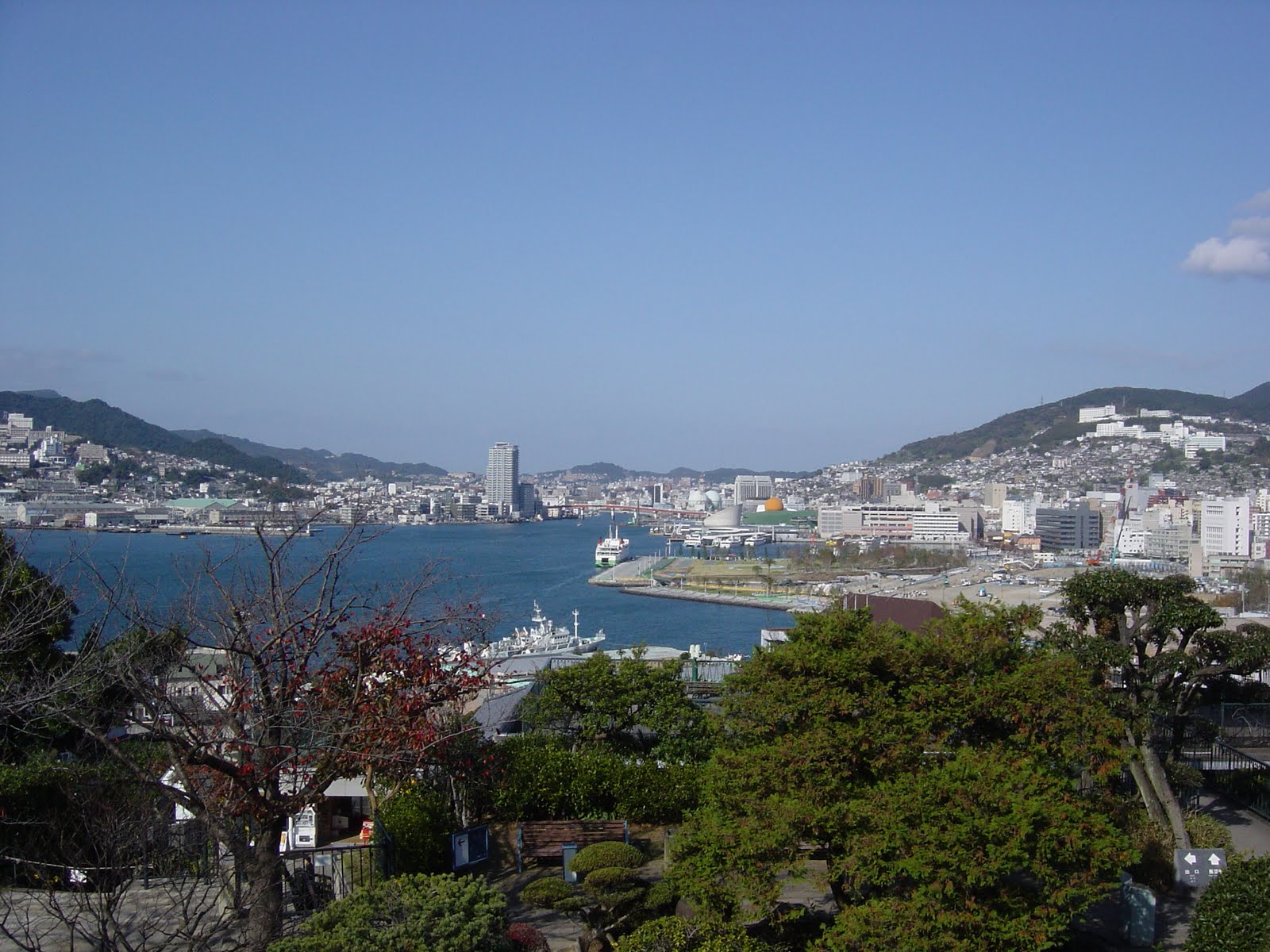
Fukushima City...


Fukushima City Street in Spring of 2011


2011 and 1937 (2011 et 1937)

It is a little surprise for me to find that such a new year card was actually used in Japan in 1937:
http://www.nenga-museum.com/showa/1937.html

And in 1938:


SECTION I: Foreign Born Population (Issue of 2011)

The recent shooting in Norway might be a precursor to the UK riots in this summer.

It should be also noted that riots occurred in France in 2005 and 2010.

The ratio of foreign-born immigrants:
1. Sweden - 14.4%
2.Spain - 14.3%
3.Germany - 12.9%
4.USA - 12.5%
5.France - 11.6%
6.UK - 11.3%
7.Norway - 10.9%

8.Italy - 7.1%...(of residing foreigners)

Table 2: Turks in Germany, 1973-2006

Table 3: Muslims in Norway, 1979-2005

Table 4: North Africans in France, 1957-2003
http://www.meforum.org/2107/europe-shifting-immigration-dynamic

It is indeed true that more than 50 percent of Mexican immigrants in the U.S. are undocumented. Additionally, the largest foreign-born population living in the United States is comprised of both legal and illegal Mexican immigrants, according to the Migration Information Source. The next largest source of immigration to the U.S. comes from the Philippines.
http://www.immigrationlawyer.co/Mexican.html

It is true the ratio of foreigners permanently living in Japan is one-digit smaller than in the U.S. and European nations.
In 2005, there were 1,555,505 foreign residents permanently residing in Japan, representing 1.22% of the Japanese population.
http://en.wikipedia.org/wiki/Demography_of_Japan#Foreign_residents

The issue for Japan is rather shrinking population from 127 million of today's level. And, there is a general concern that many Chinese have come to stay in big cities of Japan on an illegally permanent basis. Except this controversial Chinese resident problem, no serious problems exist in Japan in terms of immigrants from Africa, Islamic nations, south Asian countries, and Latin America.

The point at issue is that unlike the U.S. and European nations Japanese businesses have moved their operation in a large scale wholly or partially to Taiwan, China, South Korea, Thailand, and other Asian nations and even to America and Europe. So, most of local Asians and Latin Americans do not have to come to Japan. They can find jobs in Japanese companies and factories in their own countries or in America or Europe. Even Africans might find jobs in Japanese companies operating in Europe, such as Sony.

From a historical point of view, the Roman Empire collapsed as it took so many foreign tribes in its national structure. Past Chinese dynasties were all taken over by a new dynasty through enervation and weakening caused by conflicts with other tribes and foreign invaders.

So, in a long-term scope, the immigrant situations in Western Europe and North America indicate a great change to come in future in the European-Christian dominant global regime, though it does not mean new hegemony to be held by Chinese or Muslims. But. it will be a change leading a full-scale greater change that would occur once in 2000 years.


SECTION II. Shanghai in 1937

From a Japanese point of view, WWII began four years before 1941 when the Imperial Navy of Japan attacked U.S. Naval bases in Pearl Harbor, Hawaii.

Before the summer of 1937, Chiang Kaishek's China and Nazi Germany had already developed their military cooperation, expecting decisive battles with the Empire of Japan.

Accordingly, Chiang Kaishek's China and Nazi Germany concluded a treaty for military cooperation in early 1930's. German generals and officers came to China to train Chinese soldiers, provide weapons, and guide Chinese generals and officers in drawing strategies against the Imperial troops.

The point at issue is that Shanghai had been an international city. France, the U.K., the U.S., and Japan had their own administrative zones in Shanghai. Chinese President Chiang Kaishek regarded Shanghai as a kind of foreign territory. Chiang wanted to drive out foreign troops stationed in Shanghai. Shanghai was a money center of China at the time. Big wealth was in Shanghai. So, Chiang, with help from German generals, made a plan to attack and invade Shanghai.

(Refer to http://en.wikipedia.org/wiki/Sino-German_cooperation_(1911%E2%80%931941)
"Between 1911 and 1941, cooperation between Germany and China was instrumental in modernizing the industry and the armed forces of the Republic of China prior to the Second Sino-Japanese War.")

Chiang mobilized 650,000 soldiers and 200 military planes to attack and invade the international city Shanghai. In Shanghai, there stationed were just 2,800 American troops, 2,600 British troops, 2,050 French troops, 770 Italian troops, and 2,500 Marines of the Empire of Japan, all protecting 3.5 million residents in Shanghai.  The areas in Shanghai directly governed by Americans and Europeans (with cooperation of Japanese) were called concessions, though in the concessions so many rich and poor Chinese were living to at least enjoy Shanghai's greatest prosperity in Asia of 1930's.

Subsequently, the Empire of Japan took up this huge challenge, eventually dispatching 250,000 soldiers from Japan proper or mainland Japan to Shanghai and carrying out long-distance air missions with 500 military planes flying over the East China Sea from Japan proper and Taiwan in addition to sending 130 Naval ships.

German weapons and strategies and a superior number of soldiers did not help Chiang Kaishek. In two months, Chinese troops were totally broken. They fled to Nanjing where Chiang Kaishek and other Chinese leaders were waiting for a report of victory in War of Shangahai. Tokyo was reluctant to allow the Imperial troops to advance deep into the inland of the Chinese Continent. But, the Imperial troops chased Chinese troops taking flight to Nanjing.

In this way, the War of Shanghai President Chiang Kaishek started with help of German generals in August 1937 ended with the fall of Nanjing in December 1937. In paths, roads, villages, fields, and hills between Shanghai and Nanjing over 300 km (190 miles) scattered were hundreds of thousands of dead bodies of Chinese soldiers. To avoid disgracing themselves in the world, Chinese leaders started to claim that the Imperial troops of Japan killed hundreds of thousands of citizens in Nanjing. But, the fact is that population of Nanjing before occupation by the Imperial troops was 200,000; after the Japanese occupation, it grew to 230,000.

So, these battles between Shanghai and Nanjing must be regarded as one War: the Shanghai-Nanjing War of 1937.

And, this War was between the Empire of Japan representing France, the U.K., Italy, and the U.S. that had then-legitimate interest in Shanghai and Chiang Kaishek's China that tied up with Nazi Germany.

Yet, after the Shanghai-Nanjing War of 1937 and the fall of Najing, the diplomatic relationships changed drastically.

In early 1938, Germany officially recognized Manchukuo as an independent nation. In April of that year, Hermann Göring banned the shipment of war materials to China and in May, German advisors were recalled to Germany at Japanese insistence.

This shift from a pro-China policy to a pro-Japan one was also damaging to German business interests, as Germany had far less economic exchange with either Japan or Manchukuo than China.
http://en.wikipedia.org/wiki/Sino-German_cooperation_(1911%E2%80%931941)

The Tripartite Pact, also called the Three-Power Pact, Axis Pact, Three-way Pact or Tripartite Treaty was a pact signed in Berlin, Germany on September 27, 1940, which established the Axis Powers of World War II. The pact was signed by representatives of Germany (Adolf Hitler), Italy (foreign minister Galeazzo Ciano) and Japan (ambassador Saburo Kurusu).
http://en.wikipedia.org/wiki/Tripartite_Pact

What was more surprising for the Empire of Japan was that Chiang Kaishek turned to the U.S. to get full support.

Though it was also a long and complicated story, in December of 1941 the Imperial Navy of Japan had to eventually attack U.S. Naval bases in Pearl Harbor, Hawaii, since Chiang Kaishek's and Mao Tse-tung's China got full support from the U.S.

Finally note that troops of the Empire of Japan was defending Shanghai from invading Chinese troops in August 1937, since Chinese military planes bombed international districts of Shanghai, killing so many Chinese residents.

Chinese planes' bombing of Shanghai in 1937 (Chinese today claimed that the Japanese military planes attacked the city.  It is a lie, since Japanese troops were defending Shanghai with Americans and Europeans in addition to Judaists.):

Chinese planes' route avoiding direct engagement with Imperial Navy's cruiser Izumo in Chang Jiang (Long River) as shown below:
http://ww1.m78.com/sinojapanesewar/sinojapanese%20war.html

Imperial Navy's cruiser Izumo in Shanghai in 1937:
(http://blogs.yahoo.co.jp/jjtaro_maru/26108040.html)

Shanghai in 1937:

Aerial View of Shanghai in 1930s:
http://www.geocities.jp/torikai007/japanchina/shanghai.html

*** ***


http://kabu2kaiba.blog119.fc2.com/blog-entry-294.html

The Battle around Shanghai resulted in the Battle in Nanjing in 1937; thus Imperial Army entered the then Chinese capital Nanjing while Nanjing citizens were abandoned by Chinese leaders and generals who fled to Chongqing though they could have surrendered to the Imperial Army or let Nanjing citizens flee before them...The situation between Shanghai and Nanjing from the summer to the winter of 1937 should be reviewed more carefully.


*** *** *** ***


Japan's Prime Minister Mr. Naoto Kan today finally expressed his own decision to step down when his party DPJ gets some key laws passed in the national Diet during this month.

So, he will resign at the end of August if early and possibly. His approval rating has been about 15% even in this season of anti-nuclear power in Japan due to the history of suffering atomic bomb attacks in August of 1945. PM Mr. Kan recently proposed decrease in reliance on nuclear power, so that he could have obtained more support from voters. But, the pubic have already doubted Mr. Kan's sincerity and ability in pursuing his own policy. As the ruling party DPJ would not put an end to the Kan Cabinet, the approval rating of the DPJ has also dropped. Now, it is presumed that the DPJ will lose power in the next general election. The conservative, pro-American party LDP is expected to take over power though they were defeated in the 2009 election by the DPJ.

This expected power shift in Japan from the socialistic camp to the conservative camp that respects Japan's traditional value system might suggest power shift in the U.S. through the 2012 Presidential Election. In America, a conservative camp might succeed in holding presidency in 2013.

Japan's Prime Minister Naoto Kan's Approval Rating by The Asahi Shimbun newspaper:
(http://www.asahi.com/politics/update/0807/TKY201108070452.html)


(It was a big incident to parties concerned, but subsequent riots might erase the memory from the pubic...
http://www.youtube.com/watch?v=3nO0lKDNirI&feature=related)


Mar 8:10 And straightway he entered into a ship with his disciples, and came into the parts of Dalmanutha.
Mar 8:11 And the Pharisees came forth, and began to question with him, seeking of him a sign from heaven, tempting him.
Mar 8:12 And he sighed deeply in his spirit, and saith, Why doth this generation seek after a sign? verily I say unto you, There shall no sign be given unto this generation.
Mar 8:13 And he left them, and entering into the ship again departed to the other side.


Tuesday, August 09, 2011

"What might this parable be?" - (2011 and 1945)

Fukushima City...


2011 and 1945 (2011 et 1945)

The Western Media, especially the bad Anglo Saxon Media, have claimed in these 15 years that Japan would soon go bankrupt due to a huge amount of outstanding government bonds.

But, the fact is that domestic assets Japanese individuals and businesses have well covered the national debt, though GDP of Japan has not increased in these 15 years as part of its GDP was virtually transferred to China and South Korea as I stated yesterday.

Moreover, Japan is the world largest owner of net external assets, which most of Americans do not know. The second is China and the third is Germany. The U.S. is a net external debt owner.

Japan has net external assets worth $3.2 trillion as the world largest, though most of Americans and Englishmen think Japan has huge external debt like the U.S., since the bad Anglo Saxon Media have claimed in these 15 years that Japan would soon go bankrupt due to a huge amount of outstanding government bonds which are actually well covered by domestic assets Japanese individuals and businesses have.

Now, the U.S. government bond rating has been lowered, and London is being looted in riots.

What have those Anglo Saxon Media contributed in these 15 years?


SECTION I: Japanese Private Sector's Debt Decreasing!

The debt incurred by the Japanese private sector has been falling due to complicated effects of hard working of Japanese people, deflation caused by huge investment into China, mature social environment, etc.


In other example:
http://www.thoughtofferings.com/2009/09/mystery-of-japans-private-debt-levels.html

Most of Americans brainwashed by the wrong Anglo Saxon Media would be surprised to see this kind of data.

From the beginning, they had to think in the following way.

1) The Japanese people are diligent and talented.

2) But Japan has suffered 15-year long deflation without an increase in GDP.

3) Why? It is China and South Korea!

4) Japanese businesses must have invested so much into China and South Korea.

5) Indeed, 20,000 Japanese businesses have moved its operation wholly or partially to China and transferred technology to South Korea, hiring 10 million Chinese and South Koreans in both the countries.

6) Accordingly, part of GDP of Japan has been transferred to China and South Korea.

7) Hard working and talented Japanese have been helping China and South Korea instead of simply increasing Japanese GDP.

8) But why?

9) It is due to environmental conditions within Japan and globalization of economy. Japan has to protect its natural environment; no more large-scale development of the land for factories and plants are desirable. What's more, Japan needs cheap labor force in China and South Korea. Japanese businesses and technologies have moved to China and South Korea, while Japanese businesses are making big profits.

So, the rating of the Japanese Government Bond must be higher than the present one.


SECTION II: American Private Sector's Debt Decreasing?

The debt incurred by the American private sector was increasing till 2009 due to simple effect of greedy and wrong application of the American Dream, though recently it leveled and started to decrease.


(Click to enlarge.)
http://www.thoughtofferings.com/2009/09/mystery-of-japans-private-debt-levels.html

Yet it is still at a higher level; accordingly, the rating of the U.S. Government Bond must be lower than the present one.


SECTION III. Nagasaki in 1945

Today in 1945, an atomic bomb was dropped on Nagasaki City, Nagasaki Prefecture of Japan, to destroy the old, big port city where big building dockyards and Catholic churches were situated.

http://mainichi.jp/select/wadai/graph/nagasakifilm/index.html

After the atomic bomb attack:


(http://www.page.sannet.ne.jp/mhvmhv/NagasakiAtomicBombDisaster.html)

(http://hk1215.jugem.jp/?day=20070809)


Before the atomic bomb attack:

http://kids.s24.xrea.com/heiwa/nagasaki/toukamae/index.htm

(http://hk1215.jugem.jp/?day=20070809)


The moment the "One" U.S. atomic bomb exploded over Nagasaki City on August 9, 1945 as observed from the street:


Nagasaki City Today:
(Click to enlarge.)
http://location.cocolog-nifty.com/photos/uncategorized/2008/02/24/dsc05949.jpg

*** *** *** ***

Appendix 1. The Flight Record between Tokyo and London

It took 51 hours for the fastest plane to fly from Tokyo to London in 1937.

The Mitsubishi Ki-15 (the 97 type headquarters reconnaissance plane) was a Japanese reconnaissance aircraft and a light attack bomber of the Second Sino-Japanese War and Pacific War...[The total production volume of this 97 Type bomber was 437.]

...being named Kamikaze (as sold to The Asahi Shimbun newspaper company) and registered as J-BAAI. It was the first Japanese-built airplane to fly to Europe and caused a sensation in 1937 by making the flight between Tokyo and London, for the Coronation of King George VI, between 6 April 1937 and 9 April 1937 in a flight time of 51 hours, 17 minutes and 23 seconds, a world record at the time...

http://en.wikipedia.org/wiki/Mitsubishi_Ki-15#World_record_flight_to_Europe_and_other_civilian_use

(http://www.nags-gallery.com/cgi-bin/bbs39/bbs39.cgi?mode=past&year=2010&mon=6)

However, as the above map shows, it actually took four days for two Japanese who piloted the plane from Tokyo to London, sleeping at night of each day on the ground.


Luk 8:9 And his disciples asked him, saying, What might this parable be?
Luk 8:10 And he said, Unto you it is given to know the mysteries of the kingdom of God: but to others in parables; that seeing they might not see, and hearing they might not understand.
Luk 8:11 Now the parable is this: The seed is the word of God.

Monday, August 08, 2011

"He that hath ears to hear" - (1995 and 1945)

To Fukushima Prefecture...


1995 and 1945 (1995 et 1945)

This is the summer of America's rating crisis.

This is the summer of Japan's nuclear and political crises.
Proverbs 26:1 As snow in summer, and as rain in harvest, so honour is not seemly for a fool.
I saw some bolts of lighting in the sky the other day which were so mighty, fast, and bright though no rain fell on me.


SECTION I: Before and After Windows 95

Here, we review the total (public and private) U.S. debt in terms of its ratio over its GDP.


Debt and liability incurred by the Great Depression was finally cleared in 1952, after WWII, when the post-war economic boom started in the U.S.

Then, through the electric appliance boom in 1950's and the Apollo project boom in 1960's, the technological development in the U.S. progressed at a good rate, from the vacuum tube age to the semiconductor age.

In the middle of 1980's, computer technologies expanded with application of advanced semiconductor chips which enabled production of Apple's PCs and introduction of early versions of Windows OS. Subsequently, computer transactions relying on incomplete computer software in Wall Street caused the so-called Black Monday, symbolizing a great increase in data and processes used in online financial transactions. Accordingly, quantity of monetary data shot up so sharply. In this trend, the amount of U.S. public debts also climbed to one level higher. Then they came to wait for other technological innovation to apply to the monetary market.

(http://www.morganstanley.com/institutional/techresearch/pdfs/Internet_Trends_041210.pdf)

When the number of the Internet users increased from millions to ten millions and hundred millions, the multitude of economic activities was sky-rocketed. Money being calculated, multiplied, leveraged and circulated got two to three digits larger. So did credit and debt. Accordingly the balance point was raised so high. Viewed from the debt side, the total (public and private) U.S. debt against the U.S. GDP started to approach 400%.

The popular product that represents the era around 1997 was an operating system for a PC, Windows 95. For the first time, consumers obtained a means to use the cyber space from their own house or desk in office. Accordingly, virtually every consumer started to connect to computer systems in Wall Street companies to buy and sell a big amount of dollars he or she could not without this technology.


SECTION II: Spies in 1945

Diplomats of the Empire of Japan stationed in Spain recruited a certain notable spy, a Judaistic Spaniard named Velasco, during the Second World War.

Receiving big money from the Japanese-counselor to Spain, Velasco organized a large-scale spy network covering Washington DC, New York, New Orleans, San Francisco, Los Angeles, and San Diego as well as Latin America and Spain. The organization is called "TO" by the Japanese elite in Tokyo. The headquarters was set in Madrid with six key members. Information they collected was transmitted to Tokyo by radio, though it was intercepted by the American military intelligence service.

The most important information the TO organization obtained was about an American secret project of building atomic bombs. In their operation to get this information, one spy of TO was shot to death by FBI in Las Vegas. Yet, this big secret information was radioed to the capital of the Empire of Japan. Then what happened?

The Japanese elite and generals in Tokyo did not pay attention to information Velasco sent from Madrid. Though the Imperial Japanese Government spent big money for the TO operation, they did not seriously check secret reports from Madrid. Yet, the Imperial military launched its effort to produce a Japanese version of atomic bombs, digging uranium in Fukushima Prefecture and mobilizing top scientists, such as Hideki Yukawa who was honored with Nobel Prize after WWII. But, they did not alarm the Japanese people about a possible atomic-bomb attack by Americans.

So, when the U.S. military dropped atomic bombs in Hiroshima and Nagasaki in early August of 1945, the Japanese leaders quickly understood the meaning of the huge destruction.

Incidentally, the spy Velasco was not a simple spy:
Escape from the Bunker by Harry Cooper
...
In 1984, Harry Cooper, a former Naval Reserve officer and the found of Sharkhunters, received a letter from one of the many surviving WWII members of the organization. The man, appearing as Don Angel Alcazar de Velasco, said he was a Spaniard and that he had worked for Japanese and German intelligence. He made more astounding claims, the most amazing of which was that it was he who smuggled top Nazi Martin Bormann out of Berlin via U-Boat to South America...

He claimed he was a Spaniard and that his name was Don Angel Alcazar de Velasco. He claimed he smuggled Hitler's second, Martin Bormann, out of the Berlin bunker and smuggled him to South America. He claimed that in 1953 he met a man who those around him called 'the Fuhrer.' The man bore an uncanny likeness to an aging Adolf Hitler. Don Angel said he had heard that Hitler escaped Berlin as well, drugged and whisked away by those in his inner circle.

The 'dead Hitler' was nothing more than a double.

The claims were so fantastic - but so fascinating - I checked him out through the man surviving WWII contacts I still have who are members of Sharkhunters. He was who he said he was...

http://flmsdown.net/ebooks/55443-escape-from-the-bunker.html

*** *** *** ***

Appendix 1. Purple, An Encryption System Used by The Empire of Japan during WWII

The Imperial elite of Japan during WWII did not ever believe that their coding system, the 97-shiki obun inji-ki or Purple, could be ever broken.

The Japanese coding system was more unique than German Enigma. Besides, the Japanese written language was not easy. Americans and the English must not have been able to decode Purple texts. But, they actually did. It is partly because they stole part of a coding book for Purple from a Japanese diplomatic office in America, partly because Japanese used an old encryption system, called Red, in parallel with Purple, partly because Japanese did not take any precautions to further enhance secrecy of the system in its operation, and partly because some talented American scientist discovered that the Purple system applied a telephone switching system unlike any other coding systems in the world.

Arrogance of the Imperial Japanese elite made this cryptography system fail while some Japanese experts pointed to weak points of Purple, for example, using different methods to two groups of alphabets, one group with 6 letters and another 20, following a similar method used in Red.
Japan's PURPLE Encryption:

The Japanese were most efficient at destroying their cryptographic machines during World War II. To this date, not even one complete machine has been discovered. However, with pure genius and ingenuity, cryptographers from the United States were able to crack the PURPLE, as it was called.

In 1940, the British, Polish, and French were working hard on cracking the German Enigma (and for the most part, succeeding). Meanwhile, the US Signals Intelligence Service (SIS) worked on Japan's code machine. What made cracking the PURPLE more difficult than the enigma was that it used a revolutionary concept in machine cryptography.

In fact, PURPLE used telephone stepping switches instead of rotors in its encryption scheme. A stepping switch was used in those days to route telephone calls from source to destination. By utilizing this, the encrypted letters did not follow patterns that codebreakers were accustomed to with traditional rotor machines.

So, William Friedman, a renowned cryptographer, was curious about what could make these patterns? Eventually, he and his team were able to put together a version of the PURPLE machine almost exactly the same as the Japanese version. However, Friedman did so without ever seeing a picture or blueprint of the machine; he only saw messages encrypted with it!

So, knowing how the machine worked, the United States was able to build a machine to crack the code of PURPLE. It figured out the code used to encrypt messages, thus allowing for plaintext viewing by the user. As a result of Friedman's work, allied lives were saved, and battles were won, helping to bring the war to a close as quickly as possible.

The following picture is the only part of a real Japanese PURPLE machine to have ever been recovered by anyone. Everything else was destroyed.
(http://library.thinkquest.org/28005/flashed/timemachine/courseofhistory/purple.shtml)

The machine taken in the above picture was actually retrieved by the allies from the Japanese embassy in Berlin after the surrender of Germany in 1945.

Yet, it is still a mystery whether or not the U.S. Government knew that the Empire of Japan was to open war with the U.S. on December 7 (Japan Time), 1941. It looks like the Roosevelt Administration expected that the Imperial Navy would start to attack U.S. bases in the Philippines instead of Pearl Harbor, Hawaii. Incidentally exact performance and specifications of Japan's Zero fighters were kept almost perfectly secret, though 78 Zeros were included in 380 attack planes that took off from total six aircraft carriers to Pearl Harbor.


(Young men venture into playing in any country in any age...
http://www.youtube.com/watch?v=5syFYSsXoSU&feature=related)


Luk 8:8 And other fell on good ground, and sprang up, and bare fruit an hundredfold. And when he had said these things, he cried, He that hath ears to hear, let him hear.


Sunday, August 07, 2011

Before and After Windows 95

Tokyo...A 634 Meter-High Tower (the world tallest standalone TV tower)


Before and After Windows 95 (vant et après Windows 95) (Ver. 4.0)

I still recall how enthusiastic consumers even in Tokyo looked lining up and waiting at shops for start of sale of Windows 95 in late 1995.

Yet, what I was familiar with was Windows 3.1 at the time.  And, I was sorry that Japanese makers were giving up their own version of Japanese operating systems for personal computers.  I felt that Japan lost a chance for attaining dominance in the PC sector forever.  So, I bought a Japanese-version of Windows 95 mounted PC and then Windows 98 and so on.  But a dial-up modem used in my home was so slow at 9.6k bps.  The Internet was heavy when taking some pictures, say, from a NASA site.  But the era changed in Japan, too, from that of the so-called PC communications network (allowing for e-mail, BBS, and so on) to that of the Internet.

(Indeed before the era of Windows 95, Japan is leading the world in development of electronics, semiconductors, robotics,  mainframe computers if an IBM type, and personal computers if based on Japanese DOS versions.  Japanese makers such as Fujitsu, NEC, Toshiba, Sony, Hitachi, Mitsubishi, Sharp, Sanyo, etc. all developed, manifactured, and sold Japanese versions of DOS PCs.    But, as Windows 95 symbolizes, the era changed to globalization through Microsoft English OS, the English-based Internet communications, and English-based software development.  The U.S. succeeded in securing its position in the new high-technology sphere by leveraging business expansion of Microsoft, Intel, Cisco Systems, Yahoo, and the likes.)


SECTION I: Semiconductor Market Billing

The world really changed around 1995 to 1997 as the statistics on semiconductor market below show:
http://www.sia-online.org/industry-statistics/industry-statistics/

Suppose that Wall Street is generating a huge amount of dollar assets in the middle of Sahara.

Suppose the world is Sahara and Wall Street is generating a huge amount of dollar assets in the middle of Sahara. What value do those dollars have? Wall Street workers and super rich men will soon starve to death in the heat under the sun above Sahara. They cannot eat dollar bills, they cannot live in dollar bills, and they cannot see even TV with just dollar bills in the hands in the middle of Sahara.

It is industrial products that give value to dollar bills, apart from discussions on importance of agriculture. Wall Street must be situated in the most advanced industrial nation or in the most advanced scientific nation, or otherwise at a place with an international financial system that is used by advanced industrial and scientific nations.

In this context, the U.S, must be the most advanced industrial nation or the most advanced scientific nation, so that it can operate Wall Street which generates dollar wealth for rich men who enjoy life full of advanced and high-quality products.

(It should be noted that Intel and other American semiconductor makers led the world in providing CPU chips of personal computers from the begging of the PC era.  Silicon Valley literally means that American hi-tech industry started with aggressive application of semiconductor devices. However, it is Japanese electronics makers, such as Sony, Panasonic, Hitachi, Toshiba, NEC, Mitsubishi, Fujitsu, Sharp, etc., that produced the largest amount of the most advanced semiconductor memory chips and other functional chips through 1980's and 1990's before the Internet boom, though Japanese makers could not take on Intel and Microsoft as well as IBM, since it is an American government policy to keep superiority in the core PC technology.  Therefore, since 1995, the U.S. semiconductor industry recovered their loss to the Japanese industry, riding on the trend of the PC/Internet boom. In this context, too, Windows 95 is symbolic, heralding recovery of the U.S. semiconductor industry.


(Click to enlarge.)

As for the City of London, another financial center of the world, though the U.K. did not have leading power in the semiconductor industry, continental industry of Europe, including Germany, was behind it.  The U.K. was also one of the largest investors in the U.S.  It had also an asset of global financial network having been built all over the world over past centuries.  In addition, they aggressively introduced hi-tech equipment into their business. So, some other factors worked in the City to allow for its prosperity.)

In this context, the basic factor to indicate a trend of wealth is semiconductors in this electronic age.

Accordingly, a trend of the market billing of semiconductors shows a trend of the world in terms of its generation of material wealth. And, it clearly shows that the world really changed around 1995 to 1997 as the above statistics on semiconductor market show.

Indeed, PCs and the Internet connections need semiconductor devices as TV sets need them.  And, around 1995, PCs and the Internet connectivity started to prevail all over the world, including China, India, South Korea, etc.  Even Japanese car makers started to introduce various chips not only into robots for manufacturing cars but also into vehicles they produced, in order to realize high quality of control of operation of a car.

Truly, from 1980s to 1990s, the world started to include semiconductor devices as one of basic elements of its material civilization, in addition to crude oil and iron.  The explosion of needs for PCs, Internet use, cellular phones, and other high-tech controlled products such as cars ignited the semiconductor boom in the world.  The material landscape of the world changed forever, say, with flat panel TV sets everywhere.  And, it was Japan that led this trend, though China and South Korea started to follow so well Japan around 2000, since many Japanese makers moved their factories and facilities to China and many Japanese engineers moved to South Korean companies.

Anyway, remember that the modern wealth is based on the three elements: iron, crude oil, and semiconductors (chips).


SECTION II: Internet Revolution and China

The Industrial Revolution changed the world forever starting from England in the late 18th century.

The Internet Revolution started to change the world forever starting from the G7 (the U.S., JAPAN, Germany, France, the U.K., Italy, and Canada) countries around 1995.

But note that the Internet technology is supported by electronics, semiconductor technology, and modern physics.

The power of the Internet was released to the world with sale of the Windows 95 operating system to be used in an Intel processor-based computers. Windows 95 is accompanied by an Internet connectivity function. Any user who bought a PC with Windows 95 could access the Internet from his home or office. It paved the way for a flourishing era of venture business.

(Click to enlarge.)

Also, around 1997, mobile phones came to be widely used first in the G7 countries and then all over the world. This system is also based on semiconductor technology. Especially Japanese carriers started to allow a cellular phone to access the Internet, leading the trend to today's Internet use on mobile phones.

It is as if Pandora's box had been opened. The earliest beneficiary is Mr. Clinton's America. Then, China started to leverage the Internet to get information about and funds for development of advanced technologies. Indeed, it is Japanese money and technology as well as the Internet that made China get promoted economically to multiply its GDP.

It should be also noted that since late 1990's many Japanese engineers have been recruited by Chinese companies and South Korean companies. A great amount of technological information and know-hows has been transferred to China and South Korea from Japan. Even today, 40% of exporting companies in China are founded with foreign capital mostly from Japan and the U.S.


As the Industrial Revolution that started in the late 18th century launched the U.K. to the leading position in the global economy, the Internet Revolution that started around 1995 opened the door for China to the global stage and had it get prepared for higher growth of its GDP, though with huge technological and financial support from Japan.

Yet, this Internet made it easy for China to unlawfully steal and capture information on advanced technology.  The amount of patent infringements by Chinese companies against Japanese companies is estimated to be over hundreds of billion dollars per year.  Put simply, China's economic success is based on illegal activities leveraging the Internet and other channels, mainly targeting the Japanese high-tech industry.  For example, every Chinese high-speed train is based on stolen Japanese technology, presumably allowing Japan to request $1 million per train per operation on Chinese railroad networks.

Put extremely, fools, namely professional investors, in Wall Street have been just mesmerized by the economic expansion of China without understanding why it could be possible for China.  As if it had been a great magic, a big economy China suddenly appeared before them.  But you must well understand that the decisive factors for China's economic rise are Japan's great help and support for China over decades and power of the Internet.


SECTION III: Internet Revolution and 2001 Terror

Everybody uses a telephone, including CIA, FBI, a narco-trafficking cartel, and terrorists.  Telecommunications have further proved their usefulness in the Internet era, though such a large scale, complicated, high-quality telecommunications network as the Internet was once only in the hand of the government, big enterprises, and authentic R&D bodies.
Al Qaeda and the Internet:
The Danger of “Cyberplanning” 
TIMOTHY L. THOMAS 
From Parameters, Spring 2003, pp. 112-23. 
We can say with some certainty, al Qaeda loves the Internet. When the latter first appeared, it was hailed as an integrator of cultures and a medium for businesses, consumers, and governments to communicate with one another. It appeared to offer unparalleled opportunities for the creation of a “global village.” Today the Internet still offers that promise, but it also has proven in some respects to be a digital menace. Its use by al Qaeda is only one example...
Evidence strongly suggests that terrorists used the Internet to plan their operations for 9/11. Computers seized in Afghanistan reportedly revealed that al Qaeda was collecting intelligence on targets and sending encrypted messages via the Internet. As recently as 16 September 2002, al Qaeda cells operating in America reportedly were using Internet-based phone services to communicate with cells overseas. These incidents indicate that the Internet is being used as a “cyberplanning” tool for terrorists. It provides terrorists with anonymity, command and control resources, and a host of other measures to coordinate and integrate attack options... 
Since 9/11, US sources have monitored several websites linked to al Qaeda that appear to contain elements of cyberplanning: 
- alneda.com, which US officials said contained encrypted information to direct al Qaeda members to more secure sites, featured international news on al Qaeda, and published articles, fatwas (decisions on applying Muslim law), and books.
- assam.com, believed to be linked to al Qaeda (originally hosted by the Scranton company BurstNET Technologies, Inc.), served as a mouthpiece for jihad in Afghanistan, Chechnya, and Palestine.
- almuhrajiroun.com, an al Qaeda site which urged sympathizers to assassinate Pakistani President Musharraf.
- qassam.net, reportedly linked to Hamas. 
- jihadunspun.net, which offered a 36-minute video of Osama bin Laden.2 
- 7hj.7hj.com, which aimed to teach visitors how to conduct computer attacks.3 
- aloswa.org, which featured quotes from bin Laden tapes, religious legal rulings that “justified” the terrorist attacks, and support for the al Qaeda cause.4 
- drasat.com, run by the Islamic Studies and Research Center (which some allege is a fake center), and reported to be the most credible of dozens of Islamist sites posting al Qaeda news. 
- jehad.net, alsaha.com, and islammemo.com, alleged to have posted al Qaeda statements on their websites. 
- mwhoob.net and aljehad.online, alleged to have flashed political-religious songs, with pictures of persecuted Muslims, to denounce US policy and Arab leaders, notably Saudi.

http://www.iwar.org.uk/cyberterror/resources/cyberplanning/al-qaeda.htm


(to be continued...)


SECTION IV: Internet Revolution and 2008 Financial Crisis

The Windows 95 gave great traction power to the U.S. households economy.

Americans all started to use Windows 95-equipped PCs to connect to the Internet for their individual business and financial activities. It resulted in acquisition and accumulation of assets in U.S. households.  

Now let's check what researchers discussed on New York Stock Exchange in terms of Information Technology.
INFORMATION TECHNOLOGY AND
THE NEW YORK STOCK EXCHANGE’S
STRATEGIC RESOURCES FROM 1982-1999

...
From about 1988 until 1994, investments in IT showed little increase, matching an economy that was not growing. See Figure 1. The Exchange’s IT strategy at the time was to maintain the status quo with its major initiative being broker booth support. After 1994, the NYSE invested more heavily in IT as trading volume accelerated, and it faced competition from the Nasdaq, which was becoming known for the IPOs of attractive new technology listings, and the ECNs. The Exchange also saw transactions rising dramatically in the buoyant capital markets and the expanding economy of the 1990s. In this period continuing to the present, the NYSE’s IT strategy has been to use technologically aggressively to meet competition from a number of sources as well as demands for trading capacity.
...

(Click to enlarge)
http://cisnet.baruch.cuny.edu/papers/cis200208.pdf

The effect of Windows 95 in the money industry is so clear in the above figures.  Manual operation was replaced with computer-based handling of orders.  And the computers were not a mainframe but handy PCs easily introduced on the floor and office rooms of NYSE.  The era clearly started with a drastic change in NYSE when it found the schedule of sales of, and specifications of, Windows 95.


(to be continued...)


SECTION V: Internet Revolution and 2008 Presidential Election

(to be continued...)


*** *** *** ***


Appendix I. Nagasaki on August 9, 1945

It is said that the U.S. Government selected Hiroshima, Kokura, Nagasaki, and Niigata as target cities for atomic bomb attacks at the last stage of WWII.

On August 9, as the crew of a bombing B29 failed three times to correctly set their sights on a target in Kokura while Japanese fighter planes were approaching, they left Kokura for Nagasaki. It is believed that there would have been more casualties if Kokura had been attacked.
A map showing mission runs of August 6 and August 9, with Hiroshima, Nagasaki, and Kokura (the original target for August 9) displayed.
http://en.wikipedia.org/wiki/Atomic_bombings_of_Hiroshima_and_Nagasaki


Appendix II. Imperial Army of Japan (1871 - 1945)

Type 4 Heavy Bomber: capable of carrying a hydrobomb or a 800 kg bomb (otherwise 15 of a 50 kg bomb), flying at 537 km/h within a flying range of 3,800 km. The total production volume of this Type 4 is 635 between 1943 and 1945.

(http://en.wikipedia.org/wiki/Mitsubishi_Ki-67)

An engineer (of course a Japanese) of this bomber became a professor of engineering faculty of a university in Japan after WWII. The design of this bomber was applied to design of the shinkansen express train, since the professor joined develoment of the advanced high-speed train after the Second World War.

(http://blog.kyushu-heritage.jp/?eid=545824)