Thursday, January 02, 2014

"the Spirit of God moved upon the face of the waters" - Enigma of Edessa


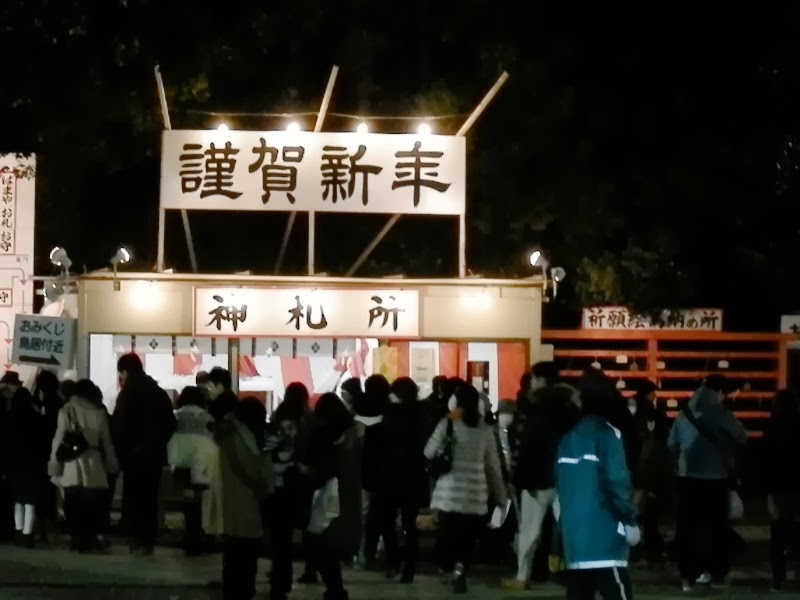
Mt. Fuji, Tokyo Sky-Tree Tower, and Shinto Shrine with 2 Million Visitors on January 2


Enigma of Edessa

If the Holy Shroud of Turin is true, one enigma remains. How was it brought to Edessa?
The precise date of the introduction of Christianity into Edessa is not known. However, there is no doubt that even before AD 190 Christianity had spread vigorously within Edessa and its surroundings and that shortly after the royal house joined the church.[6] According to a legend first reported by Eusebius in the 4th century, Syriac King Abgar V Ukāmā was converted by Addai,[7] who was one of the seventy-two disciples, sent to him by "Judas, who is also called Thomas".[citation needed]. Yet various sources confirm that the Abgar who embraced the Christian faith was Abgar IX.[8][9][10] Under him Christianity became the official religion of the kingdom.[11] As for Addai, he was neither one of the seventy-two disciples as the legend asserts, nor was sent by Apostle Thomas, as Eusebius says,[12] but a missionary from Judea who evangelized Mesopotamia about the middle of the 2nd century, and became the first bishop of Edessa.[citation needed]
http://en.wikipedia.org/wiki/Edessa,_Mesopotamia#Christianity

Edessa (now Şanlıurfa) in northwestern Mesopotamia was from apostolic times the principal center of Syriac-speaking Christianity. it was the capital of an independent kingdom from 132 BC to AD 216, when it became tributary to Rome. Celebrated as an important centre of Greco-Syrian culture, Edessa was also noted for its Jewish community, with proselytes in the royal family. Strategically located on the main trade routes of the Fertile Crescent, it was easily accessible from Antioch, where the mission to the Gentiles was inaugurated. When early Christians were scattered abroad because of persecution, some found refuge at Edessa. Thus the Edessan church traced its origin to the apostolic age (which may account for its rapid growth), and Christianity even became the state religion for a time. 
The missionary Addai evangelized Mesopotamia (modern Iraq) about the middle of the 2nd century. An ancient legend recorded by Eusebius (AD 260–340) and also found in the Doctrine of Addai (c. AD 400) (from information in the royal archives of Edessa) describes how King Abgar V of Edessa communicated to Jesus, requesting he come and heal him, to which appeal he received a reply. It is said that after the resurrection, the Thomas sent Addai (or Thaddaeus), to the king, with the result that the city was won to the Christian faith. In this mission he was accompanied by a disciple, Mari, and the two are regarded as co-founders of the church, according to the Liturgy of Addai and Mari (c. AD 200), which is still the normal liturgy of the Assyrian church. The Doctrine of Addai further states that Thomas was regarded as an apostle of the church, which long treasured a letter written by him from India.[2][3]
http://en.wikipedia.org/wiki/Early_centers_of_Christianity#Antioch
It is just a hypothesis, but it is thought that the Shroud was taken out of the tomb where the dead body of Christ Jesus had been kept for three days or so.  But it was finally handed over to Mother Mary, since the relic could not be used for missionary work by early Christians.  Any opponents to and enemies of Christ should have soon tried to destroy the Shroud if it had been used for a mission.

Mother Mary must have later given it to a woman who was closely associated with Christ Jesus.  She then fled to Edessa when persecution became sever in Jerusalem.  And a man who accompanied her to Edessa might call himself Addai or was mistaken for Addai later.    

As the Shroud was never mentioned by St. Paul, St. Peter, and others, it was completely hidden even from early Christians.  But, there was a possibility that the authors of the Gospels knew the existence of the Shroud.  It could be sensed from their descriptions about how female followers found Jesus' tomb empty.
Mat 28:1 In the end of the sabbath, as it began to dawn toward the first day of the week, came Mary Magdalene and the other Mary to see the sepulchre.
Mat 28:2 And, behold, there was a great earthquake: for the angel of the Lord descended from heaven, and came and rolled back the stone from the door, and sat upon it.
Mat 28:3 His countenance was like lightning, and his raiment white as snow:
Mat 28:4 And for fear of him the keepers did shake, and became as dead men.
Mat 28:5 And the angel answered and said unto the women, Fear not ye: for I know that ye seek Jesus, which was crucified.
Mat 28:6 He is not here: for he is risen, as he said. Come, see the place where the Lord lay.
Mat 28:7 And go quickly, and tell his disciples that he is risen from the dead; and, behold, he goeth before you into Galilee; there shall ye see him: lo, I have told you.
Mat 28:8 And they departed quickly from the sepulchre with fear and great joy; and did run to bring his disciples word.
Mat 28:9 And as they went to tell his disciples, behold, Jesus met them, saying, All hail. And they came and held him by the feet, and worshipped him.
Mat 28:10 Then said Jesus unto them, Be not afraid: go tell my brethren that they go into Galilee, and there shall they see me.

Mar 16:1 And when the sabbath was past, Mary Magdalene, and Mary the mother of James, and Salome, had bought sweet spices, that they might come and anoint him.
Mar 16:2 And very early in the morning the first day of the week, they came unto the sepulchre at the rising of the sun.
Mar 16:3 And they said among themselves, Who shall roll us away the stone from the door of the sepulchre?
Mar 16:4 And when they looked, they saw that the stone was rolled away: for it was very great.
Mar 16:5 And entering into the sepulchre, they saw a young man sitting on the right side, clothed in a long white garment; and they were affrighted.
Mar 16:6 And he saith unto them, Be not affrighted: Ye seek Jesus of Nazareth, which was crucified: he is risen; he is not here: behold the place where they laid him.
Mar 16:7 But go your way, tell his disciples and Peter that he goeth before you into Galilee: there shall ye see him, as he said unto you.
Mar 16:8 And they went out quickly, and fled from the sepulchre; for they trembled and were amazed: neither said they any thing to any man; for they were afraid.

Luk 24:1 Now upon the first day of the week, very early in the morning, they came unto the sepulchre, bringing the spices which they had prepared, and certain others with them.
Luk 24:2 And they found the stone rolled away from the sepulchre.
Luk 24:3 And they entered in, and found not the body of the Lord Jesus.
Luk 24:4 And it came to pass, as they were much perplexed thereabout, behold, two men stood by them in shining garments:
Luk 24:5 And as they were afraid, and bowed down their faces to the earth, they said unto them, Why seek ye the living among the dead?
Luk 24:6 He is not here, but is risen: remember how he spake unto you when he was yet in Galilee,
Luk 24:7 Saying, The Son of man must be delivered into the hands of sinful men, and be crucified, and the third day rise again.
Luk 24:8 And they remembered his words,
Luk 24:9 And returned from the sepulchre, and told all these things unto the eleven, and to all the rest.
Luk 24:10 It was Mary Magdalene and Joanna, and Mary the mother of James, and other women that were with them, which told these things unto the apostles.
Luk 24:11 And their words seemed to them as idle tales, and they believed them not.
Luk 24:12 Then arose Peter, and ran unto the sepulchre; and stooping down, he beheld the linen clothes laid by themselves, and departed, wondering in himself at that which was come to pass.

Joh 20:1 The first day of the week cometh Mary Magdalene early, when it was yet dark, unto the sepulchre, and seeth the stone taken away from the sepulchre.
Joh 20:2 Then she runneth, and cometh to Simon Peter, and to the other disciple, whom Jesus loved, and saith unto them, They have taken away the LORD out of the sepulchre, and we know not where they have laid him.
Joh 20:3 Peter therefore went forth, and that other disciple, and came to the sepulchre.
Joh 20:4 So they ran both together: and the other disciple did outrun Peter, and came first to the sepulchre.
Joh 20:5 And he stooping down, and looking in, saw the linen clothes lying; yet went he not in.
Joh 20:6 Then cometh Simon Peter following him, and went into the sepulchre, and seeth the linen clothes lie,
Joh 20:7 And the napkin, that was about his head, not lying with the linen clothes, but wrapped together in a place by itself.
Joh 20:8 Then went in also that other disciple, which came first to the sepulchre, and he saw, and believed.
Joh 20:9 For as yet they knew not the scripture, that he must rise again from the dead.
Joh 20:10 Then the disciples went away again unto their own home.
Joh 20:11 But Mary stood without at the sepulchre weeping: and as she wept, she stooped down, and looked into the sepulchre,
Joh 20:12 And seeth two angels in white sitting, the one at the head, and the other at the feet, where the body of Jesus had lain.
Joh 20:13 And they say unto her, Woman, why weepest thou? She saith unto them, Because they have taken away my LORD, and I know not where they have laid him.
Joh 20:14 And when she had thus said, she turned herself back, and saw Jesus standing, and knew not that it was Jesus.
Joh 20:15 Jesus saith unto her, Woman, why weepest thou? whom seekest thou? She, supposing him to be the gardener, saith unto him, Sir, if thou have borne him hence, tell me where thou hast laid him, and I will take him away.
Joh 20:16 Jesus saith unto her, Mary. She turned herself, and saith unto him, Rabboni; which is to say, Master.
Joh 20:17 Jesus saith unto her, Touch me not; for I am not yet ascended to my Father: but go to my brethren, and say unto them, I ascend unto my Father, and your Father; and to my God, and your God.
Joh 20:18 Mary Magdalene came and told the disciples that she had seen the LORD, and that he had spoken these things unto her.
From this sepulcher to Edessa, the linen or the Shroud was carried by someone without doubt.  If it had not been by St. Peter, it could be Mary Magdalene.

And it is very impressive that Edessa in northwestern Mesopotamia was from apostolic times the principal center of Syriac-speaking Christianity, since even today Syria is a focus of the world due to the cruel civil war going on there.  Edessa, Syria, and Jerusalem seem to have been closely associated from the era of Early Christianity.


*** *** ***

Gen 1:1 In the beginning God created the heaven and the earth.
Gen 1:2 And the earth was without form, and void; and darkness was upon the face of the deep. And the Spirit of God moved upon the face of the waters.
Gen 1:3 And God said, Let there be light: and there was light.

Wednesday, January 01, 2014

"the Word was with God" - Some Aspects of Shintoism


Evening of January 1, 2014, around Tokyo


Some Aspects of Shintoism

Mt. Fuji is the highest mountain in Japan.

But it is located just 100 km west of Tokyo.  Mt. Fuji itself is the main body of a shinto shrine.  But has Tokyo been sufficiently protected by the holy mountain?  In the modern era, Tokyo was twice devastated.  In 1923, the Great Kanto earthquake killed more than 140,000 people; those victims were mostly Tokyo citizens who lived in downtowns.  Half of Tokyo became burnt ruins.  In 1945, the last year of WWII, Tokyo suffered sever air bombardment by US bombers, resulting in 110,000 deaths.  Two thirds of Tokyo became burnt ruins.

However after WWII, Japan recovered to be the second largest economy, next to the US.  At least, Mt. Fuji protected Japan after all.

It is true Japanese look like people without faith in God.  But most of Japanese visit shinto shrines on special occasions, such as New Year Days.  For example, Meiji Shrine in Tokyo is visited every year by three million people in the first three days of the year.  The shrine in the above pictures receives two million.

There is no concept of the sole creator of the universe in shitoism.  But Japanese are sensitive to spiritual matters.  And there is strong tradition of study and research in Buddhism among Japanese.  So, it is unthinkable that Japanese someday stop going to shinto shrines on reasonable occasions.  Even Yasukuni Shrine of Tokyo has more than 200,000 visitors in the three new year days (from January 1 to 3) every year.  (Yasukuni Shrines established in 1869 enshrines 2.5 million fallen soldiers of the Empire of Japan.)

Nonetheless the deep connection between the Japanese race and its unique religion shintoism is not seen in Japanese living abroad on the permanent base.  It is a stark contrast between the Japanese and Judaists.  Judaists follow and observe their religion wherever they live.  But the linkage of Japanese people with shinto looks like evaporating when they move to foreign countries.  Conversely, shinto is deeply connected to the nature of Japan.

But, Japan is prone to be attacked by various types of natural disasters such as typhoons, earthquakes, tsunamis, etc.  But, this archipelago has been also afflicted by nuclear energy: Hiroshima, Nagasaki, and Fukushima.  These tragedies must also strongly influence Japanese minds.  So, it cannot be easy for any conservative politicians to restart any of 50 nuclear power plants now halted due to the Fukushima Daiichi nuclear accident and arm Japan with nuclear weapons (if China should start an armed conflict around the Senkaku Islands).  


*** *** *** ***


Joh 1:1 In the beginning was the Word, and the Word was with God, and the Word was God.

Tuesday, December 31, 2013

"the prince of this world be cast out" - Enigma of Edessa


Views from Tokyo Sky-Tree Tower

Enigma of Edessa


The Holy Shroud was brought to Edessa.  But how different Edessa was?

 http://it.wikipedia.org/wiki/Contea_di_Edessa
The School of Edessa 
Edessa occupies a singular place in Christendom. Presently called Urfa, a modern Turkish city of some 80,000 inhabitants, it was once associated with Jesus and early missionary activities of the Church. Pilgrims came to Edessa (the Syrians called the city "Orhay") from Mesopotamia, Persia, and the Far East. Traditions about the city reached the countries of Western Europe; its monasteries and caves housed saints, scholars, and poets. Edessa is generally regarded as the birthplace of Syriac literature and philosophy.  
A favorable geographical location enabled Edessa to achieve early prominence. A north-south road from Armenia bisected Edessa, continuing through Harran and the cities of Syria. An east-west road linked Edessa to Nisibis and points beyond in the Far East with the fords of the Euphrates in the west. Caravans of traders carried spices, gems, and muslin from India, and silk from China on these ancient highways.
First conquered by the Greeks, and ruled by the Seleucids from 302 until 130 B.C.E., Edessa fell into the hands of the Parthians and, finally, the Romans in 49 C.E. Although Edessa was proclaimed a colonia in 214 C.E., the thought and culture of Orhay, like the culture of the entire oikoumene, remained Greek. The coins of Edessa bore legends in Greek. The wealthy families of the city sent their sons to study in Antioch, Beirut, Alexandria, and Athens. The greatest Edessan philosopher, Bardaisan, was predominantly influenced by Greek thought.  
There was great religious ferment in the Syrian orient in the second and third centuries. A Jewish community flourished in both Edessa and Nisibis, and the latter city served as a storehouse for Jewish contributions to the Jerusalem Temple. Jews lived side by side with the pagan community, and even shared a common burial ground. In addition, the Church was contending with the heresies of Marcionism and Gnosticism during this period. A cult center dedicated to the worship of astral deities sprang up in Palmyra as well as in Harran, and in nearby Hieropolis a Temple was supported by monies from Babylonia and Assyria. Edessa's residents were similarly engaged in planet worship. Christianity made subtle inroads into this eclectic world of religious thought and practice, and ultimately emerged triumphant. A Christian church was established at the beginning of the third century; by the fourth century Edessa was acknowledged as the first kingdom to adopt Christianity as its official religion.
http://www.nestorian.org/the_school_of_edessa.html


The Letters of Christ and Abgarus 
c. ?-325 C.E.
Tradition holds that the Syrian church at Edessa was founded after King Abgar had written a letter to Jesus himself, who responded in writing that an apostle would be sent following his ascension. The tradition further dictates that the apostle was Thomas, or that Thomas sent Thaddeus to the Syrian capital. 
Copies of the letters were obtained from the church at Edessa by Eusebius and translated into Greek for his Ecclesiastical History around 325 C.E. He expressed little doubt that the letters were authentic, but contemporary scholars naturally dismiss them. Even so, many Eastern and Anglican churches hold the letters in high regard.
http://www.maplenet.net/~trowbridge/abgarus.htm
Abgarus of Edessa 
Abgarus of Edessa (4 B.C. - 7 A.D. and 13 A.D. - 50 A.D.) ruled the kingdom of Osroene in Mesopotamia, at the same time Jesus lived in Palestine. 
According to tradition, this king, Abgar V of Osroene (Ukkama or Uchomo, "the black"), being afflicted with leprosy, sent a letter to Jesus, acknowledging his divinity, craving his help and offering him asylum in his own residence; the tradition states that Jesus wrote a letter declining to go, promising, however, that after his ascension he would send one of his disciples. 
Eusebius, Bishop of Caesarea in the early 4th century, found in the records of Edessa (former capital of Osroene) in c. 325 an exchange of two letters between Abgar and Jesus and published them in his Ecclesiastical History (i. 13). Eusebius also states that in due course Judas, son of Thaddaeus, was sent in 29 AD. 
Another version is found in the Syriac Doctrina Addai (=Addaei, Addaeus = Thaddaeus), from the second half of the 4th century. Here it is said that the reply of Jesus was given not in writing, but verbally, and that the event took place in 32 AD. This Teaching of Addai is also the earliest full account of the icon, a painting of Jesus' face made from life during his ministry by Hannan, an agent of ailing King Abgar V, who enshrines it in one of his palaces. Greek forms of the legend are found in the Acta Thaddaei, the "Acts of Thaddaeus". 
In yet another form of the story, derived from Moses of Chorene's mid-5th century History of the Armenians, it is said further that Jesus sent his portrait to Abgar, and that this portrait was preserved in Edessa. 
These stories have given rise to much discussion. Most testimony of the 5th century, for instance Augustine and Jerome, is to the effect that Jesus wrote nothing. The correspondence was rejected as apocryphal by Pope Gelasius I and a Roman synod (c. 495). Biblical scholars now generally believe that the letters were fabricated, probably in the 3rd century AD, and "planted" where Eusebius eventually found them. Another theory is that the story was fabricated by Abgar IX of Osroene, during whose reign the kingdom became Christianized, as a way of legitimizing this religious transformation. 
Text of the letter, transcribed from the Doctrina Addaei, is as follows:
Abgar Ouchama to Jesus, the Good Physician Who has appeared in the country of Jerusalem, greeting:
I have heard of Thee, and of Thy healing; that Thou dost not use medicines or roots, but by Thy word openest (the eyes) of the blind, makest the lame to walk, cleansest the lepers, makest the deaf to hear; how by Thy word (also) Thou healest (sick) spirits and those who are tormented with lunatic demons, and how, again, Thou raisest the dead to life. And, learning the wonders that Thou doest, it was borne in upon me that (of two things, one): either Thou hast come down from heaven, or else Thou art the Son of God, who bringest all these things to pass. Wherefore I write to Thee, and pray that thou wilt come to me, who adore Thee, and heal all the ill that I suffer, according to the faith I have in Thee. I also learn that the Jews murmur against Thee, and persecute Thee, that they seek to crucify Thee, and to destroy Thee. I possess but one small city, but it is beautiful, and large enough for us two to live in peace. 
The Doctrina then continues:
When Jesus had received the letter, in the house of the high priest of the Jews, He said to Hannan†, the secretary, "Go thou, and say to thy master, who hath sent thee to Me: 'Happy art thou who hast believed in Me, not having seen Me, for it is written of Me that those who shall see Me shall not believe in Me, and that those who shall not see Me shall believe in Me. As to that which thou hast written, that I should come to thee, (behold) all that for which I was sent here below is finished, and I ascend again to My Father who sent Me, and when I shall have ascended to Him I will send thee one of My disciples, who shall heal all thy sufferings, and shall give (thee) health again, and shall convert all who are with thee unto life eternal. And thy city shall be blessed forever, and the enemy shall never overcome it.'"

http://www.fact-index.com/a/ab/abgarus_of_edessa.html
The most reasonable story is that when the First Jewish–Roman War (66–73 CE) started those who had kept the Holy Shroud after the resurrection of Christ Jesus from the tomb fled to Edessa.  Then they showed the Shroud to a king of Edessa.  When those early Christians died there, the Shroud was left in the hand of the king.

But which took and kept the Holy Shroud in custody: St. Peter and other leaders of the Early Christianity or Mother Mary and siblings of Christ Jesus?  But if Mary of Magdala had taken possession of the Shroud and afterward moved to Edessa,  the story could be more dramatic.


*** *** ***

Joh 12:31 Now is the judgment of this world: now shall the prince of this world be cast out.

Monday, December 30, 2013

"not with me is against me"


Tokyo Suburbs with Mt. Fuji, Shin-Kansen Lines, and Tokyo Sky-Tree Tower, at This Dusk


*** *** *** ***


Mat 12:30 He that is not with me is against me; and he that gathereth not with me scattereth abroad.

Sunday, December 29, 2013

"except he first bind the strong man?" - The Holy Shroud back to Constantinopl


Tokyo Downtown


The Holy Shroud back to Constantinopl

Roughly speaking, the Holy Shroud was brought to a kingdom situated in the south part of present-day Turkey from Jerusalem in the first century AD.

Then it was taken to Constantinople (presently Istanbul).   There were some evidence that the Shroud was on display in the palace in Constantinople.    But the capital of the Empire of the East faced a notoriously severe attack by the Fourth Crusade (1202–1204).
The Fourth Crusade (1202–1204) was originally intended to conquer Muslim-controlled Jerusalem by means of an invasion through Egypt. Instead, in April 1204, the Crusaders of Western Europe invaded and sacked the Christian (Eastern Orthodox) city of Constantinople, capital of the Byzantine Empire. This is seen as one of the final acts in the Great Schism between the Eastern Orthodox Church and Roman Catholic Church, and a key turning point in the decline of the empire and of Christianity in the Near East.

The Latin soldiery subjected the greatest city in Europe to an indescribable sack. For three days they murdered, raped, looted and destroyed on a scale which even the ancient Vandals and Goths would have found unbelievable. Constantinople had become a veritable museum of ancient and Byzantine art, an emporium of such incredible wealth that the Latins were astounded at the riches they found. Though the Venetians had an appreciation for the art which they discovered (they were themselves semi-Byzantines) and saved much of it, the French and others destroyed indiscriminately, halting to refresh themselves with wine, violation of nuns, and murder of Orthodox clerics. The Crusaders vented their hatred for the Greeks most spectacularly in the desecration of the greatest Church in Christendom. They smashed the silver iconostasis, the icons and the holy books of Hagia Sophia, and seated upon the patriarchal throne a whore who sang coarse songs as they drank wine from the Church's holy vessels. The estrangement of East and West, which had proceeded over the centuries, culminated in the horrible massacre that accompanied the conquest of Constantinople. The Greeks were convinced that even the Turks, had they taken the city, would not have been as cruel as the Latin Christians. The defeat of Byzantium, already in a state of decline, accelerated political degeneration so that the Byzantines eventually became an easy prey to the Turks. The Fourth Crusade and the crusading movement generally thus resulted, ultimately, in the victory of Islam, a result which was of course the exact opposite of its original intention.
http://en.wikipedia.org/wiki/Fourth_Crusade#Sack_of_Constantinople
During this turmoil, it is believed that the Shroud was taken by French crusaders.  And a pious French noble man called Otho de La Roche was given the Shroud as his share of pillage.  He was counselor for the knight commander of the Fourth Crusade.

Then Otho de La Roche, baron of Ray-sur-Saone, became Lord of Athens.  Otto arrived at Athens around the end of 1204.  Indeed, two different sources of information can confirm the presence of the Shroud in Athens in the summer of 1205.  In 1205 he married cousin Isabelle.  Between them, there was a son named Otho II.   But his wife Isabelle died and he re-married a Greek woman and then came back to France with the Shroud.  After his death in 1234 the Shroud seems to have remained in Ray-sur-Saoine.

Otho II took control of the fief Ray-sur-Saone with the Shroud.  Then Otho II died in 1254 leaving two daughters; one of them was Isabelle.  Isabelle married into the family of de Vergy to have  a son called Jean I.   On this occasion the Shroud seems to have been handed over to the de Vergy family.

Jean I de Vergy had a son Guillaume whose daughter was Jeanne de Vergy.  Jeanne married Geoffroi I de Charney.  Then, thanks to Jeanne de Vergy, related in the fifth generation with Otho de La Roche, the Shroud was shown in public in Lirey.  It is an official start of the emergence of the Holy Shroud in the general public.

However, her son Geoffroi II did not inherit a Shroud when his father died.  The Shroud must have been treated as property of the de Vergy family, because in the period between 1360 and 1389 the Shroud was preserved in Monfort-en-Auxious, a de Vergy property.

(Refer to http://www.acheiropoietos.info/proceedings/PianaMYHSWeb.pdf)


To make sure, Geoffroi I de Charne was not an irresponsible person.  He looks like a man of honor.

Geoffroi de Charny (c. 1300 – 19 September 1356) was a French knight and author of at least three works on chivalry. He was born around 1300. His father, Jean de Charny was the Lord of Lirey in Burgundy and his mother was Margaret de Joinville. His grandfather on his mother's side, Jean de Joinville, was a close friend of King Louis IX and author of his biography. 
Geoffroi de Charny and his wife Jeanne de Vergy are the first reliably recorded owners of the Turin Shroud.[9][10] The first public exhibition of the Shroud is memorialized in The Pilgrimage Medal shown here and dating from that time. The medal shows the image of the Shroud[11] with very precise indications in spite of its small dimensions. On this medal one can see a frontal and dorsal view of the body, the linen herring patterns, four marks of burns as well as the coats of arms of the Charny and Vergy families. This pilgrimage medal is exhibited at the Cluny museum in Paris (France).
http://en.wikipedia.org/wiki/Geoffroi_de_Charny#Shroud_of_Turin
Pilgrimage of Lirey representing the Shroud of Turin (Croquis d'Arthur Forgeais, 1865)

So, now we know how the Holy Shroud suddenly appeared in France in the 14th century without involvement of the Vatican.

It had been possessions of the Eastern Roman Empire or the Byzantine Empire but not of the Vatican.  And it was plunder of French crusaders who carried out the Fourth Crusade.  But fortunately this Holy Shroud settled in the hand of a pious French nobleman who happened to become the Lord of Athens.   And there were some reliable proofs that the Holy Shroud existed in Athens in 1205.

So, we can now trace the Holy Shroud as far as Constantinople (presently Istanbul).

But when and how did the Holy Shroud reach the capital of the Byzantine Empire ?

944 – The Shroud arrives in Constantinople. Theophanes presents the “hagion mandylion” to Emperor Romanus, which he has brought to Constantinople from Edessa
http://maxondeadline.com/the-true-icon-about-the-book/timeline/


*** *** *** ***


Mat 12:29 Or else how can one enter into a strong man's house, and spoil his goods, except he first bind the strong man? and then he will spoil his house.