Monday, March 31, 2014

"There came then his brethren and his mother" - Haneda and Narita


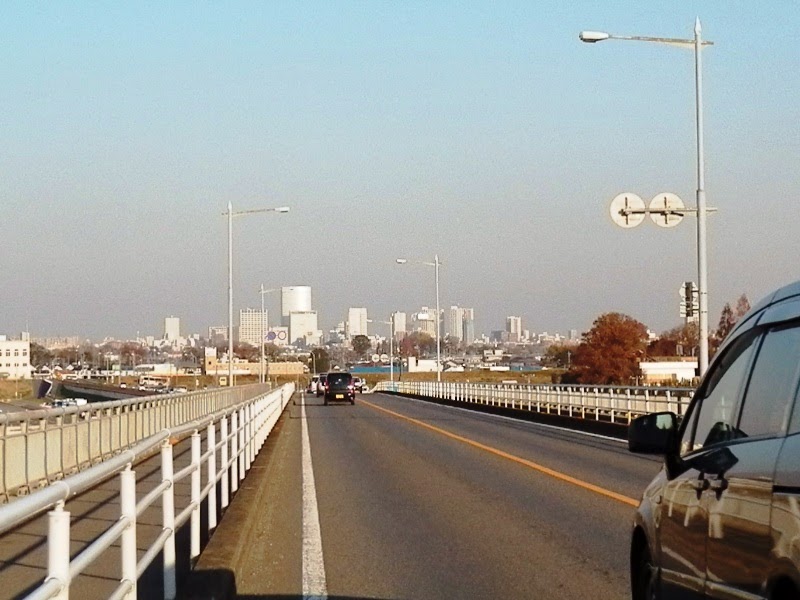
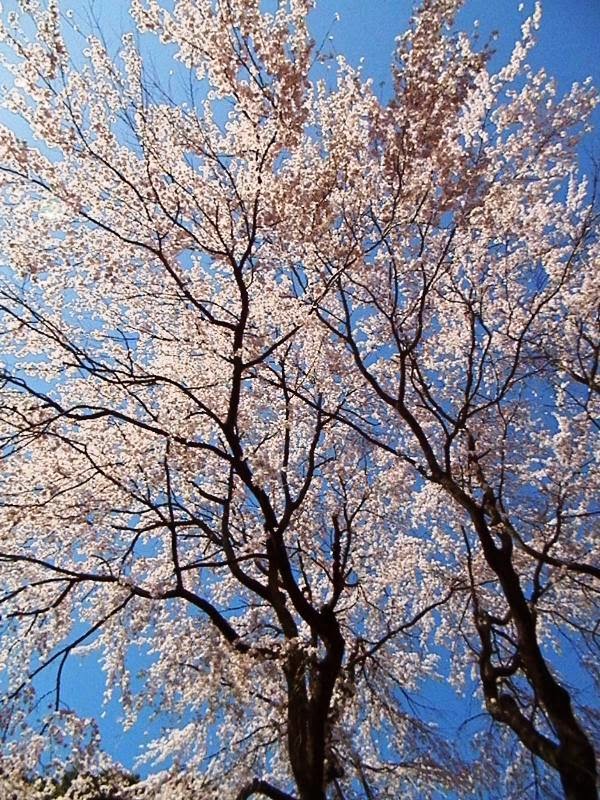
Cherry Blossoms around Tokyo Today


Haneda and Narita


In 1964, Tokyo hosted summer Olympic Games.  In this year the Japanese Government lifted a ban on Japanese citizens traveling abroad for sight seeing.

However, basically one Japanese citizen was allowed to go abroad only once per year.  They could bring to foreign countries only $500 or less with themselves.

In 1966, the restriction on the number of times for overseas traveling was abolished.  In 1970, the Boeing 747 was introduced into the Japanese air transportation.  Jumbo jets drastically increased the number of Japanese who made overseas trip, though only a little less than 500,000 Japanese went abroad in 1969.

In 1978, Narita International Airport was opened after big delay.  The number of Japanese flying abroad continued to increase without stagnation to 17 million in 1995.  Since then after some ups and downs, it finally reached 18,490,000 in 2012.

Originally, Tokyo started international air transportation from Haneda International Airport in 1931.  Haneda is situated in Ota Ward, Tokyo Prefecture.  It takes about 30 minutes by train, monorail, or bus or taxi from Tokyo Railroad Station to Haneda Airport.

But, since 1978, Narita Airport (with only one 4 km runway till 2002) has been positioned as the main international airport for Tokyo while Haneda has become a hub airport for domestic flights. For reference, it takes about one hour by train from Tokyo Station to Narita Airport located in Chiba Prefecture northeast of Tokyo. 

However, recently with expansion of Haneda airport, more and more international air carriers have come to use Haneda.  Accordingly, foreigners visiting Japan are split into Narita and Haneda.


        Number of Visiting Foreigners at Two Main Airports in 2013
       
NARITA............4,263,463    

HANEDA..........1,293,083


Narita International Airport has a unique history.  In the aftermath of the anti-Vietnam War movement, Japanese leftist groups and students were violently against the opening of this new international airport in late 1960s and 1970s.  So, even today, anti-Narita Airport movement holds some plots within the area included in Narita Airport.  That is why Narita has still only one 4,000 meter runway in addition to one 2,500 meter runway.
Around 1966, a group of local residents combined with student activists and left-wing political parties formed a popular resistance group known as the Sanrizuka-Shibayama Union to Oppose the Airport, which remained active until fracturing in 1983.[7] Similar strategies had already been employed during the postwar era to block the expansion of Tachikawa Air Base and other US military facilities in Japan.[7] In June and July 1966, the Union sent formal protests to the mayor of Narita, the governor and vice-governor of Chiba Prefecture and the prefectural office of the Liberal Democratic Party.[7] In November 1967, when the Transport Ministry began surveying the perimeter of the airport, Union members set up roadblocks. The Zengakuren radical student union then began sending students to Narita to help the local farmers.[7] 
Eminent domain power had rarely been used in Japan up to that point. Traditionally, the Japanese government would offer to relocate homeowners in regions slated for expropriation, rather than condemn their property and pay compensation as provided by law. In the case of Narita Airport, this type of cooperative expropriation did not occur: some residents went as far as using terror by threatening to burn down new homes of anyone who would voluntarily move out.[citation needed] 
Under the 1966 plan, the airport would have been completed in 1971, but due to the ongoing resettlement disputes, not all of the land for the airport was available by then. Finally, in 1971, the Japanese government began forcibly expropriating land. 291 protesters were arrested and more than 1,000 police, villagers and student militants were injured in a series of riots, notably on September 16, 1971, when three policemen were killed in a riot involving thousands. Some protesters chained themselves to their homes and refused to leave.
http://en.wikipedia.org/wiki/Narita_International_Airport#Construction
So, for some old Japanese Narita is not an ear-pleasing name of a place.  However, if an inland earthquake occurs in or around Tokyo, Haneda Airport would be more damaged and dangerous.  You had better get in and leave Japan through other international airports than Narita or Haneda.  

http://turbos86.harowota.com/2013/08/traveling-from-the-airport-into-tokyo/


*** *** *** ***


Mar 3:31 There came then his brethren and his mother, and, standing without, sent unto him, calling him.
Mar 3:32 And the multitude sat about him, and they said unto him, Behold, thy mother and thy brethren without seek for thee.
Mar 3:33 And he answered them, saying, Who is my mother, or my brethren?
Mar 3:34 And he looked round about on them which sat about him, and said, Behold my mother and my brethren!
Mar 3:35 For whosoever shall do the will of God, the same is my brother, and my sister, and mother.

Sunday, March 30, 2014

"He hath an unclean spirit" - Providence for the First Emperor of China


Cherry Blossoms this Rainy Evening around Tokyo


Providence for the First Emperor of China

In 219 BC, the First Emperor of China, namely the king of Qin, conducted a special ritual at the summit of Mt. Tai all alone in order to glorify his great success of unifying the whole China.
Mount Tai is one of the "Five Great Mountains". It is associated with sunrise, birth, and renewal, and is often regarded the foremost of the five. Mount Tai has been a place of worship for at least 3,000 years and served as one of the most important ceremonial centers of China[4] during large portions of this period. 
Religious worship of Mount Tai has a tradition dating back 3,000 years, from the time of the Shang (c. 1600–1046 bc) to the Qing Dynasty (1644–1912). Over time, this worship evolved into an official imperial rite and Mount Tai became one of the principal places where the emperor would pay homage to heaven (on the summit) and earth (at the foot of the mountain) in the Feng (Chinese: 封; pinyin: Fēng) and Shan (Chinese: 禪; pinyin: Shàn) sacrifices respectively.  
In 219 bc, Qin Shi Huang, the first Emperor of China, held a ceremony on the summit and proclaimed the unity of his empire in a well-known inscription.
http://en.wikipedia.org/wiki/Mount_Tai 
However at the time this ritual was to be conducted by the First Emperor for the first time in 500 years.  It was because China had been in the so-called Period of Warring States since the Zhou dynasty (c. 1046–256 BC) lost its ruling power and hegemony to exist only as a nominal court.  It is also said that before the First Emperor 72 kings had conducted the Feng Shan (Ho Zen in Japanese) ritual on the Mt. Tai.

As records and knowledge about how preceding kings had conducted Fen Shan were lost already, the Fist Emperor consulted Confucian scholars about what to do on the holy mountain.  But those scholars could not satisfy the Emperor.  So, it is said that he performed his own version of the holy ritual, praying to the heaven and the earth.  And what exactly he did was not recorded.

Anyway, his empire of Qin collapsed soon after his death.  The Emperor died in 210 BC and the Qin dynasty fell in 206 BC through fierce battles against insurgents.

Though kings and lords in China, including  the First Emperor, did not behave like a man of virtue who followed teaching of Confucius, Mencius, Lao-tze, and other ancient philosophers, they at least showed their respect for the great spirits of the heaven and the earth.    
 
According to Chinese myths, there ware the legendary Three Sovereigns and Five Emperors in the holy era of the past history before the first known kingdom was built.

Records of the Grand Historian by Sima Zhen described the Three Sovereigns were Heavenly Sovereign (天皇), Earthly Sovereign (地皇), Tai Sovereign (泰皇). The Chinese expression of emperor, huangdi (皇帝) was created by combining the word Sovereign (皇) and the word Great King (帝) by the First Emperor of Qin.  (This kanji expression of Emperor is pronounced Koutei in Japanese.)

And, Japan adopted the kanji expression of Heavenly Sovereign (天皇) to express the title of the Japanese emperor.  Nonetheless, it is pronounced Ten-no in Japanese but not Koutei.

Anyway the supreme political power both in China and Japan is originally linked to the concept of heaven and providence.  It might be akin to the God of Hebrews.


*** *** *** ***

Mar 3:28 Verily I say unto you, All sins shall be forgiven unto the sons of men, and blasphemies wherewith soever they shall blaspheme:
Mar 3:29 But he that shall blaspheme against the Holy Ghost hath never forgiveness, but is in danger of eternal damnation.
Mar 3:30 Because they said, He hath an unclean spirit.

Saturday, March 29, 2014

"this my joy therefore is fulfilled"


Tokyo


*** *** *** ***


Joh 3:29 He that hath the bride is the bridegroom: but the friend of the bridegroom, which standeth and heareth him, rejoiceth greatly because of the bridegroom's voice: this my joy therefore is fulfilled.


"Say not unto thy neighbour, Go, and come again" - A Whole Set of Sutras


A Shinto Shrine in Tokyo


A Whole Set of Sutras

There was one remarkable Buddhist priest in the 17th century or in the Edo period of Japan under the rule of the Tokugawa samurai clan.  When he was a 36 year old Zen monk, he decided to accomplish a big deed of printing all the Buddhist sutras.
Tetsugen Dōkō (1630 – 1682) was a Japanese Zen Master, and an important early leader of the Ōbaku school of Buddhism.

The following story is told of Tetsugen's efforts to publish the sutras.

Tetsugen decided to publish the sutras, which at that time were available only in Chinese. The books were to be printed with wood blocks in an edition of seven thousand copies, a tremendous undertaking.

Tetsugen began by travelling and collecting donations for this purpose. A few sympathizers would give him a hundred pieces of gold, but most of the time he received only small coins. He thanked each donor with equal gratitude. After ten years Tetsugen had enough money to begin his task.

It happened that at that time the Uji River overflowed. Famine followed. Tetsugen took the funds he had collected for the books and spent them to save others from starvation. Then he began again his work of collecting.

Several years afterward an epidemic spread over the country. Tetsugen again gave away what he had collected.

For a third time he started his work, and after twenty years his wish was fulfilled. The printing blocks which produced the first edition of sutras can be seen today in Ōbaku monastery in Kyoto.
The Japanese tell their children that Tetsugen made three sets of sutras, and that the first two invisible sets surpass even the last.
http://en.wikipedia.org/wiki/Tetsugen_Doko
In China and Japan, a complete set of all the Buddhist scriptures is called Issai-Kyo (in Japanese pronunciation) or the whole set of sutras.  This set comprises 6,965 books.  They are divided into the three categories: Kyo (in Japanese), books of doctrines the Buddha taught, Ritsu (in Japanese), books of warnings and instructions about living of monks, and Ron (in Japanese), books containing teaching and explanation by the Buddha and his disciples about Kyo and Ritsu,

To produce Issai-Kyo, wood-block printing was applied.  Issai-Kyo was once printed and issued only twice separately in China and Japan.  But in Japan it is admitted today that it was Tetsugen Doko that made this whole set of sutras widely known to and learnt by the public.

Specifically, Tetsugen printed 7,334 books in 1,618 volumes in 1678, according to a record.  He dedicated them to ex-emperor with a Buddhist title Go-Mizunoo (1596 – 1680).  And in 1681, he officially made printed sutras available to the public, while the printing was made possible based on religiously goodwill donation from 8,000 people including farmers, townsmen, and samurai lords.

Any Buddhist scriptures any school of Buddhists uses are included in Issai-Kyo consisting of about 7,000 books.

Part of Tetsugen's Whole Set of Sutras
http://www.city.nishio.aichi.jp/index.cfm/8,17641,91,408,html


*** *** *** ***


Pro 3:27 Withhold not good from them to whom it is due, when it is in the power of thine hand to do it.
Pro 3:28 Say not unto thy neighbour, Go, and come again, and to morrow I will give; when thou hast it by thee.
Pro 3:29 Devise not evil against thy neighbour, seeing he dwelleth securely by thee.
Pro 3:30 Strive not with a man without cause, if he have done thee no harm.

Thursday, March 27, 2014

"but by the law of faith" - No More Execution


Shinagawa Ward, Tokyo


No More Execution 

A prisoner whose death sentence was finally fixed more than 30 years ago for a murder case which occurred about 50 years ago was released today from Tokyo Detention House.
Iwao Hakamada, the world’s longest-serving death row inmate, released after new DNA evidence revealed
AFP MARCH 27, 2014 5:34PM 
A JAPANESE court has decided to release a man on death row for more than 40 years in a high-profile murder case based on new DNA evidence. 
The Shizuoka District Court on Thursday suspended the death sentence for 78-year-old Iwao Hakamada and ordered him released after 48 years behind bars. Guinness World Records lists him the longest-serving death row inmate. 
He was originally sentenced to death in 1968 and the supreme court confirmed his death sentence in 1980. 
“The court suspends death sentence and confinement of the person who had been ruled guilty,” a court official said. 
Hakamada, a professional boxer, was convicted of killing a company manager and his family and setting fire to their central Japan home, where he was a live-in employee.
The court says DNA analysis obtained by his lawyers suggests investigators fabricated evidence. It also ordered a retrial.
http://www.theaustralian.com.au/news/iwao-hakamada-the-worlds-longestserving-death-row-inmate-released-after-new-dna-evidence-revealed/story-e6frg6n6-1226866659279
In 2013, Japan Federation of Bar Associations reported that those who support or do not deny employment of capital punishment accounted for 56%.  In fact, Japan has still the capital punishment system.

Indeed it is very absurd for the police to pick up somebody as a criminal for a murder case, where two or more victims were killed cruelly, after long and complicated investigations despite concrete and persuading evidence and for public prosecutors and judges to almost blindly accept his confession under coercion only to sentence him to death.

From a viewpoint of interest of mankind, it is necessary to prevent death of anybody, including a murderer, after a murder case, since too many people are to die.   Any act by human beings to increase a number of dead men must not please God, even if it is an execution based on due judicial procedures.

Now there are 130 inmates sentenced to death in Japan.  In the US there are about 3,300.  In China, death penalty is reportedly executed on about 4,000 people every year.  


The Supreme Court of Japan
http://www.courts.go.jp/about/sosiki/saikosaibansyo/


*** *** *** ***


Rom 3:27 Where is boasting then? It is excluded. By what law? of works? Nay: but by the law of faith.
Rom 3:28 Therefore we conclude that a man is justified by faith without the deeds of the law.
Rom 3:29 Is he the God of the Jews only? is he not also of the Gentiles? Yes, of the Gentiles also:

Wednesday, March 26, 2014

"if Satan rise up against himself" - Courageous Historians


Tokyo Transportation


Courageous Historians 

In ancient China, historians were respected and they respected themselves.

These historians wrote history for their kings.  It was not only an official text book but also an official record of a nation.  Accordingly, a king who employed a historian placed a strong requirement on him.

An official record a historian was to write about a nation where he was employed was expected to satisfy the king of the nation.  But some historians would not simply praise kings they served.  However such a historian was usually punished by a king.

In one example, a historian did not write a history book in a manner to satisfy a king.  So, he was executed by the king.  Then a son of the historian succeeded his father to become a new historian.  But the new historian also presented truth and plain facts in the book he wrote without making a flattering remark for the king.  Then again, the king executed the historian.  Finally a son of this brave but tragic historian or a grandson of the first historian for the king took up this important position in the court.  He also honestly wrote a history book of the nation, depicting the king and his deeds as he was and they were.  Despite anger, the king did not punish this last historian for some reason.

Anyway, writing history was so important and dangerous in ancient China.  Official historians working in the court of kingdoms were all under strong pressure.     But not all the historians offered adulation to their kings.  Truth was reported by some courageous and righteous historians.  Or any despot could not completely destroy or distort truth.


Luk 12:2 For there is nothing covered, that shall not be revealed; neither hid, that shall not be known.
Luk 12:3 Therefore whatsoever ye have spoken in darkness shall be heard in the light; and that which ye have spoken in the ear in closets shall be proclaimed upon the housetops.
Luk 12:4 And I say unto you my friends, Be not afraid of them that kill the body, and after that have no more that they can do.


*** *** *** ***


Mar 3:26 And if Satan rise up against himself, and be divided, he cannot stand, but hath an end.

Tuesday, March 25, 2014

"between some of John's disciples and the Jews" - Seasons


Around Tokyo Station


Seasons

The winter is going to end.

The human civilization started in sub-tropical regions, such as Mesopotamia, Egypt, India, Greece, the Chang Jiang River region of south China, and other regions without cold winter.

But it was extended and deployed in temperate zones, such as the Italian Peninsula, the central China, etc.  Then the Industrial Revolution was set off in England, part of north Europe.

Judaists moved on the earth along with progress and development of civilization.  They reached and prevailed around Germany before WWII, and then a great tragedy happened due to Hitler and Nazis.

Then after WWII, roughly a half of Judaists returned to Palestine featured by a temperate climate while another half immigrated into North America which has wider areas covering the tropical zone to the cold zone.

So, if this progress of the human history is so reasonable even from a viewpoint of Judaists like shifts of seasons on the earth, Israel seems to be a kind of the Old Testament for Judaists living today, and the US seems to be a kind of the New Testament for them.

In future, American Christianity might be integrated into American Judaism eventually.  And Americans might move from a zone to other, according to their spiritual states as if repeating the past history.

Now the time in the North Hemisphere is going to head for the hottest days in August.


*** *** *** ***


Joh 3:25 Then there arose a question between some of John's disciples and the Jews about purifying.
Joh 3:26 And they came unto John, and said unto him, Rabbi, he that was with thee beyond Jordan, to whom thou barest witness, behold, the same baptizeth, and all men come to him.
Joh 3:27 John answered and said, A man can receive nothing, except it be given him from heaven.
Joh 3:28 Ye yourselves bear me witness, that I said, I am not the Christ, but that I am sent before him.

Monday, March 24, 2014

"all the prophets from Samuel" - A Buddha Inside


Tokyo Downtown Tramcar Line


A Buddha Inside

Christianity is simple in that it is based on a notion that there are only two major players: men and God.

Compared with God, any difference among human beings can be nil.

But Buddhism is different.  There are many stages to reach the status of the Buddha who masters every law and secret of the universe, including life, death and transmigration.

In Buddhism where existence of the sole creator of the universe is not admitted, a man is required to enhance himself as high as possible.  And the end of this effort is the status of the Buddha.  Though the Buddha is not the creator of the universe, he transcends any effect the universe has on a man.  His status is in this context on a par with the universe.

Buddhism must be based on a theory that the whole universe, including the spiritual universe, cannot be built by anybody or any spirits and gods.  It is overwhelmingly great and complicated.  It is beyond ability of any human beings, spirits, and gods.  All a man should do and can do is to understand the universe fully and stand aloof from it like the Buddha.  In this logic, God of Christianity can be the universe.  But an act of creating the universe is a concept beyond Buddhism.

One unique doctrine of some schools of the Japanese Buddhism is that a monk should perform the ascetic and religious practices to become the Buddha eventually.  But it is possible only if a monk has the same internal characteristics as the Buddha.  Put simply, as a monk is a Buddha, he can become the Buddha through rigorous training.  If he is a mere man or an animal, no matter how hard he may train himself he cannot reach the status of the Buddha.
     
In other word, to find merit in himself which is a Buddha in the essence of his existence is an end of the ascetic and religious practices in Buddhism, according to some schools of Japanese Buddhism.

But Christianity never tells a believer to discover a god in his mind so as to be saved.  A believer is saved as a man by God for his proven faith.

But according to a theory of some schools of Japanese Buddhism, every one must have the same virtue and condition as the Buddha.  Therefore, some monks who could realize this truth can become a Buddha to attain higher perception through religious training.

Finally, it seems that a man cannot fully understand or comprehend God of Christianity, the sole designer and builder of this universe, but a man may fully grasp what the Buddha is through his inner Buddha.


A Japanese Buddhist Priest in the later Samurai Era
http://www.gokusho.info/info/eventinfo/2013/04/post-33.html


*** *** *** ***


Act 3:23 And it shall come to pass, that every soul, which will not hear that prophet, shall be destroyed from among the people.
Act 3:24 Yea, and all the prophets from Samuel and those that follow after, as many as have spoken, have likewise foretold of these days.

Sunday, March 23, 2014

"being (as was supposed) the son of Joseph," - Old Evacuees from Fukushima Daiichi Town


Tokyo Downtown Districts


Old Evacuees from Fukushima Daiichi Town

As of September 2012, there were more than 51,000 Japanese citizens who were 100 years old or older.

It was the first time that the number of 100 years-old persons reached 50,000 in Japan.

One of them, Mr. Yoshida, was born in Okuma Town where the Fuksuhima Daiichi Nuclear Power Plant is situated.  He came to Tokyo with his family when he was an elementary school boy.  Then he encountered the Greta Kanto Earthquake in a downtown of Tokyo.  This 1923 Great Earthquake took on about 100,000 people.

Later Mr. Yoshida became an English teacher and married a woman who was also from Fukushima Prefecture.  However the Empire of Japan joined WWII in 1941 and the young English teacher was called into the armed forces of the Empire.  Troops he was assigned to was sent to Manchuria, presently northeast China.

During the war, his wife stayed in Tokyo, but air raids on Tokyo by the US air force became intensified.  Accordingly she returned to Fukushima.  And, a month later Tokyo suffered a big bombing by American B29s which killed more than 100,000 citizens.  If she had continued to live in Tokyo, she should have been killed, since her old residence was in a devastated area of Tokyo City.

After WWII, namely August 1945, Mr. Yoshida, with troops he belonged to, surrendered to Soviet Union troops to be captive soldiers.  He was forced to work in Siberia as with other 600,000 ex-Japanese soldiers.  Nonetheless Mr. Yoshida was luckily released in September 1948.  After returning to Japan, he worked as an English teacher in junior high-schools in Fukushima Prefecture till he retired.

He was living peacefully with his eldest son aged 75 in Okuma Town when the 3/11 Great Earthquake and Tsuami and the subsequent Fukushima Daiichi Nuclear Power Plant Accident occurred.  The tsunami rushed from the Pacific Ocean to the point several hundreds meters before Mr. Yoshida's house.  Then hours later, people in Okuma Town were ordered to evacuate due to the Nuclear Accident.

Mr. Yoshida and his wife are now living in a shelter house far from Okuma Town and the Fukushima Daiichi Plant.  The very old couple still hope to return to Okuma Town some day in five years or so.          

Okuma Town with Fukushima Daiichi Nuclear Power Plant
http://www.panoramio.com/photo/68457103


*** *** *** ***


Luk 3:22 And the Holy Ghost descended in a bodily shape like a dove upon him, and a voice came from heaven, which said, Thou art my beloved Son; in thee I am well pleased.
Luk 3:23 And Jesus himself began to be about thirty years of age, being (as was supposed) the son of Joseph, which was the son of Heli,
Luk 3:24 Which was the son of Matthat, which was the son of Levi, which was the son of Melchi, which was the son of Janna, which was the son of Joseph,

Saturday, March 22, 2014

"Moses truly said unto the fathers" - The Most Responsible Country: the US


Around the Tokyo Station


The Most Responsible Country: the US

What is the state of global poverty?
The United Nations Food and Agriculture Organization estimates that nearly 870 million people of the 7.1 billion people in the world, or one in eight, were suffering from chronic undernourishment in 2010-2012. Almost all the hungry people, 852 million, live in developing countries, representing 15 percent of the population of developing counties. There are 16 million people undernourished in developed countries (FAO 2012). 
The number of undernourished people decreased nearly 30 percent in Asia and the Pacific, from 739 million to 563 million, largely due to socio-economic progress in many countries in the region. The prevalence of undernourishment in the region decreased from 23.7 percent to 13.9 percent. 
Latin America and the Caribbean also made progress, falling from 65 million hungry in 1990-1992 to 49 million in 2010-2012, while the prevalence of undernourishment dipped from 14.6 percent to 8.3 percent. But the rate of progress has slowed recently. 
The number of hungry grew in Africa over the period, from 175 million to 239 million, with nearly 20 million added  in the last few years. Nearly one in four are  hungry. And in sub-Saharan Africa, the modest progress achieved in recent years up to 2007 was reversed, with hunger rising 2 percent per year since then.
Developed regions also saw the number of hungry rise, from 13 million in 2004-2006 to 16 million in 2010-2012, reversing a steady decrease in previous years from 20 million in 1990-1992 (FAO 2012). 
The above is based on the new estimates of world hunger by the FAO using revised  proceedures. It is worth noting that the new estimates give a different answer than the old estimates as the graph below shows (Lappe, 2013).
http://www.worldhunger.org/articles/Learn/world%20hunger%20facts%202002.htm
Poverty is not a crime of the poor but of the rich.  Being rich while others are poor is a social crime, an ethical evil deed, and a religious sin.  This sin can be seen among people in any country and among countries in the world.

The US has been the most wealthy for a century and more.  Therefore it is the most responsible in terms of this sin domestically and internationally.

Trend of GDP by Major Countries
http://www.pirineosturismoreceptivo.com/2012/08/gdp.html

The US has a duty to solve problems arising from the gap between the rich and the poor.  With its economic, social, and cultural power, it must make full efforts to eradicate evils rooted in social conditions featured by the inequality in the distribution of wealth.  The US must contribute to achieving peace in the world where a war is often triggered by countries in their process of securing wealth and resources.  It is because the more you are given, the more you are requested from.
12:48 But he that knew not, and did commit things worthy of stripes, shall be beaten with few stripes. For unto whomsoever much is given, of him shall be much required: and to whom men have committed much, of him they will ask the more.
Once the US officially announced that it had a mission to make freedom and democracy prevail in the world.  It must realize that it has still an obligation to eradicate poverty internally and globally.  For this purpose, the US does not have to rely on its military strength.  But it must open its resources and products of its industry to the world.  Universities in the US can invite excellent students from the world, but its end should be to make their home countries rich and developed to the level of the US but not to make the US richer and more advanced than other countries.

In this context, the first country in the world to be judged and punished by Christ Jesus on His second coming must be the US.


*** *** *** ***


Act 3:22 For Moses truly said unto the fathers, A prophet shall the Lord your God raise up unto you of your brethren, like unto me; him shall ye hear in all things whatsoever he shall say unto you.
Act 3:23 And it shall come to pass, that every soul, which will not hear that prophet, shall be destroyed from among the people.

Friday, March 21, 2014

"sit with me in my throne" - Reciting Namu Ami Dabutsu


Around the Imperial Palace, Tokyo


Reciting Namu Ami Dabutsu

There are wise men everywhere.

And people know wisdom makes people live wisely and smartly.  However, to make their living comfortable, most of wise men use their wisdom to obtain wealth and social status.  As such rich people with high position do not mind existence of and take care of poor and unlucky people, this world becomes so sinful and tragic for all.

So apart from how much wise a person is, Christ Jesus tells to learn and follow teachings of God.  Since human wisdom makes only wise men happy, He requests people to learn wisdom of God to make everybody saved and blessed.

How human wisdom is regarded by Christ Jesus is so simple.  It never saves people and never improves society.  It is because a man surely tries to use his wisdom for his interest but not for others.  So, Christ Jesus tells people to abandon their wisdom but learn and practice wisdom of God.

However, in Buddhism where existence of the sole creator of the whole universe is not admitted, wisdom is the only means with which a man can save himself.  So, Buddhists try to learn the highest wisdom Gautama Buddha acquired, since such wisdom would make them conquer every pain in this world and fear of death.  They want to be free from the cruel and rotten world and their fates of suffering cycles of birth in the helpless world eventually.

But, in order to get higher wisdom, a man has to train himself not only in terms of religious knowledge but also spiritual experiences.  It will take years and decades for a monk to reach a certain level of wisdom any other Buddhists would recognize as highly advanced and deeply insightful.  Life, pains, unhappiness, death, good, evil, and any other mental objects must be exhaustively examined and reviewed by a monk for him to grab a piece of truce of the inner space.

Of course, there is a long history in the Buddhism.  There are may precedent examples of ascetic training and study of truce.  Accordingly, there are thousands of holy books and creeds where wisdom of past Buddhists are collected and contained.  That is why a Buddhist monk has to read so many Buddhist scriptures to master teachings of Gautama Buddha and his followers.

Nonetheless, some past leading Buddhist priests in Japan invented a new way of practicing Buddhism.   They proposed just chanting some simple religious expression or prayer to the Buddha, for example, "Namu Ami Dabutsu.".  They said, actually hundreds years ago, that farmers and other poor people did not have to learn difficult characters and read creeds but had better chant some simple but effective prayer to the Buddha or other deities of Buddhism.  Of course it was not a simple imprudent idea.  Schools founded by those priests produced many religious works and books to explain how such a practice was effective.
Hōnen (1133 – 1212) is the religious reformer and founder of the first independent branch of Japanese Pure Land Buddhism called Jōdo-shū ("The Pure Land School"). In the related Jōdo Shinshū sect, he is considered the Seventh Patriarch. Hōnen became a monk of the Tendai sect at an early age, but grew disaffected, and sought an approach to Buddhism that anyone could follow, even during the perceived Age of Dharma Decline. After discovering the writings of Chinese Buddhist, Shan-tao, he undertook the teaching of rebirth in the Pure Land of Amitabha through reciting the Buddha's name, or nembutsu. 
Hōnen's teachings: 
Reciting the nembutsu does not come from studying and understanding its meaning. There is no other reason or cause by which we can utterly believe in attaining birth in the Pure Land than the nembutsu itself. Reciting the nembutsu and believing in birth in the Pure Land naturally gives rise to the three minds (sanjin) and the four modes of practice (shishu). If I am withholding any deeper knowledge beyond simple recitation of the nembutsu, then may I lose sight of the compassion of Shakyamuni and Amida Buddha and slip through the embrace of Amida's original vow. Even if those who believe in the nembutsu deeply study all the teachings which Shakyamuni taught during his life, they should not put on any airs and should practice the nembutsu with the sincerity of those untrained followers ignorant of Buddhist doctrines.
http://en.wikipedia.org/wiki/H%C5%8Dnen#Doctrine
Anyway the essence in nembutsu recitation is to direct one's mind to the spirit of the Buddha beyond any worldly matters and unholy spiritual matters.


*** *** *** ***


Rev 3:21 To him that overcometh will I grant to sit with me in my throne, even as I also overcame, and am set down with my Father in his throne.
Rev 3:22 He that hath an ear, let him hear what the Spirit saith unto the churches.

Thursday, March 20, 2014

"the multitude cometh together again" - Sarin Gas Attack in Tokyo


Tokyo Suburbs

Sarin Gas Attack in Tokyo

The most impressive incident for the Tokyo Metropolitan Police Department in 140 years of its history is the Aum Shinrikyo cult terror using a sarin gas in 1995.

This horrible terror was conducted in several cars of subway trains running under business zones of central Tokyo.   Sarin gas released by cult members in crowded vehicles killed 13 commuters and subway staff members and injured 6,300 office workers who were heading their workplaces in Tokyo.
The sarin attack on the Tokyo subway, usually referred to in the Japanese media as the Subway Sarin Incident was an act of domestic terrorism perpetrated by members of Aum Shinrikyo on March 20, 1995. 
In five coordinated attacks, the perpetrators released sarin on several lines of the Tokyo subway, killing thirteen people, severely injuring fifty and causing temporary vision problems for nearly a thousand others. The attack was directed against trains passing through Kasumigaseki and Nagatachō, home to the Japanese government. It is the most serious attack to occur in Japan since the end of World War II.
http://en.wikipedia.org/wiki/Sarin_gas_attack_on_the_Tokyo_subway
The leader of the cult, Chizuo Matsumoto (1955-), called himself Shoko Asahara.  He was actually a pseudo-religious organizer talented in practicing yoga and delivering religious theory where Buddhism and Hinduism are mixed.  He also abused an eschatologic view employed from Christianity.

Aum Shinrikyo had about 10,000 members at its peak of activities around 1990.  It also earned $70 million per year through its business involving computer shops.  This cult was remarkably efficient in recruiting new followers from the campus of notable universities in Japan and acquiring rich believers to force them to donate money to the cult as much as possible.  It was suspected that Aum Shinrikyo had strong ties with some Japanese crime syndicates, the Russian Mafia, and North Korean agents.
 
Matsumoto, the guru of the cult, had a crazy plan to attack the administrative district of the central government.  He tried to kill bureaucrats and occupy core organizations of the Japanese Government in Tokyo, using his brainwashed followers armed with AK-47 rifles and sarin gas, in order to establish his own regime.  For this purpose, Aum Shinrikyo had factories where AK-47s and sarin were secretly produced by cult engineers and members.

Nonetheless, since this plan was leaked to the police and Matsumoto realized it, he launched, in a proactive manner, the sarin gas attack in Tokyo subway lines running though governmental districts of Tokyo.      

However, the headquarters of Aum Shinrikyo situated at the foot of Mt. Fuji were raided by 2,500 policemen two days after the sarin gas attack in Tokyo.  The cult organization and management collapsed as many leading figures of the cult were arrested.  Two months later Matsumoto or Asahara was found and arrested in one of buildings in the headquarter precincts.  He was sentenced to death in a judicial court and this judgment was finally fixed in 2013 after long judicial processes.

Though it is said that the ex-guru of Aum Shinrikyo behaves like a mad man in the cell, there seems to be no chance for him to escape from death penalty.  But, his death might make him a martyr hundreds of remaining members of the cult, which changed its name already, would respect and revere all the more.  The competent government office might be caught in a dilemma.

So, this is the most impressive incident for the Tokyo Metropolitan Police Department in 140 years of its history: the Aum Shinrikyo cult incident involving a sarin gas attack in Tokyo subway lines which was set off on March 20, 1995.

Aum Shinrikyo Cult Headquarters
http://www.npa.go.jp/hakusyo/h08/h080102.html

Raid by the Police on Cult Precincts, Taking out Chemicals Used for Sarin Production
http://blogos.com/article/42874/


*** *** *** ***


Mar 3:20 And the multitude cometh together again, so that they could not so much as eat bread.
Mar 3:21 And when his friends heard of it, they went out to lay hold on him: for they said, He is beside himself.
Mar 3:22 And the scribes which came down from Jerusalem said, He hath Beelzebub, and by the prince of the devils casteth he out devils.
Mar 3:23 And he called them unto him, and said unto them in parables, How can Satan cast out Satan?

Wednesday, March 19, 2014

"for all the evils which Herod had done" - The Diary of Anne Frank


Tokyo Suburbs


The Diary of Anne Frank

In Japan a 36-year old jobless man damaged and torn pages in 300 or more copies of The Diary of Anne Frank mostly in scores of public libraries in Tokyo.
Authorities in Tokyo have arrested an unidentified 36-year-old male for vandalizing books related to Anne Frank, including The Diary of a Young Girl (The Diary of Anne Frank). More than 300 copies of books related to Anne Frank have had their pages torn out throughout the city. 
Tokyo police say the unemployed suspect admitted to vandalizing 23 copies of Frank-related material at a library on February 5th. In addition, it has been reported that some of the torn pages were discovered at an undisclosed residence in the capital. Although his motives appear unclear, many Japanese media outlets have reported that there are doubts regarding the suspect’s mental competency. 
Authorizes are investigating further to determine if the individual is involved with incidents of vandalism that have occurred at 38 libraries in Tokyo since last month. 
The Diary of Anne Frank was first published in 1947 in Amsterdam. It was first published in English in 1952, and likewise, in Japanese, quickly becoming an international bestseller. 
http://www.shalomlife.com/culture/22370/man-arrested-for-vandalizing-anne-frank-book-in-japan/

The arrested man reportedly said to the police that he wanted to assert publicly that The Diary of Anne Frank was not written by Anne Frank.  The police seems to suspect that this crime suspect is mentally impaired.

Though the Empire of Japan allied with Nazi Germany during WWII, the Japanese people have had no racial prejudice on Judaists.  Most of the Japanese people know the title, The Diary of Anne Frank, and probably read it once in their lives.  And they are all impressed positively by the book and Anne Frank.  It is popular enough to be targeted by a mad man, in a sense.

However it is still unknown why and how Satan has used this criminal in Tokyo to issue any warning to Judaists in the world.

One thing sure is that if Anne Frank had been able to flee to the U.S., she must have had a happy life.


*** *** *** ***


Luk 3:19 But Herod the tetrarch, being reproved by him for Herodias his brother Philip's wife, and for all the evils which Herod had done,
Luk 3:20 Added yet this above all, that he shut up John in prison.

Tuesday, March 18, 2014

"he that believeth not is condemned" - Earthquakes in the Pacific near Tokyo


Around Tokyo Suburbs

Earthquakes in the Pacific near Tokyo

The Tokyo area is evaluated scientifically to have a local earthquake of a magnitude 7 or more at any moment or at a possibility of 80% in the coming 30 years.

But the Pacific Ocean off the Boso Penisula situated between Tokyo Bay and the Pacific is also a candidate to cause a big earthquake, since the sea area has had earthquakes, as shown below, for 30 days from the end of 2013 to January 2014.

http://blog.inmycab.com/saitama/20693/

This south Kanto Area suffered at least three times M8-class earthquakes in the past: one in 1677 (noted as M8.5), one in 1703 and other in 1923 as shown below.

http://tokyodisaster.blogspot.jp/2014/01/blog-post.html
 http://plaza.rakuten.co.jp/555yj/diary/201110310002/

Though an interval of these subducition-zone earthquakes is said to be 200 to 400 years, an inland earthquake can be set off during the interval.

Anyway 330 years have passed since the 1677 Enho Boso Earthquake.  Tokyo should be on alert, since such an earthquake could cause at least a few meter-high tsunami in Tokyo Bay, inundating a large urban area on the bay even if it is a few meters high.

To make sure, for this reason, the 2020 Tokyo Olympics must be cancelled.


*** *** *** ***


Joh 3:17 For God sent not his Son into the world to condemn the world; but that the world through him might be saved.
Joh 3:18 He that believeth on him is not condemned: but he that believeth not is condemned already, because he hath not believed in the name of the only begotten Son of God.

Monday, March 17, 2014

”through ignorance ye did it” - Radioactive Labor Structure in Fukushima Daiichi


Shinkansen Trains, Japan


Radioactive Labor Structure in Fukushima Daiichi

The evil of the nuclear power industry is in its labor structure.

Permanent employees of nuclear power generation plants usually do not tackle tasks where they may be exposed to high radioactive doses, but workers hired by second-tire or third-tire contractors are assigned to radioactively dangerous jobs in plants.

Owners or operators of nuclear power generation plants are usually large companies recognized as excellent ones in terms of financial and social status.  Regular employees of such companies are well protected by management.  From those employees, future leaders of the nuclear industry might emerge.  They are under life-long protection of the nuclear industry.

So, they use subcontractors for dangerous jobs in a nuclear power plant.  And a main subcontractor usually use a second-tire subcontractor which in turn contracts a third-tire subcontractor.  This chain of weird outsourcing continues often to involve sixth or seventh-tire subcontracting.  A little generous wages an electric power generation company pays to one worker, who is expected to work in a highly contaminated environment, reduce substantially when they reach the hand of the worker, since each tire subcontractor takes big portions off them.  Sometimes  a subcontract worker employed at the bottom of this hierarchy through a long and complicated chain of subcontracting receives only a half, one third or so of the original wages.  For the worst example, Tokyo Electric Power Co. (TEPCO), the owner of Fukushima Daiichi, pays $1,000 per day to a recovery worker, but the worker actually gets only $100 as subcontractors pick money from the original amount as costs for management or any excuses. 

What is worse, those subcontract workers receive high doses.  It is not only dangerous to their health but also problematic to their professional life.   When their institutional limit of exposure to radiation is exceeded, they are not allowed to work.  And since more and more workers have come to have a higher cumulative radiation dose, it is afraid that there will be shortage of manpower in the Fukushima Daiichi plant in near future.

An average dose for subcontract workers in Fukushima Daiichi was over 1 milli Sievert, but that for regular employees of TEPCO is less than 0.4 milli Sievert as of 2010 when the Fukushima Daiichi accident did not yet occur.

As of 2012 (after the accident in Fukushima was set off in March 2011), there were reportedly 281 subcontract workers whose cumulative dose was between 15 and 20 milli Sievert, but there were no TEPCO stuff who marked this level of dosage.           .          
In one year over 150 workers reached cumulative exposure levels which exceed 5 year upper limit

According to Japanese law, nuclear plant workers can be exposed to no more than 50 millisieverts of radiation per year and 100 millisieverts over the span of 5 years. 
The labor ministry says that as of March 2012, just one year since the onset of the Fukushima nuclear disaster, 167 workers had left the plant with cumulative exposure levels of over 100 millisieverts. 
During the spring months of April, May, and June, 79 workers were exposed to more than 20 millisieverts, and 215 others from 10 to 20 millisieverts. 
University of Tokyo Professor Kazumitsu Nawata warns of the consequences of losing nuclear plant workers with necessary expertise. He says young workers must be trained due to the need for massive manpower to fully bring the Daiichi plant under control.
Nonetheless, the most sinful party is wealthy consumers living in Tokyo and other big cities. Their lavish living has been based on abundant electricity transmitted from power generation plants, once including Fukushima Daiichi and other nuclear power generation plants.  They never suffer a high radiation dose.

The Fukushima Daiichi accident exposed this sinful structure of the industry in terms of safety and welfare of workers as well as dignity of citizens.


*** *** *** ***


Act 3:17 And now, brethren, I wot that through ignorance ye did it, as did also your rulers.
Act 3:18 But those things, which God before had shewed by the mouth of all his prophets, that Christ should suffer, he hath so fulfilled.
Act 3:19 Repent ye therefore, and be converted, that your sins may be blotted out, when the times of refreshing shall come from the presence of the Lord.

Sunday, March 16, 2014

"the Spirit of God descending like a dove" - How Much Spent for Fukushima Daiichi Accident


Shinkansen Trains around Tokyo


How Much Spent for Fukushima Daiichi Accident


Since the start of the Fukushima Daiichi Nuclear Power Plant accident, the Japanese Government and the very utility TEPCO have spent about 8.5 trillion yen or $85 billion for fixing the accident up to date, though it is not yet contained fully.

The breakdown of the costs is as follow:

1. Decontamination Work......$35 billion

2. Damages and Compensation.....$35 billion

3. Restoration from the Accident.....$15 billion

Total................................................$85 billion


According to the Japanese Government, a nuclear power generation plant can generate electricity at cheaper costs than in a thermal power plant using fossil fuels.  To produce electricity of 1 kilo watts per hour, a coal thermal power plant needs costs of 9.5 yen while a nuclear power plant 8.9 yen.  So, the Government and the nuclear industry has been strongly promoting expansion of use of nuclear energy despite the Fukushima Daiichi accident.

The Government has also estimated that the total costs to run a nuclear power plant, including those for reactor decommissioning, damages, and decontamination work, would be $58 billion.

However, the actual costs accumulated in these three years since March 2011 are already $85 billion, as above indicated.   It has exceeded the Government's estimation.

What is worse, the issue of responsibility is still unclear.  Who should take primary responsibility when a large-scale nuclear accident occurs in a nuclear power plant?  To our surprise, this issue is not yet clearly addressed in Japan.  Indeed, nobody in the Government and TEPCO has been indicted for responsibility for failure in preventing the Fukushima Daiichi accident, though criminal investigations were conducted on some politicians and TEPCO executives.

No matter how much Japanese economy is large and Japan has advanced technology, Japan cannot bear suffering another nuclear accident.  It must abandon all of 50 nuclear reactors.


*** *** *** ***


Mat 3:15 And Jesus answering said unto him, Suffer it to be so now: for thus it becometh us to fulfil all righteousness. Then he suffered him.
Mat 3:16 And Jesus, when he was baptized, went up straightway out of the water: and, lo, the heavens were opened unto him, and he saw the Spirit of God descending like a dove, and lighting upon him:
Mat 3:17 And lo a voice from heaven, saying, This is my beloved Son, in whom I am well pleased.