Sunday, July 26, 2015

"much more than a prophet" - Distributed Olympic Games


A Soccer Game around Tokyo


Distributed Olympic Games


Olympic Games should be changed in terms of its management.

With advancement of technologies, telecommunications, transportation, and facilities and equipment, Olympic Games should be carried out in a different way from a conventional one where only one city or a nation hosts whole games of the Olympics.

So far as now Olympics Games have been held in advanced nations in Europe, Americas, and East Asia.  Poor countries seem to have no chances to host the Olympics forever.  I think we have to give poor or developing countries chances to host some games for the Olympics.

For example, Tokyo is expected to host the 2020 Olympic Games.  But it doesn't have to hold all the games in and around Tokyo.  Tokyo should manage the whole Olympic Games but it should assign venues of some of sporting events to cities in some other countries such as Taiwan, the Philippines, and Vietnam that have no chances to host any Olympic sporting events for centuries.

Today global audiences observe sporting events held in any part on the globe on TV and through the Internet in real time.  For them it doesn't matter where such events are held.  Athletes can move quickly from country to country by jet planes.  They can compete, for example, in Vietnam, and they can quickly fly to Tokyo for commendation ceremonies.

Though it seems too late for the 2020 Tokyo Olympics, this new scheme of distributed Olympic Games should be adopted in future, so that more countries can be directly involved in the Olympics.  If this scheme should be adopted, even Libya, Egypt, Israel, Syria, Iraq, Iran, Afghanistan, Pakistan, and India will be able to host some Olympic events.    

Implementation of Olympic Games should be distributed over two or more countries, though one city officially entitled to hold the Olympics should provide the main stadium and should be in charge of whole management of Olympic events.

And then, more countries will enjoy benefit from the Olympics in terms of not only economy but also spirit of peace and sports, while games will be held more economically and securely.


**** **** ****


Luk 7:26 But what went ye out for to see? A prophet? Yea, I say unto you, and much more than a prophet.

Saturday, July 25, 2015

"he, whom they seek to kill"


Humble Summer Festival around Tokyo


**** **** ****


Joh 7:25 Then said some of them of Jerusalem, Is not this he, whom they seek to kill?

Friday, July 24, 2015

"which built his house upon a rock" - Mt. Fuji Cures Ailing Hearts


Imperial Palace Plaza, Tokyo


Mt. Fuji Cures Ailing Hearts

There is a unique conservative critique in Japan.

Susumu Nishibe (1939-) was inclined to leftist ideologies before 1970 when the Vietnam War was being intensified.  But he changed his philosophy, thinking that leftists would sooner or later start to kill one another.

Indeed the leftists boom in Japan symbolized by radical student movements gradually ended in 1970s as leftist youths associated with the Japanese Red Army were crushed by the police.  In this process, the most shocking incident was that around 1972 those radical youths executed their members in mountains where they were hiding through internal strife.

Nishibe became professor in social science of the University of Tokyo but he quit the job after some dispute with other professors in late 1980s.  And then Nishibe became one of leading conservative pundits, making many appearances on TV and publishing a unique magazine.  He sometimes met influential politicians, including prime ministers.

Recently, the wife of Susumu Nishibe died of  cancer.  He wrote a book recalling his wife who was born in Hokkaido and raised there after WWII like her husband.

One day the wife of Nishibe was watching winter fields toward Mt. Fuji from an upper floor of a hospital where she was hospitalized.  Then an old woman, looking like an old wife of a farm family, in a wheel chair came to her.  She said that she had been suffering in relationships with father and mother-in-low.  But one day she had found a place in a mountain near her village where Mt. Fuji could be viewed so clearly.  She visited the spot secretly whenever she felt depressed and hurt.

When her parents-in-low died one after another while she was attending them so honestly, she had felt so much relieved.  But then her husband died of cancer.  And now she was suffering cancer, too.  She said that she could ride a bike.  She needed a bike for shopping as she lived in a mountainous area of Tokyo Prefecture.  She confessed that her wish was to run up the slope of Mt. Fuji by bike as high as possible and die there.

This conversation gave the wife of Nishibe a great courage.  Nishibe remembered it after the death of his wife.

Indeed, Mt. Fuji has significance to some Japanese especially when they live where they can directly observe the highest mountain in Japan.


(IPS) TOKYO-- Post-war Japan, unlike post-war Germany, has been never able to face its violent wartime record in any serious, self-reflective manner. And this year's anniversary of the end of World War II comes at a time when the country is undergoing a nascent rise in nationalism -- much to the worry of its Asian neighbors, in particular China. 
Sunday, on the 59th anniversary of the end of World War II, four Japanese government ministers visited Tokyo's Yasukuni Shrine. This Shinto site honors the nation's nearly 2.5 million war dead, but many of them are considered war criminals, including 14 people judged as "Class-A" war criminals.
....

On the other hand, conservative writer, Susumu Nishibe, explains that Japanese youth are searching for a national identity and are torn between the "sentimental philosophy" of leftists who call for repentance towards Asia and right-leaning politicians who make careless remarks to hurt the feelings of Asian neighbors by referring to Japan's World War II actions in a positive light.
 
"What is needed now is rekindling a strong identity for the modern generation about their own country -- something we lost as a result of American influence after our defeat," he explains.
http://www.monitor.net/monitor/0408a/copyright/japanwwiihonors.html


**** **** ****


Mat 7:24 Therefore whosoever heareth these sayings of mine, and doeth them, I will liken him unto a wise man, which built his house upon a rock:

Thursday, July 23, 2015

"come from within, and defile the man" - Two Cases Involving Homeless Men in Japan


Around Tokyo


Two Cases Involving Homeless Men in Japan 

One homeless man was lying on a bench before the Sendai Station.

A TV crew asked him why he was there as a homeless.  The man said that he had come from Hiroshima to Sendai, the major city near the 2011 tsunami-hit regions.  But he had not been paid as promised by his employer, so that he quit the job.

While a TV camera was tracking him, the homeless man picked up a help-wanted magazine to phone a company from a public phone using a 10 yen coin though he had just 45 yen.  He could not get a job.  So, again, he phoned another company.  It looked well.

The president of the company, a wrecking company, came to the Sendai Station for a quick interview.  They talked in a restaurant and the homeless man was hired.

But, the next day, the homeless man didn't come to the company's office.  He disappeared forever.  The TV program didn't give a clue.

In another news story, a homeless man living around a big station in Tokyo was arrested.  It was because he tried to illegally sell one of his kidneys.

The story was that a few years ago an old man appeared before the homeless man, buying him lunch and supper many times.  But this old man was a leading member of a gangster group.  So, eventually the gangster requested the homeless to sell one of his kidneys to a sick man at 2 million yen ($17,000).  The sick man was an ex-member of the gangster group.

As it is only legal in Japan to provide one's kidney to his or her family member suffering a kidney disease, the homeless man was requested to become a son-in-law of the sick ex-gangster.  However, this case was exposed, and the three men were arrested before a surgical operation was actually conducted.

It is true homeless people are unhappy even in Japan.  But, the society forcing them to fall into such a difficult situation is helpless, too.  The society seems to have no sincere intention to save the homeless but to use them, good or bad, for some profits.

For the homeless, the society looks dangerous.  When the society comes to them, they might have to be alarmed.


**** **** ****


Mar 7:23 All these evil things come from within, and defile the man.

Wednesday, July 22, 2015

"blasphemy, pride, foolishness" - Heroes around Goethe


Around Tokyo


Heroes around Goethe


Do you know anyone that knew George Washington (1732-1799), Mayer Amschel Rothschild (1744-1812), Ludwig van Beethoven (1770-1827), and Napoleon (1769-1821) as his generation?

Johann Wolfgang Goethe (1749-1832) did, and how he mentioned each of them was recorded in some books written by Goethe, his friends, or others.

Goethe indeed wrote that he saw historic events happening one after another as if they had been especially presented to him. Goethe saw the independence of the United States of America and the rise and fall of Napoleon in Europe.

And when Goethe died, the Industrial Revolution came into full deployment with real railroad transport started in Britain around 1820. Though today nobody seems to truly respect Goethe, one of the greatest German authors, everybody is living in the world directly affected by legacies of George Washington (the modern superpower America), Mayer Amschel Rothschild (modern monetary systems), Ludwig van Beethoven (modern art), and Napoleon (modern Europe).

One of the most interesting remarks of Goethe is: "You may wonder how Rothschild came to become so rich, but there was a long history behind him and his family. In anything remarkable, there is a background that is deeply rooted in the past." Truly, the modern world today has its direct background that could be traced back to the era of Goethe. It is so, since Goethe witnessed the lives and achievements of George Washington, Mayer Amschel Rothschild, Ludwig van Beethoven, and Napoleon as a man of the same generation.

Nonetheless, the one Goethe praised so unconditionally was Shakespeare.

“God shall be my hope, my stay, my guide and lantern to my feet.”
― William Shakespeare, Henry V

But a word that most well represents what Shakespeare was may be:
“There is nothing either good or bad, but thinking makes it so.”
― William Shakespeare, Hamlet
Indeed, Shakespeare is modern; therefore his faith in God must not be backed by classic practices of religion.

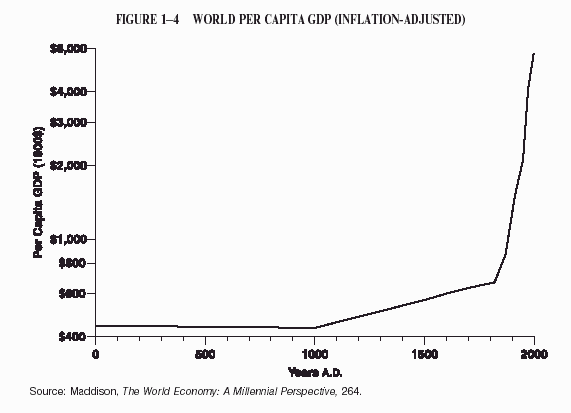
Nonetheless, Shakespeare was a person who lived 100 years after the great adventure of Columbus around 1500.  In a wider span of time, even Shakespeare belongs to an era having been opened by Columbus who reached the New World or America.


http://www.efficientfrontier.com/ef/404/CH1.HTM


After Goethe, the world changed drastically along with global development and deployment of the Industrial Revolution.  However, it has been supported by accumulated human efforts prior to it.


**** **** ****


Mar 7:22 Thefts, covetousness, wickedness, deceit, lasciviousness, an evil eye, blasphemy, pride, foolishness:

Tuesday, July 21, 2015

"unto many that were blind he gave sight" - Hebrews, Sumerians, Tamils and Japanese


High School Baseball Game Around Tokyo


Hebrews, Sumerians, Tamils and Japanese


The Japanese language is an agglutinative language like the Tamil language spoken in Southern India.

Another interesting thing is that Sumerians also spoke an agglutinative language more than 4,000 years ago.

The Bronze Age began 3,600 BC in the Sumerian world in Mesopotamia.  However Mesopotamia produced no copper and tin.  Copper was imported to Mesopotamia from Iran and coast areas of the Persian Gulf.  However, tin was imported from West Afghanistan through the Gulf as with lapis lazuli, blue precious stones.

Sumerians especially attached the importance to a location in the Persian Gulf called Dilmun.
Dilmun or Telmun[1] was a civilization in Eastern Arabia.[2][3] Dilmun was an important trading centre[2] which at the height of its power controlled the Persian Gulf trading routes.[2] The Sumerians regarded Dilmun as holy land.[4] The scholarly consensus is that Dilmun encompassed Bahrain, Kuwait,[5][6] Qatar and the coastal regions of the Eastern Province of Saudi Arabia.[7] Dilmun was mentioned by Mesopotamian civilizations as a trade partner, a source of the metal copper, and an entrepôt of the Mesopotamia-to-Indus Valley Civilization trade route.
https://en.wikipedia.org/wiki/Dilmun
Dilmun was a relay point for trade between Mesopotamia and India.

Taking all these factors into consideration, it is thought that Sumerians came to Mesopotamia from South India along with trade between Mesopotamia and South India.  The ancestors of Sumerians in South India must have been close to ancestors of Tamils.

And in a wider scope, some ancestors of Japanese and ancestors of Tamils/Sumerians must have been close to one another.

On the other hand, as Abraham came out around the Sumerian capital Ur, it is naturally thought that Hebrews were rooted in Sumerians.  In this context, Judaists, Tamils, and Japanese of today are regarded as descendants of one original language group of the ancient world established after mankind exited Africa 60,000 years ago.

In terms of DNA,  it is uniquely confirmed that the size of Y chromosome is the same between Japanese and Judaists of today.  However no other linkages have been confirmed between Japanese and Judaists of today, though some Japanese share part of DNA with Tibetans rather than Tamils.  But today we cannot find any descendants of Sumerians in the Middle East; Sumerians were absorbed by Arabic tribes.  Sumerian Hebrews must have been also absorbed by Arabic tribes, adopting an ancient Arabic language.  You cannot simply deny the above presented theory.  


A theory linking Sumerians to Japanese, though a little too quixotic
http://www.ne.jp/asahi/davinci/code/history/kuri/index5.html


**** **** ****


Luk 7:21 And in that same hour he cured many of their infirmities and plagues, and of evil spirits; and unto many that were blind he gave sight.


Monday, July 20, 2015

"In which time Moses was born" - No More Money-Based Economy


Around Tokyo


No More Money-Based Economy

Everybody is afraid all over the world of being poor.

If you have money, you can first of all get means to protect yourself and your family.  But without money, your safety is in the hand of other men who have money.  And to earn money you have to be employed by a rich man who might be very evil.  You might be even requested to commit a crime for your salary.  Being poor is a state of risk.

Of course, if you have money, you can satisfy your need and dream in addition to desires after securing your safety, a minimum requirement.  And, with money you can buy various products and services to improve material and psychological quality of your life.  What's more, you can harm the poor acting as an evil man.

Today money is created through banking systems of each nation or international organization.  Value of money is backed up by economic power of nations.  People are working in society producing goods and providing services, which is a basis of value of money.  Without real economic activities of people, money can have no value.

If all the people in the world have big money, they all try to live without working but based on power of money to buy goods and services from others or businesses.  But if no one works for money any more, there will be no goods and services.  Then money will lose its value.

Accordingly, the rich need the poor.  Rich countries need poor countries.  To secure value of money they have accumulated, the rich need laborers who work to produce goods and provide services.  Therefore we may regard money as the major source of evil.

The only solution to address this sinful effect of money is to change the meaning of economy or production of goods and provision of services.

People should not work to give value to money.  People should be engaged in production of goods and provision of services for mutual support for living.  Economic activities should not be linked with value of money but directly to welfare and well-being of people.

In this context, commercialism is the worst factor in human economy.  Commercialism arouses desires in human minds.  To satisfy desires people think they have to get money and big money.  But this flame of desires cannot be quenched any amount of money.  People just endlessly seek and stick to money.

Human matters must not be fixed with money.  Love and faith must solve every human problem.  The last revolution mankind should experience should be this shift from money-based economy to love/faith-based economy.

But what percentage of mankind should come to hate money for this revolution?


church-money
http://hypervocal.com/culture/2011/american-christianity-confuses-itself-with-commercialism/


**** **** ****


Act 7:20 In which time Moses was born, and was exceeding fair, and nourished up in his father's house three months:
Act 7:21 And when he was cast out, Pharaoh's daughter took him up, and nourished him for her own son.

Sunday, July 19, 2015

"tree that bringeth not forth good fruit" - A Successful Japanese Comic Band


Around Tokyo


A Successful Japanese Comic Band

When the Beatles made the first and last live performance in Japan in 1966, a few Japanese bands acted as curtain raisers.  The one that played immediately before the appearance of the Beatles on the stage in the Budokan, Tokyo, was the Drifters, a comic band.

http://video.search.yahoo.co.jp/search?p=%E3%83%89%E3%83%AA%E3%83%95%E3%82%BF%E3%83%BC%E3%82%BA+%E3%80%80%E6%BC%94%E5%A5%8F&aq=-1&oq=&ei=UTF-8

The leader of the Drifters was Chosuke Ikariya (1931-2004).  He led other four members as strong leader, since Ikariya was somewhat successful as a band man that had played in US military camps around Tokyo after WWII.  When he came to lead the band anew after some members left the Drifters except young one, Kato, in 1964, Ikariya recruited three musicians, Takagi, Nakamoto, and Arai, in haste.  But later Ikariya found that Arai was a pianist who couldn't play the piano but simply sound codes of rockabilly with a piano.  Ikariya also thought Arai was younger than he as other members, but later he found that Arai was three years older.  But Arai said, "Cho-san (meaning Chosuke Ikariya), you are the leader of us.  If you are younger than I, it is not funny.  Fans will not think it is funny.  So, outwardly I will tell that I am younger than you."

Ikariya admitted later that his band, the Drifters, was the fifth-class band, since Ikariya himself was a fourth-class guitar player in the Japanese popular music communities after WWII.  But, his members could perform a musical comedy.  And in comedies they played, the personality of Arai became a key factor.  Between bossy Ikariya and sullen Arai, other members found their roles and requested personalities.  Accordingly, the Drifters became so popular as a comedian group from the middle of 1960s (or after the performance on the same stage as that for the Beatles) to the middle 1980s.  They also came with a big hit song several times.  They are still remembered today as one of the most successful entertainers in Japan after WWII.  (In addition, Chosuke Ikariya played a certain role in Kurosawa's movie Dreams released in 1990.)

After Chu Arai died in 2000, Ikariya wrote a book recalling his professional life.  Ikariya specifically referred to Arai.  Though Arai was a poor performer as a musician, Ikariya learnt many things from Arai, including literature and world views.  Ikariya respected Arai and ascribed most part of the success of the Drifters to Arai.

Very ironically or interestingly, a great success story of the fifth-class comic band began after they played at the Budokan, Tokyo, as a curtain-raiser for the Beatles in 1966.  One almost ignorant leader and four weak and poor musicians became one of the most popular comic bands in Japan after WWII.

They were very different from Christ Jesus and His 12 disciples, but there must be something instructive for success of a human group in the case of the Drifters whether it is related to religion or entertainment.


イメージ 1
The Drifters
http://blogs.yahoo.co.jp/thewhosnext7/33273367.html


**** **** ****


Mat 7:19 Every tree that bringeth not forth good fruit is hewn down, and cast into the fire.

"it cannot defile him" - Proof of Faultlessness of God

Tokyo


Proof of Faultlessness of God


God is perfect, which must be understood more deeply by human beings.

Whenever I see the world map, I confirm that Jerusalem is truly the center of the world, linking Africa to Europe and Asia.  This is the key location since continents took this configuration on the surface of the earth hundreds of millions ago.

And, Christ Jesus precisely appeared at this center of the world, Jerusalem.  Compared with this drastic appearance of Christ Jesus, Confucius, the Buddha, the founder of Islam, and even Abraham appeared at locations a little wayside or out of focus.  Other sacred men look so localized but Christ Jesus is precisely at a pivotal location of the world.

Even in the time domain, Christ Jesus appeared in the middle of the major human history, 2,000 years ago.  Our civilization roughly started 4,000 years ago when Abraham and his father left Ur, a Sumerian capital in southern Iraq of today.  If we grasp this 4,000-year-long human history as a series of the key periods where our civilization has developed, Christ Jesus appeared in the middle of the progress of it.  But Other sacred men like Confucius and the Buddha did not.

(If you insist that the Great Pyramids in Egypt were built 4,600 years ago and thus the civilization started about 5,000 years ago, Confucius, the Buddha, Socrates, etc. reasonably appeared 2,500 yeas ago.  They were given some glory and significance by God, though still they were localized.)

So, in the time domain as well as in the geographical domain, Christ Jesus occupied the middle or central point.  God gave the best glory to Christ Jesus among sacred men who ever appeared in the human history.

For this reason, we have to admit that Christ Jesus is special, like the king among kings.  And, I feel so whenever I imagine a world map and a chronological table.


In addition, the earth is situated in the best location in the solar system, while our solar system is located in the best location in our galaxy.

Incidentally, though the universe is now about 14 billion years old and in the process of expansion, it would start to shrink about 30 billion years later to be compressed into a dot 50 billion years later, according to a theory.  We live in the universe in the best period of time of its deployment, indeed, in an astronomical time scale.

God is truly perfect and almighty.

This is one humble example of proofs of faultlessness of God.


**** **** **** ****


Mar 7:18 And he saith unto them, Are ye so without understanding also? Do ye not perceive, that whatsoever thing from without entereth into the man, it cannot defile him;

Friday, July 17, 2015

"this rumour of him went forth" - Live for God but not for Yourself


Around Tokyo


Live for God but not for Yourself

The basic principle is that this universe was created by God for Himself but not for mankind.

But God also created human beings for Himself.  Therefore, men should make full efforts to satisfy God but not themselves.

So, a big question remains: why did God have to create the universe and human beings for Himself?  The clue to this question can be only found in the holy books and especially in the words of Christ Jesus.

Christ Jesus said to accumulate wealth in Heaven but not in this world where wealth gets rotten.  Therefore, we may suppose that God created the universe and human beings to increase wealth in Heaven.  When a man lives a righteous life and does good deeds, helping the poor and saving the weak, his wealth should be created in Heaven.  Angels in Heaven should be glad to see such wealth increasing.

But if a man does not contribute to increasing wealth in Heaven while making himself rich in this world, he should be surely condemned and thrown into the hell.  Accordingly, we can simply understand that rich men are bad and evil and poor men are blessed no matter how difficult their lives are in this material world.

Poor men are destined for Heaven.  But if rich and evil men become so influential and powerful, making poor people suffer gravely, it is natural that God should interfere with the human world.  That is why Christ Jesus appeared in this world 2000 years ago.  However, as God is almighty, He must have known from the beginning that mankind would fail unless God interferes.  So, Christ Jesus came to this world at the right time and would come again at the very right time.  And, watching the global situations, we had better think that Christ Jesus has already come to the human world again.

Indeed, today only a very few people think that they have to live for God since God is the Creator of all that exists.


**** **** ****


Luk 7:17 And this rumour of him went forth throughout all Judaea, and throughout all the region round about.


Tuesday, July 14, 2015

"called his father Jacob to him" - The Vatican and the Emperor of Japan

Tokyo


The Vatican and the Emperor of Japan


The Emperor of Showa instructed Prime Minister Tojo to send an envoy to the Vatican a few months after the Pearl Harbor Attack.

The Emperor himself was involved in choosing the minister plenipotentiary to be sent to the Vatican.  Though it is not considered today that the Vatican played any key role in the diplomacy of the Empire of Japan during WWII, it is very interesting that the Emperor took a rare initiative in Japan's diplomacy in sending the envoy to the Vatican when the Imperial Government had an optimistic view about the prospect of the then on-going war against the US and the UK after the Pearl Harbor Attack of December 1941.

After WWII, the Emperor of Japan recalled why he had tried to strengthen the relationship with the Vatican after the Pearl Harbor Attack.  According to the Emperor, the major reasons were: gather information related to international situations through the Vatican, study a possibility of using a big influence the Vatican had on the world, and prepare for the time to end the war where a tie with the Vatican would be useful.

However, the Emperor of Showa admitted that he had not been able to find a suitable diplomat or a politician who could effectively work on the Vatican, since the war had already started.  And, he also stated that the bad relationship between Hitler and the Vatican had some adverse effect on his plan to make the Vatican more friendly to the Empire.

Nonetheless, it is very interesting that after WWII the Emperor of Showa dared to mention his view on the Vatican.  It showed that the Emperor viewed the world rather pragmatically.  With reference to other information sources, it seems that in Emperor's view the Empire had at the time only two cards diplomatically, that is, the Vatican and the Soviet Union, since the Empire got into the state of belligerence with the US, the UK, etc.

It also represented a common view among learnt Japanese around WWII.  The world was virtually ruled by the Western Powers, and at the core of Europe the Vatican had an implicit influence.  And not only European countries but also Christian countries in Asia, Africa, and Americas would listen to the Vatican.  So, it is better for Japan to keep good relationship with the Vatican.  And, basically, these conditions have not changed to the present day.

But, how has the Vatican viewed Japan in these centuries?

Apparently, the Vatican failed in its mission to Japan since the 16th century.  From the middle 17th century to the middle of the 19th century Japan led by a samurai regime closed the nation to prevent influx of Catholicism.  Even after Japan opened the door and assured freedom of religion to its people after the Meiji Restoration of 1868, there has been no wide diffusion of Catholicism in Japan.  Today, Catholics account for less than 0.4% among the Japanese population.

The relationships between the Vatican and Japan, including one between the Vatican and the Imperial family of Japan, seem to remain yet-to-be-defined.    


Emperor of Showa and the Pope in 1981, Tokyo
http://ianhumondai.blogspot.jp/2014/06/blog-post_1076.html


**** **** ****


Act 7:13 And at the second time Joseph was made known to his brethren; and Joseph's kindred was made known unto Pharaoh.
Act 7:14 Then sent Joseph, and called his father Jacob to him, and all his kindred, threescore and fifteen souls.
Act 7:15 So Jacob went down into Egypt, and died, he, and our fathers,

Monday, July 13, 2015

"he hardened Pharaoh's heart" - When Emperor Has a Nightmare

Tokyo toward Yokohama 


When Emperor Has a Nightmare


The Emperor of Showa (1901-1989) had three younger brothers.  The eldest among them was Prince Chichibu (1902 – 1953).

Prince Chichibu once wrote that when they were small children they had talked about nightmares.  One of them told that when one had a nightmare he would often place his hands on the chest.  But why?

Some of them said that it would be opposite.  As one put his hands on the chest, he had a nightmare.  But the eldest brother, namely the future emperor of Japan, expressed his opinion rather thoughtfully: "The reason why one often places his hands on the chest when he has a terrible dream is that he wants to protect his heart from a danger he feels in the dream."

So, Prince Chichibu wrote that his elder brother, namely the Emperor of Showa, was a clever person fit for a scientist.  Indeed, the Emperor of Showa was also well known for his biological study.

The Emperor of Showa, who led the Empire of Japan between 1926 and 1945 and democratic Japan between 1945 and 1989, was a very thoughtful person.  Truly, there have been almost no reports or gossips suggesting his foolishness or laughable mistakes, though the media had not been allowed to freely report imperial house matters before the end of WWII.

The most difficult decision Emeoper of Showa had ever made seems to have been related to his status after the defeat of the Empire of Japan in WWII.  Though he was not brought into the Tokyo Tribunal of War Criminals after WWII and not blamed officially for the war, there were strong voices in the US, the UK, the Netherlands, Australia, China, the Soviet Union, etc. for punishing the Emperor of Japan for damage and atrocity the Imperial military had inflicted on peoples around the Pacific Ocean and China.

Even some Japanese thought at the time that it would be probably better for the Emperor of Showa to voluntarily step down, allowing Prince Chichibu to succeed him.  But General MacArthur who led the allied forces stationed in Japan after WWII virtually encouraged the Emperor of Showa to stay in the imperial throne.  The Emperor of Showa met General MacArthur in person 11 times or so till MacArthur left Japan in 1951.  And, the Japanese people never requested the Emperor of Showa to resign officially or publicly in any effective manner.

The great economic success of Japan after WWII might be attributed to its stable states politically and culturally all through 1950s, 1960s, 1970s, and 1980s.  And, the Emperor of Showa must be one of the largest factors of it.  The first half of his reigning period called Showa was full of wars, but the latter half was full of peace and prosperity for the Japanese people.

And it is also true that even the Emperor of Showa felt a threat of life a few times in his life.  At least it is well known that the Emperor faced a critical danger on himself in the February 26 Incident of 1936 (a kind of failed coup by young military officers) and in the August 14 incident of 1945 (a kind of failed insurgence by desperate military officers).  The Emperor could of course survive those crises by himself with support from loyal and brave military officers and the like.

The Emperor of Showa seems to have some reasons to have nightmares, but it is unknown how the incumbent Emperor of Japan, the eldest son of The Emperor of Showa, would act when he has a bad dream or whether he has any nightmares at all.


Emperor Showa, as Prince Michinomiya, and his younger brothers in 1921
https://en.wikipedia.org/wiki/Hirohito


**** **** ****


Exo 7:11 Then Pharaoh also called the wise men and the sorcerers: now the magicians of Egypt, they also did in like manner with their enchantments.
Exo 7:12 For they cast down every man his rod, and they became serpents: but Aaron's rod swallowed up their rods.
Exo 7:13 And he hardened Pharaoh's heart, that he hearkened not unto them; as the LORD had said.

Thursday, July 09, 2015

"will he give him a stone?" - The Only Imperial Family Prime Minister of Japan


Tokyo


The Only Imperial Family Prime Minister of Japan


Naruhiko Higashi-kuninomiya (1887-1990) was the only imperial family member of Japan who became prime minister.  He assumed the office of prime minister from August 17 to October 9, 1945, while the Imperial military surrendered to the US on August 15, 1945.  Naruhiko Higashi-kuninomiya was one of key figures who took the helm of Japan in the difficult time immediately after WWII.

Though the Emperor announced his decision for the surrender by radio to all the Japanese people and Imperial troops stationed in and outside Japan, some extreme Imperial Army officers were still determined to fight till their death.

To persuade those die-hard officers, the Emperor and his aids thought it was necessary to appoint an imperial family member as a successor of prime minister admiral Suzuki who resigned after the Suzuki Cabinet successfully unified opinions of the Imperial Government for acceptance of the Potsdam Declaration to surrender.  No matter how bigoted those jingoistic military officers were, they would obey the order for surrender issued by a prime minister who was a clear deputy of the Emperor, thought the Emperor and his entourage.

Indeed, the Empire of Japan still had millions of soldiers and 3,000 military planes when the Emperor expressed his will to surrender in August 1945.  There was a possibility that a military coup could occur in Tokyo.    

Prime Minister Higashi-kuninomiya did his best.  So, it was his Cabinet that signed on the instrument of surrender on the battleship Missouri in Tokyo Bay on September 2, 1945.  But, he resigned in a month after the historical event.

It was because he thought he lost the trust of General MacArthur.  It was about handling of the famous picture of the Emperor and General MacArthur taken when the Emperor visited the US embassy in Tokyo to see General MacArthur on September 27, 1945.

The Higashi-kuninomiya Cabinet thought it was not appropriate to allow newspapers to show the picture to the general public.  The Emperor looked like a civilian without wearing military clothing he had usually put on during and before WWII.  But he was in formal dress, while MacArthur wore casual military clothing.  The picture simply told that the Emperor was not a sacred man but a defeated man.  It must have been so shocking to the general public, thought the Higashi-kuninomiya Cabinet.  They tried to forbid Japanese newspapers to present the picture.  But, the General Headquarters of the allied forces led by General MacArthur forbade the Japanese Government to forbid publishing of the picture.  So, Prime Minister Higashi-kuninomiya decided to resign.

  
Higashi-kuninomiya was a general of the Imperial Army during WWII.  He was familiar with General Tojo who was prime minister when the Empire decided the execution of the Pearl Harbor Attack in 1941.

One day before the Pearl Harbor Attack, General Higashi-kuninomiya met with General Tojo to persuade him to stop launching war against the US.  Higashi-kuninomiya told Tojo his experience in Paris when he had been in an overseas assignment in France between 1920 and 1927.

In Paris Higashi-kuninomiya talked with Georges Benjamin Clemenceau, a former prime minister of France.  Clemenceau told him that the US was preparing for war against the Empire of Japan.  Higashi-kuninomiya was surprised, saying that Japan never considered a possibility of making war against the US.  But, the old French politician said, "Japan is not good at diplomacy, and Japanese are quick-tempered.  If the US Government should drive the Imperial Government into the corner, the Imperial military would start war.  The US must surely take this strategy.  But, American industrial power far surpasses Japan's.  If a war broke out between the two countries, Japan would surely lose.  Therefore, Japan must be patient to avoid the war."

However, Prime Minister General Tojo said that he could not withdraw Imperial troops from mainland China (which was requested by the Roosevelt Administration) and it was just a difference of opinion between him and Higashi-kuninomiya as to the prospect of the coming war between the Empire and the US.

According to one theory, there was a possibility that the Emperor and his advisers would appoint Higashi-kuninomiya as prime minister before the Pearl Harbor Attack instead of naming General Tojyo for the position.  But, it is said that some advisers thought it was not appropriate to have an imperial family member take responsibility for making war against the US and the UK.  Accordingly, General Tojo took the bold course of opening war with the US and the UK with consent of the Emperor in December 1941.


Naruhiko Higashi-kuninomiya
https://ja.wikipedia.org/wiki/%E6%9D%B1%E4%B9%85%E9%82%87%E5%AE%AE%E7%A8%94%E5%BD%A6%E7%8E%8B


Emperor and MacArthur in newspaper on September 29, 1945
http://www.29296.club/u78542624.html


**** **** **** 


Mat 7:9 Or what man is there of you, whom if his son ask bread, will he give him a stone?

Wednesday, July 08, 2015

"take nothing for their journey" - The First Japanese that Traveled Tibet


Tokyo


The First Japanese that Traveled Tibet


When a Japanese Buddhist monk had some doubt about Buddhism, say, 100 years ago, he had to go to the original place where the religion had been first established around the 5th century BC.  But India had long lost traditions of Buddhism.  So, he had to go to Tibet, since Tibet had imported important part or some essence of Buddhism between the 7th and 14th centuries before it was lost in India.

Indeed, Japan imported Buddhism through China since the 6th century, but Chinese themselves had first imported Buddhism about 1st century.  Even in the 7th century, a notable Chinese priest made an adventurous journey to India to bring back many Buddhist sutras.  Therefore, if a Japanese monk had any doubt on Buddhism, it meant there was a need to refer to Sanskrit Buddhist scriptures which Chinese monks translated into Chinese versions, since Sanskrit was a classical language of India.  Or, he must refer to Tibetan scriptures as Tibetans must have more faithfully translated Sanskrit scriptures.

So, Ekai Kawaguchi (1866 – 1945)  traveled to Tibet as the first Japanese that had ever entered the Himalayan country closed to foreigners.  Specifically, he secretly reached and stayed in Lhasa from July 1900 to June 1902, and then from 1913 to 1915.

He brought back to Japan a large collection of Tibetan scriptures, but had a lengthy and public dispute with the other pilgrims about who the Dalai Lama had intended to give them to, causing him to lose some face in the Buddhist world.[17] He did assist the German Theravada monk Nyanatiloka in the 1920s. 
After this Kawaguchi became an independent monk, living with his brother's family for the rest of his life, and earning an income from scholarly publications. He refused to assist the military police when they sought intelligence on Tibet, and died in 1945.[18]
He was a friend of Mrs. Annie Besant, President of the Theosophical Society, who encouraged him to publish the English text of his book, Three Years in Tibet.[19] The Government of Nepal issued a postage stamp in 2003 commemorating Kawaguchi's visits to that country.
https://en.wikipedia.org/wiki/Ekai_Kawaguchi#Further_travels

Ekai Kawaguchi was a faithful Buddhist.  He never ate meat and fish.  He never tried to make money by selling his experiences on a commercial basis or establishing a new faction of Buddhism in Japan.  After his adventure in Tibet, he tried to edit a Tibetan-Japanese dictionary, which was however never be accomplished when he died in the last year of WWII.

More importantly, through his observations of Buddhist communities in Tibet and other Asian countries as well as Japan, Kawaguchi concluded that there were no truly righteous monks and orders today.  Temples were no more sacred places.  Buddhist organizations were rotten.  Buddhist rituals turned to be false acts.  So, Kawaguchi renounced his status as a Buddhist priest.

Kawaguchi then claimed that people must not respect Buddhist priests and orders.  But people should practice Buddhism in their daily living.  It is just like a Christian priest who has traveled to Rome and Jerusalem to study Christianity starts to claim that churches and priests are useless or anti-Christian so that people must practice teaching of Christ Jesus in their daily lives.

Indeed there is a Buddhist tenet predicting the decline of Buddhism, called "the latter days of Buddhism."  According to the tenet, Buddhism would be correctly practiced and understood for 500 years after the death of the Buddha, but would not be understood, even if practiced superficially, for the next 1,000 years.  And after these 1,500 years, no more correct practice and understanding of Buddhism would be observed.

Ekai Kawaguchi seems to have believed in this theory.  His countermeasure to this state of lost belief in Buddhism is for everybody to practice the teaching of the Buddha in their daily lives.

However, Kawaguchi died in the last year of WWII.  And, after WWII, American Christianity along with American democracy was widely and openly introduced into the Japanese society.  Even the Constitution of Japan was drafted by Christian Americans subject to General MacArthur, the supreme commander of the allied forces that occupied Japan after WWII.  It might suggest that it is Christianity but not Buddhism that the Japanese people should seriously turn to as the means to save their souls.

Today, in Japanese schools, Ekai Kawaguchi is not introduced as a unique Buddhist but simply as a great adventurer who traveled Tibet 100 years ago where no foreigners were allowed in the country at the time.


イメージ 1
Ekai Kawaguchi
http://blogs.yahoo.co.jp/mitsounob/31873171.html


**** **** ****


Mar 6:8 And commanded them that they should take nothing for their journey, save a staff only; no scrip, no bread, no money in their purse:

Tuesday, July 07, 2015

"called unto him the twelve" - Buddhist Homeless Man in Nagoya

Tokyo


Buddhist Homeless Man in Nagoya


Several years ago, a homeless man was arrested and indicted for violence on a public official in Nagoya City, Japan.

When the homeless man was preparing a meal in a public park, city officials came to him, requesting evacuation from the place.  As the homeless man got angry, he allegedly poured soup on one of officials and grab and locked his head with the arms.

The homeless man was put in a house of custody for one year and five months till a court ruled the case.  He was sentenced to pay a fine of 300,000 yen ($2,500).  But as his term in custody before the verdict translated into 5,000 yen per day, he was immediately released after the judgment without paying the fine.

In some public parks in big cities, such as Tokyo, Osaka, and Nagoya , in Japan, homeless people can be sometimes spotted.  Most of them live in very humble tents built using timbers and blue sheets on corners or among bushes of public parks.  But, public administration often tries to drive them out.  Especially when a big official event is held, such as a Summit Meeting, homeless people living in public parks are forced to evacuate the places for a security reason.

The above stated homeless person in Nagoya may be unique in his statement in the court.  He claimed that people in the world were brainwashed.  People are taught to believe in war and wealth as God. And there is competition in the society on how much one believes in this God.  Those who are disqualified in this competition are forced to become lambs to be simply controlled by winners in society.

He further argued: To fight against this evil brainwashing people have to live as homeless persons like the Buddha.  His living as a homeless man is the very practice of this principle.  So, it is a right thing for him to live in a public park; and in terms of his case, he didn't harm the public servant in real.

Of course, a judge in charge was not moved by his statement.  Usually, in such a case as this involving a homeless person, judges simply accept assertion by public prosecutors, the police, and public officers.

However, there are some organizations who support homeless people in big cities in Japan.  Most of members are humanitarians, religious activists, or politically leftists.  But, it is unthinkable today that any radical extremist group mobilizes homeless people to cause social unrest or a riot in Japan.  

According to a survey by the Japanese Government, the numbers of homeless persons in big cities are as follows as of January 2012:
Tokyo.....  2,069
Yokohama..... 595
Kawasaki..... 502
Nagoya..... 249
Osaka..... 2,132
Fukuoka..... 211
(http://www.mhlw.go.jp/stf/houdou/2r98520000027ptf.html)

Nonetheless, these figures seem to be underestimated.

Anyway, Christ Jesus and His disciples were homeless, too.


**** **** ****


Mar 6:7 And he called unto him the twelve, and began to send them forth by two and two; and gave them power over unclean spirits;

Monday, July 06, 2015

"trouble not thyself: for I am not worthy" - Methane Hydrate Causes Tsunami


Tokyo


Methane Hydrate Causes Tsunami

On December 21, 1946, a big earthquake (M8.0) occurred in the Pacific Ocean 50 km off Cape Shiono-misaki situated at the southernmost tip of the Kii Peninsula, south of Kyoto and Osaka.  It is called the 1946 Nankai (south sea) Earthquake.

It caused 1,330 deaths in regions of western Japan on the Pacific Ocean.  As it was just one year after the end of WWII, there was some confusion in handling this disaster.  But it was reported that some towns and villages were attacked by tsunamis as high as 6.5 meters.  The tsunami also reached Hawaii and the US west coasts.  This earthquake was reportedly triggered by a rise of an undersea mass of land stretching 250 km.


One thing particular in this earthquake is that some people saw a lightening phenomenon called earthquake light.

For example, notable Japanese actor Hisaya Morishige (1913-2009) wrote about his experience of encountering this earthquake and a following tsunami in his essay.

Morishige traveled to a seaside town to make business of trading fish.  Though Morishige was living in Tokyo in 1946 with his family after coming back to Japan from Manchuria, where he had worked as an announcer of a radio station during WWII, he happened to travel to Osaka, his hometown, to find a job as he was unemployed at the time.  In Osaka, one of his friends introduced a man living in the seaside town who was familiar with a boss of the fishing industry in the seaside area.  So, Morishige traveled to the seaside town of Tokushima Prefecture.

The earthquake happened before the dawn after a night Morishige met the boss withe the mediator in an inn.  As the boss promised to help Morishige's planned business to sell fish in Osaka, Morishige was sleeping happily.  But the big earthquake and tsunami destroyed his plan as well as many homes in the town, including the mediator's.  

In the darkness, quaking Morishige somehow climbed up a hill behind the inn; then he saw some weird light over the sea.  Workers of the inn told him that some wells had dried up the day before or so.

Some scientists wrote a paper to analyze this earthquake in 2009.  Their conclusion is that Methane Hydrate accumulated on the sea bed gushed out due to the huge seismic activity.  The frozen material consisting of Methane and water molecules jolted so hard delivered the Methane gas which exploded and came up to the surface of the sea, pushing up the surface to cause the tsunami.  It also triggered earthquake light as the gas could take fire when it was mingled with the air and chlorine.

 (http://sakuya.ed.shizuoka.ac.jp/rzisin/kaishi_24/HE24_181_184_19EnomotoMod.pdf#search='1946%E5%B9%B4++%E6%98%AD%E5%92%8C%E5%8D%97%E6%B5%B7%E5%9C%B0%E9%9C%87++%E7%99%BA%E5%85%89')

Today, a great amount of Methane Hydrate has been found on the sea beds around Japan.  It is expected to be a big future energy source.  However, as the scientific report tells, it can also trigger or augment a tsunami accompanying an undersea earthquake.


After this experience of the natural disaster, Morishige pursued his career as a comedian and then a movie star.  He became a very successful actor, exhibiting various talents.  One of his successful roles in theatrical performances was Tevye of Fiddler on the Roof, a story of a Jewish family in Ukraine.  Morishige played Tevye 900 times in Japanese theaters till 1986.  He was awarded the Order of Culture, the highest prize for scholars and artists, by the Japanese Government as the first case for performers in the genre of popular arts in 1991.

However, Hisaya Morishige did not encounter the 2011 Great Earthquake and Tsunami of the Pacific Coats of East Japan.


**** **** ****


Luk 7:6 Then Jesus went with them. And when he was now not far from the house, the centurion sent friends to him, saying unto him, Lord, trouble not thyself: for I am not worthy that thou shouldest enter under my roof:

Sunday, July 05, 2015

"neither did his brethren" - Murder Case of a Japanese Film Director


Tokyo


Murder Case of a Japanese Film Director


Kenzaburo Oe (1935-) was awarded the Nobel prize for literature in 1994 as the second Japanese winner in this field.  It was one year before the Aum Shinrikyo cult group launched a sarin gas attack in Tokyo subway lines in 1995.

Oe had an old friend who was then a film director.  Oe and his old friend Juzo Itami (1993-1997) once studied in the same high-school in western Japan.  Oe respected Itami who showed great talent in literature.  Oe even wrote some novels as he wished to be praised by Itami when Oe was a student of the University of Tokyo and Itami was working as a commercial artist in Tokyo.  Then, Oe won the Akutagawa Award to be publicly recognized as a professional author, and Itami subsequently became an actor (first calling himself Ichizo Itami and then Juzo Itami).

Itami's father was a film director, too.  And, Oe later married a younger sister of Itami. Oe and Itami are brothers in law.

Juzo Itami became a popular actor, though not a big star, as well as a writer and a reporter for some TV works.  He even acted in some American movies such as 55 Days at Peking.  But in 1984 he directed a unique Japanese movie titled O-Soshiki (The Funeral).  Then he became a very popular film director in Japan.

Itami made some films on unique issues such as tax evasion and civilians' fight against gangsters.  His films were not merely for entertainment but also related to serious social issues if not social justice.  And some gangsters got angry to see his film depicting foolish and dangerous gangsters.

Specifically in 1992 when his sixth movie titled Minbo-no On-na (The Woman Fighting Civil Violence), Itami was actually assaulted by members of a big criminal organization, since the film depicted workers of a hotel fighting against yakuza gangsters.  Itami suffered severe cuts on the face and arms; it took three months for him to recover.  The police arrested five members of the Goto-gumi group subject to the nationwide syndicate Yamaguchi-gumi group.

Juzo Itami publicly announced that he would never be intimated.  And he continued to produce and direct his unique films.  Then, the terror by the Aum Shinrikyo cult occurred in 1995.  The Japanese society was alarmed at cults in general, since Aum Shinrikyo's sarin gas terror killed 13 passengers and injured 6,000 commuters near the government district in Tokyo.

In 1997, movie director Itami produced a new film featuring an act of terror by a cult.  It was titled Marutai-no On-na (The Woman under Police Protection), presenting a story that an actress happened to watch a killing of a lawyer and his wife by a cult member, so that she was put under police protection.  It was based on Itami's experience that he had been put under police protection after the gangsters' attack in 1992.  And as was usual, his wife, an actress, played the leading part.

This film apparently was based on behaviors of the Aum Shinrikyo cult.  There had been some murder cases conducted by the cult, or so suspected, before and after the 1995 sarin terror.

Actually a lawyer fighting the cult was murdered with his wife and young son in 1989.  In early 1995, an old man who was a brother of a rich woman whose assets were targeted by the cult was abducted and killed as he was hiding his sister from the cult.  Even Aum Shinrikyo was trying to use anthrax germs to kill its enemies.

But what was more weird occurred after the large-scale police investigation of the cult in the wake of the Tokyo subway sarin-gas attack by the cult in March 1995: one of top executives of the cult was killed by a gangster-group associated man before the cult's headquarters in Tokyo.  This victim, named Murai, made many TV appearances after the terror in subway lines, so that the general public was very much surprised and alarmed.  As Murai was close to the guru of the cult, Asahara (ne Matsumoto), it looked like a warning to Asahara given by some gangster group that had secret linkage with the cult.  Indeed, there was a rumor that the the Aum Shinrikyo cult was making money by producing and selling drugs through gangsters.

So, Itami's 1997 film might irritate some gangsters that had been some secret business with the Aum Shinrikyo cult that had had tens of hundreds of followers and $100 million assets in its prime.  And Juzo Itami died in December 1997 in a mysterious manner.

The police judged that Itami committed a suicide by jumping from the roof of a condominium building in which he had an office.  There was no trace of struggles.  Even a will written with a word processor was found in his office.  Furthermore, at the time, a magazine reported his adultery with a young woman, which must have made him suffer.

However, it is said that an autopsy found a large amount of alcohol in his stomach.  Itami was not a stupid man who would commit a suicide only because his adultery was publicly reported, and usually a man never drank so much when he was committing a suicide.  Itami was most probably killed by gangsters.

Moreover, it is said that at the time Itami planned to make a film related to the Soka-Gakkai Buddhist Association closely linked to a political party, Komeito.  There was a rumor that Soka-Gakkai sometimes used gangsters to harass their enemies.  In addition, Itami was reportedly interested in the dark side of industrial waste disposal business around which some gangsters were allegedly acting secretly for big money.  Furthermore, some gangsters who had attacked Itami in 1992 had been released from jails around 1997.  It cannot be simply denied that they tried an assault again.

Nonetheless, today, there are no big voices in society that cast doubt on Itami's apparent suicide of 1997.  Even, Itami's brother-in-law Kenzaburo Oe, a Nobel prize laureate and strong peace advocate, doesn't express his doubt about Itami's death.

This is one of difficult case deeply related to the dark side of the Japanese society to which even a Nobel prize seems useless to address them.


Juzo Itami.jpg
Juzo Itami
https://en.wikipedia.org/wiki/Juzo_Itami


**** **** ****


Joh 7:5 For neither did his brethren believe in him.