Wednesday, August 05, 2015

"preached Christ unto them" - Miracles before the Hiroshima Day


A Tokyo Subway Station


Miracles before the Hiroshima Day


It was a very hot day, today.

I was walking to a railroad station, wishing that God would show me a miracle.   I looked up at the sky, and there were no clouds at all, even no drifting ones.   "This is the very blue sky of August," I thought.  On a raised path between buildings, I checked Mt. Fuji, 100 km far.  The air with summer vapor hindered the view of the mountain.  Only a lower slope of Mt. Fuji was seen.

When I was returning from the station, I found that one big clump of clouds occupied a part of the west sky.  It was dark in the evening sky.  Then without sounds, the whole clump of clouds flashed.  The instant strong light from the inside of the clouds showed detailed structure of the clump, though it was fairly far.  It was not yet a huge cumulonimbus cloud, but it had a similar momentum in a way of overlapping various gray clouds to form the one big clump in the western sky.

A flash of lightening repeated in an interval of about 5 seconds.  I stopped walking to observe them many times untiringly.  It is as if huge bombs had been exploding endlessly in the dark clouds without sounds.  However only a few pedestrians realized the mysterious show in the sky around Tokyo.

Later I checked a newspaper and found some articles about Japan-related WWII stories, including the 1941 Hiroshima atomic bomb:

Some Americans were promoting a project to return Japanese flags US soldiers had collected in battle fields in the Pacific Ocean in WWII to families of fallen Japanese soldiers who had possessed the flags when they died.  Some members of the project visited the Prime Minister Office to hand over scores of old Japanese flags to PM Shinzo Abe.

Another article introduced two women who suffered the Hiroshima atomic bomb attack in August 1941: one died in 2011 and another still alive.  They are just ordinary Japanese women but they wrote books about their experiences in Hiroshima.

Ms. Teiko Okuda was 31 years old at the time.  She was not directly exposed to the blast of the atomic bomb, but she ventured into Hiroshima City to look for a child of her brother who had been sent overseas as a soldier.  Ms. Okuda walked through the devastated city for eight days from the day when Hiroshima was attacked.  She was carrying some foods and water, which she gave to suffering children whenever she encountered them on the destroyed streets of Hiroshima.  Every child dying in her arms wished to give foods and water they were being provided for by Ms. Okuda to their dying family members.  Ms. Okuda later wrote a book on this tragic experiences to publish it at her own expense.  The circulation of copies of the book was thus limited.  But last year a producer of a major publisher found this book to decide its release from the company, though Ms. Okuda died at the age of 96 in 2011, while her self-published book reached the fourth edition.  

Ms. Shizue Inada, 95 years old, issued a book last year on her Hiroshima experiences.  She was working as a 24-year old public heath nurse in a town 6 km far from the center of Hiroshima City.   In a house where she visited for her duty in the morning of August 6, 1941, she witnessed a huge mushroom cloud of the atomic bomb.  She returned to the town office while watching the weird cloud.  Then she started to help and treat victims of the atomic bomb attack in a first-aid station set up in a primary school.  Six days after the tragic day, she went to the center of explosion to look for acquaintances.  After that, her whole body exhibited purple blotches; she though she was dying, too.  But she survived to date.  Next year she married and moved to a prefecture near Tokyo to work and raise three children.  She joined some anti-nuclear movement managed by exposed persons.  She even traveled to the US and Switzerland for peace activities.  And, though she is very old now, she decided to issue a book last year.

Indeed, it is August 5 today, and it will be August 6 tomorrow: the Hiroshima Day.

Finally as part of a miracle of today, I am writing this report.

A uranium gun-type atomic bomb (Little Boy) was dropped on Hiroshima on August 6, 1945, followed by a plutonium implosion-type bomb (Fat Man) on the city of Nagasaki on August 9. Little Boy exploded 2,000 feet above Hiroshima in a blast equal to 12-15,000 tons of TNT, destroying five square miles of the city. Within the first two to four months of the bombings, the acute effects of the atomic bombings killed 90,000–166,000 people in Hiroshima and 39,000–80,000 in Nagasaki; roughly half of the deaths in each city occurred on the first day.
https://en.wikipedia.org/wiki/Atomic_bombings_of_Hiroshima_and_Nagasaki#Hiroshima
(According to Hiroshima City, at the time 350,000 soldiers and citizens, including Taiwanese and Koreans and American prisoners of war, were living or passing the city.  It is not yet known precisely how many people were killed in Hiroshima, though it is thought that 140,000 people died due to the atomic bomb attack by the end of December 1941.

The number of fallen Japanese soldiers in Hiroshima is believed to be between 10,000 and 30,000.  In addition, the number of American prisoners of war killed in Hiroshima was 23, though only 17 of them were identified with their names.)


広島産業奨励館と平和公園の原爆投下前の姿.JPG
Near the Center of Explosion, Hiroshima City, before the Atomic Bomb Attack
http://blog.goo.ne.jp/nak2006/e/3c3f5c246a86582fa7f016bd1360200a
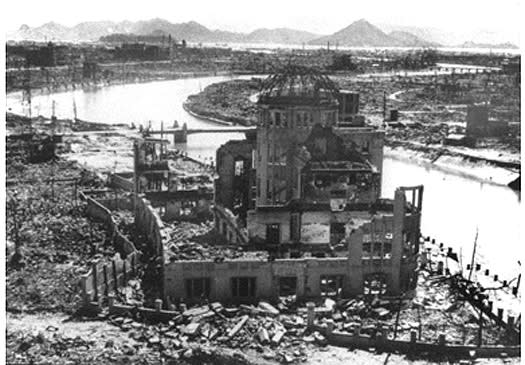

After the Blast of the Atomic Bomb
http://blog.goo.ne.jp/raymiyatake/e/eda6395faa79938f08f52d9194104ccb


**** **** ****


Act 8:5 Then Philip went down to the city of Samaria, and preached Christ unto them.

Tuesday, August 04, 2015

"upon the mountains of Ararat" - Aesop's Fish


A Tokyo Railroad Station


Aesop's Fish

It is very interesting that 500 years before Christ the world had seen great philosophers or persons of religion: Daniel, Socrates, the Buddha, Confucius, etc.

But the most interesting one that seems to have had an influence on Christ Jesus is Aesop.
Aesop (c. 620–564 BCE) was an Ancient Greek fabulist or story teller credited with a number of fables now collectively known as Aesop's Fables.

From Aristotle and Herodotus we learn that Aesop was a slave in Samos and that his masters were first a man named Xanthus and then a man named Iadmon; that he must eventually have been freed, because he argued as an advocate for a wealthy Samian; and that he met his end in the city of Delphi.

https://en.wikipedia.org/wiki/Aesop
So, it is no wonder that Judaists and Christ Jesus heard some stories created by Aesop.
The following Bible verses may have been taken from Aesop:
1. The Fighting Cocks and the Eagle 
Proverbs 16:18 "Pride goeth before destruction, and an haughty spirit before a fall."
2. The Mouse and The Bull 
Ecclesiastes 9:11 "The race is not to the swift, nor the battle to the strong… but time and chance happeneth to them all."
3. The Kingdom of the Lion 
Isaiah 11:6-9 "The wolf also shall dwell with the lamb, and the leopard shall lie down with the kid... And the cow and the bear shall feed; their young ones shall lie down together… They shall not hurt nor destroy in all my holy mountain..."
4. The Raven and the Swan 
Jeremiah 13:23 "Can the Ethiopian change his skin, or the leopard his spots? then may ye also do good, that are accustomed to do evil." 
5. The Two Pots 
Douay-Rheims: Ecclesiasticus 13:3 "What agreement shall the earthen pot have with the kettle? for if they knock one against the other, it shall be broken."
6. Wolf in Sheep's Clothing 
Matthew 7:15 "Beware of false prophets, which come to you in sheep's clothing, but inwardly they are ravening wolves."
7. The Quack Frog 
Luke 4:23 "And he [Jesus] said unto them… Physician, heal thyself."
8. The Fisherman and His Pipe 
Luke 7:32 "They are like unto children sitting in the marketplace, and calling one to another, and saying, We have piped unto you, and ye have not danced; we have mourned to you, and ye have not wept."

http://www.answers.com/Q/Where_is_aesop_found_in_the_bible


It is so interesting that Christ Jesus adapted The Fisherman and His Pipe.
Luk 7:29 And all the people that heard him, and the publicans, justified God, being baptized with the baptism of John.
Luk 7:30 But the Pharisees and lawyers rejected the counsel of God against themselves, being not baptized of him.
Luk 7:31 And the Lord said, Whereunto then shall I liken the men of this generation? and to what are they like?
Luk 7:32 They are like unto children sitting in the marketplace, and calling one to another, and saying, We have piped unto you, and ye have not danced; we have mourned to you, and ye have not wept.
Luk 7:33 For John the Baptist came neither eating bread nor drinking wine; and ye say, He hath a devil.
Luk 7:34 The Son of man is come eating and drinking; and ye say, Behold a gluttonous man, and a winebibber, a friend of publicans and sinners!
However the original story regrading The Fisherman and His Pipe is as follows:
THE FISHERMAN AND HIS PIPE  
There was once a fisherman who saw some fish in the sea and played on his pipe, expecting them to come out onto the land. When his hopes proved false, he took a net and used it instead, and in this way he was able to haul in a huge catch of fish. As the fish were all leaping about, the fisherman remarked, 'I say, enough of your dancing, since you refused to dance when I played my pipe for you before!'
http://mythfolklore.net/aesopica/perry/11.htm

It is a little hard to find relevance between Aesop's story and Christ's saying.  But, even if fish or people didn't act as expected by God, God would take a decisive step to realize what He has expected.

We should dance and weep, when we are expected to do so by God.  But the minds, hearts, and souls clouded and soiled by desire and money cannot dance and weep if they see a sacred man being executed.

So, I have to liken people of our generation to those fish.


Additionally, Aesop's Fables were first introduced into Japan in the late 16th century by Catholic missionaries to Japan.  The Fables had some influences on the Japanese literature in later centuries.


アリとキリギリス(The Ants and the Grasshopper)
http://hukumusume.com/douwa/pc/aesop/03/31.htm


**** **** ****


Gen 8:4 And the ark rested in the seventh month, on the seventeenth day of the month, upon the mountains of Ararat.

Monday, August 03, 2015

"Jesus put forth his hand" - How an Anti-Nuclear Film was Made


Around Tokyo


How an Anti-Nuclear Film was Made


In March 1954, the crew of the Japanese fishing boat Daigo Fukuryumaru was exposed to strong radiation caused by a US hydrogen bomb test in the southern Pacific Ocean.

Eventually, one of 23 crews of the fishing vessel died of radioactive disease in September 1954.  This incident was widely reported not only in Japan but also globally, and the world became aware of danger of the US thermonuclear device test being conducted on Bikini Atoll.

However, the Japanese Government did not take a stern attitude to the US.  As the US Government paid $2 million as consolation payment to victims in 1955, Tokyo stopped protest to Washington, while the US Government never officially apologized.  The Japanese Government did not want to rouse the Japanese people to blame the US that inflicted nuclear damage to Japanese again, in addition to the use of atomic bombs in Hiroshima and Nagasaki in WWII.  Tokyo wanted to keep good relationships with Washington for economic interest and in prospect of obtaining nuclear energy technology from the US in the future.

Accordingly the general public of Japan gradually forgot the Daigo Fukuryumaru Incident.  However, there was a film director in Japan who wanted to handle this incident in his work.
Lucky Dragon No. 5 (Daigo Fukuryu Maru) is a 1959 Japanese film directed by Kaneto Shindo (1912-2012). It is based on the story of the Daigo Fukuryū Maru.

An ageing fishing boat, Dai-go Fukuryū Maru ("Lucky Dragon No. 5") sets out from the port of Yaizu in Shizuoka Prefecture. It travels around the Pacific, line fishing. While the ship is near Bikini Atoll, the ship's navigator sees a flash. All the crew come up to watch. They realize it is an atomic explosion, but take the time to clear their fishing gear. A short time later, grey ash starts to fall on the ship. By the time the ship returns to port, the sailors have been burned brown. They unload the fish, which are then transported away. They visit the local doctor and then go to Tokyo for an examination. It turns out they are all highly radioactive. Their symptoms become worse, and the contaminated fish causes a panic. The men are taken to hospitals in Tokyo, leaving their families behind. The radio operator, Kuboyama (Jūkichi Uno), dies from the radiation.

https://en.wikipedia.org/wiki/Lucky_Dragon_No._5_(film)

Film director Shindo was at the time a member of an independent film making organization.  He did not belong to any movie companies.  Therefore, he had not enough money.  But, as he had already made a film on Hiroshima, Shindo was strongly motivated to handle this nuclear disaster.

Shindo and his crew visited and stayed in the port town Yaizu, 200 km west of Tokyo, for taking pictures.  But their budget was depleted.  They found they had no more money to pay accommodation charges to a Japanese-style inn where they were staying.  But the owner of the inn cooperated with Shindo, allowing them to stay till their shootings were over.  And finally, Shindo and the crew left Yaizu, just promising they would pay the charge some time in future.

But, this film Daigo Fukuryu Maru was not accepted widely in Japan.  People wanted to forget about the tragedy.  Japan was entering an era of high economic growth by mainly exporting goods to the US market.  So, it was mainly leftist people that praised this film.  This film could nolt achieve even reasonable financial success.  Shindo could not pay debts to the inn in Yaizu.

Director Shindo thought that his ambition to run an independent film-making organization failed.  But he wanted to make another one as the last trial.  It was The Naked Island (Hadaka no shima), released in 1960, though it had nothing to do with nuclear disasters.  It was made with the least amount of budget Shindo had ever used.   However, this film was highly appreciated overseas.  Shindo could sell performance rights to foreign agents at reasonable prices.

And then Shindo visited Yaizu to pay the debts to the inn owner.  The owner was surprised and could not easily believe that Shindo and his poor crew could produce a great hit.

In March 2011, an M9.0 earthquake occurred in the Pacific off the northeast part of the Japanese mainland.  It triggered great tsunamis that in turn triggered the Fukushima Daiichi Nuclear accident.  Some Japanese facing a threat of radiation exposure recalled the film Daigo Fukuryu Maru, though Shindo died next year after making his last film, which was an anti-war story, in 2011.  Kaneto Shindo was 98 year old when he made his last film, making him the oldest film director in the world.

The wooden ship Daigo Fukuryumaru is today exhibited on Tokyo Bay, though you may purchase the DVD of Daigo Fukuryu Maru through a vendor.


dai5-3333.jpg
http://www.soko-net.jp/mt/archives/2005/05/post_54.html


http://members.jcom.home.ne.jp/hana-2/Fukuryu-maru.htm


地図
Bikini Atoll east of Guam
http://www.jcp.or.jp/akahata/aik10/2011-02-28/2011022805_01_0.html


第五福竜丸B2.jpg
Film Poster of Daigo Fukuryu Maru (a black-and-white movie)
http://poster.blog.so-net.ne.jp/2010-04-11-34


**** **** ****


Mat 8:3 And Jesus put forth his hand, and touched him, saying, I will; be thou clean. And immediately his leprosy was cleansed.


Sunday, August 02, 2015

"he came again into the temple" - Christians, Friends of Judaists before WWII?


A Shinto Shrine around Tokyo


Christians, Friends of Judaists before WWII?


Alfred Smoular (1911-1995) joined the resistance movement in France during WWII.

However he was captured and sent to a concentration camp.  He was later even sent to Auschwitz.

Luckily he could survive the horrible and difficult time of the war.  After WWII, he started to work in AFP, since he had graduated from the Sorbonne.   And then, he was dispatched to Tokyo as a special correspondent to cover the Korean War.  He married a Japanese woman to live in Japan till his death.

He did not long mention or write a book about his experiences in Nazi concentration camps where he experienced extreme crimes against humanity.  But in 1988, he wrote his memoir 186416 Souvenirs de la Resistance et de la Deportation, which was translated into Japanese and published in Japan.

In this book, the author Smoular wrote that he heard a terrible thing from a French diplomat during the Korean War.  The diplomat said that when he was a junior member of the French Foreign Ministry before WWII, he had written a report on Nazis' persecution of Judaists; but his boss recommended him to burn the report, since nobody wanted to know such a thing.  And, the diplomat confessed that he had burnt the report.    

Smoular noted that an attention should be paid that Hitler had taken over power through a series of democratic elections in Germany before WWII.

Indeed, Hitler took power relying on support from lower-middle-class Germans rather than working-class Germans.  And traditional sentiments of the German people must have been more strongly preserved and observed among those lower-middle-class Germans than any sectors in the German society.  Disbelief in Judaists had been long hidden in the major sector of Germany as well as Europe in general.

However, the most interesting thing is that Judaists living in Germany before WWII had not realized the dangerous potential of this pan-European anti-Jewish sentiment.

Jewish people in Europe before WWII thought they were surrounded by Christians who respected the Old Testament, Abraham, and Moses, so that they were safe, since those Christians were a kind of friends to Judaists.  It was a big mistake.  But why did they misunderstand the surrounding Christians, including Hitler?

This is a big question yet to be fully answered while 70 years have passed after WWII.

Anyway, when Columbus reached America around 1500, all the Judaists in Europe should have started to leave for the New World.


**** **** ****


Joh 8:1 Jesus went unto the mount of Olives.
Joh 8:2 And early in the morning he came again into the temple, and all the people came unto him; and he sat down, and taught them.
Joh 8:3 And the scribes and Pharisees brought unto him a woman taken in adultery; and when they had set her in the midst,
Joh 8:4 They say unto him, Master, this woman was taken in adultery, in the very act.

Saturday, August 01, 2015

"Jesus called his disciples unto him" - Two Chinese Christian Revolutionists


Around the Imperial Palace, Tokyo


Two Chinese Christian Revolutionists


The key to understanding China before WWII is Sun Yat-sen (1866 – 1925), a Chinese revolutionary leader against Qin and the first president of the Republic of China).

Both the leaders, present and past, of Beijing and Taipei respect Sun.  He was the greatest hero in China after the fall of the Qing dynasty in 1911.   It was not easy for Chinese politicians and leaders of any parties and camps to establish a new nation after the imperial Qin government was crushed through a series of battles.  But it was so impressive that finally those revolutionary activists set Sun as their top leader, though not autocratic but symbolic, to lead new China.   Even it looked possible that communist and nationalist Chinese camps got united under the authority of Sun who had learned in Hawaii and London (in the British Museum) and was even trusted by leaders of the Soviet Union.

However, the keys to understanding Sun Yat-sen were Christianity and Japan.  Especially, the fact that the first modern president of China was a Christian is very significant.

When Sun was a child, he often met one of his uncles who had joined the insurgent army led by Hong Xiuquan (1814-1864).
Hong Xiuquan led the Taiping Rebellion against the Qing Dynasty, establishing the Taiping Heavenly Kingdom over varying portions of southern China, with himself as the "Heavenly King" and self-proclaimed brother of Jesus Christ.
https://en.wikipedia.org/wiki/Hong_Xiuquan
Young boy Sun liked to play the role of Hong Xiuquan when he performed a make-bedlieve play of the Taiping Rebellion with his friends.  He respected self-professed Christian Hong Xiuquan who had claimed that one night he had heard a voice of God, which had led him to launching a large-scale insurgency against the Qing dynasty.

As for Japan's influence on Sun Yat-sen, it is said one of his last words on his deathbed in Beijing was Japanese.
Sun Yat-sen spent time living in Japan while in exile. He befriended and was financially aided by a democratic revolutionary named Miyazaki Toten. Most Japanese who actively worked with Sun were motivated by a pan-Asian fear of encroaching Western imperialism. 
On 20 August 1905, Sun joined forces with revolutionary Chinese students studying in Tokyo, Japan to form the unified group Tongmenghui (United League), which sponsored uprisings in China.[45][46] By 1906 the number of Tongmenghui members reached 963 people.

On 28 November 1924 Sun traveled to Japan and gave a speech on Pan-Asianism at Kobe, Japan.
 
Sun died of liver cancer on 12 March 1925 at the age of 58 at the Rockefeller financed Peking Union Medical College. 

Sun (seated, right) and his wife Soong Ching-ling (seated, center) in Kobe, Japan in 1924.

https://en.wikipedia.org/wiki/Sun_Yat-sen

So, as a lesson, when you became a great leader in China, you have to respect both Christianity and Japan.


**** **** ****


Mar 8:1 In those days the multitude being very great, and having nothing to eat, Jesus called his disciples unto him, and saith unto them,
Mar 8:2 I have compassion on the multitude, because they have now been with me three days, and have nothing to eat:
Mar 8:3 And if I send them away fasting to their own houses, they will faint by the way: for divers of them came from far.

Wednesday, July 29, 2015

"I am from him" - Successors of the Human History


Around Imperial Palace, Tokyo


Successors of the Human History

What started must be ended in a state reflecting the state where it has started.

This era after Christ has continued for 2,000 years.  If the present period of time is a demarcation point, we have to check how the state of the world 2,000 years ago has changed to date.

Roughly speaking, in the first century the Roman Empire reached its heyday, at least, in terms of the size of its territory.  The Empire fought in Great Britain, leaving at least a proof of the scope of its influence as far as in Britain.  The Empire fought in the east of the Rhine River, making a difference of culture between future France and Germany.  The Empire destroyed Jerusalem, triggering future penetration of Judaists into Europe.  Put simply, a rough framework of Europe and the Near East of today was set  in the first century by the Roman Empire as the active player.

In the first century the Parthian Empire ruled present-day Iran and Iraq, thus preventing penetration of Roman troops into the Middle East.  It also means that the region was kept off a strong influence of Christianity, allowing other religions (mostly future Islam) to emerge and expand.

In the first century, India was governed by the Kushan Empire where Buddhism was respected and transformed as shown by Greco-Buddhist art, including Buddhist statues.  However, as this Empire had been established by an Iranian tribe, the future acceptance of Islam in part of great India seems to have been rooted in this period.

In the first century, China was ruled by the Han dynasty (206 BC to 220).  The Han court adopted Confucianism as its state religion, though Buddhism was first brought to China in this period.  However, there was an interruption of the Han dynasty as a revolution occurred.  The Xin dynasty was established by a maternal relative of a Han emperor, thus interrupting the governance of the Han court from 9 to 23 AD.  This revolution was so devastating that the population of China decreased from about 60 million to 20 million when the Han court took over power again from the Xin court.  To prevent such a revolution, Confucianism was all the more encouraged for the general public by Han rulers.  Nonetheless, China has had to experience similar revolutions and ideological control so many times to date for 2,000 years.

In the first century, a local leader or a local king in West Japan sent a mission to the Han court.  At the time most of the Korean Peninsula was colonized by the Han dynasty.  But Chinese troops did not cross the sea to invade Japan.  The Han court sent a gold seal to the local king of West Japan in return.  Chinese started to call Japanese "Wa" with a sense of strong distinction from other tribes living in the Far East or eastward around China.  Even today, there is a stronger influence of Confucianism and historical linkage with China in Korea than in Japan, though Koreans today don't use kanji (Chinese) letters but Japanese do.

Now you can understand what the global history is, if you live in America or Australia.  We should not simply live today as an individual who knows only the world of today.  We are expected to understand ourselves as successors of the human history that has spanned at least 2,000 years since the emergence of Christ Jesus around Jerusalem.


Appendix: 

0 to 750: The Early Christianity Failed

750 to 1500: The Vatican Failed

1500 to 1750: The European Protestantism Failed

1750 to 2000: The American Christianity Failed

2010: Start of the Second Coming of the Son of God


**** **** ****


Joh 7:27 Howbeit we know this man whence he is: but when Christ cometh, no man knoweth whence he is.
Joh 7:28 Then cried Jesus in the temple as he taught, saying, Ye both know me, and ye know whence I am: and I am not come of myself, but he that sent me is true, whom ye know not.
Joh 7:29 But I know him: for I am from him, and he hath sent me.

Tuesday, July 28, 2015

"when Jesus had ended these sayings" - Oswald and His Alibis


A Tokyo Subway Station


Oswald and His Alibis


Oswald could not set up his alibis in both the JFK assassination case and the officer Tippit murder case.

If some group of anti-Kennedy criminals had wanted to frame these cases on Oswald, they should have naturally destroyed the alibi of Oswald in the two cases.  And, they seem to have succeeded.

These two homicide cases were clearly related.  JFK was killed around 0:30 p.m. on November 22, 1963 and Tippit was killed around 1:15 p.m.  When JFK was killed, Oswald was alone somewhere in the Texas School Book Depository building.  When Dallas police officer Tippit was shot four times with a revolver and/or an automatic pistol, Oswald was on his way to the Texas Theater.  Oswald had no alibis.

The most difficult part in using Oswald as a dummy is how to take away alibis from Oswald in crucial moments.  And, the anti-Kennedy group remarkably succeeded.

Conversely, mysteries of the JFK Assassination could be solved when it is found where Oswald was at the times of both the murders.

To make sure, as the Zapruder film shows that President Kennedy was shot at the forehead, it was not Oswald that fired the fatal shot at JFK.

Anyway, it seems that Oswald had not been viewed or spotted with anybody suspicious in Dallas before November 22.  Oswald must have been manipulated very carefully for months before the Assassination.

An FBI agent who interviewed him wrote that “Oswald stated that … he had eaten lunch in the lunch room at the Texas School Book Depository, alone, but recalled possibly two Negro employees walking through the room during this period. He stated possibly one of these employees was called ‘Junior’ and the other was a short individual.”
Some second–hand versions of Oswald’s alibi have him claiming to have eaten lunch with ‘Junior’ Jarman, which Jarman denied. This denial allowed the Warren Report to dismiss without argument Oswald’s claim that he was on the first floor.
 http://22november1963.org.uk/

It was just like with the Texas Theater. Why did he go there? It wasn’t because he had a hankering for a war movie. And it wasn’t because he had to duck off the street after having killed Tippit because he didn’t kill Tippit. There is a witness, Butch Burroughs, the popcorn man at the theater, who insisted that Oswald was in the theater at 1:07. Tippit wasn’t killed until 1:16. So, do the Math.
http://www.veteranstoday.com/2015/05/13/jfk-truth-oswald-had-an-alibi/


BTW;  It was NOT Oswald's jacket found in the used car lot.   The jacket found had a Cleaner's tag on it.Marina testified that she always washed his jackets.
http://whokilledjfk.net/tippit.htm


**** **** ****


Mat 7:28 And it came to pass, when Jesus had ended these sayings, the people were astonished at his doctrine:
Mat 7:29 For he taught them as one having authority, and not as the scribes.

"Let the children first be filled" - Historical Symbolic Incidents in these 500 Years


The National Diet Bldg., Tokyo


Historical Symbolic Incidents in these 500 Years


Symbolic incidents in the centuries since Columbus reached America about 500 years ago should be as follows:

1500 or so: Columbus reaches America.

1600 or so: Shakespeare contributes to English literature.

1700 or so: Newton contributes to physics and mathematics.

1800 or so: Napoleon contributes to modern political regimes in Europe.

1900 or so: Einstein contributes to advanced physics.

2000 or so: The Islamic terror comes to have a dangerous momentum.


What I mean is when you discuss the world of today, including the Greek Crisis, the Islamic nation, and race-related shooting crimes in the US, you have to think about underlying influences of those symbolic incidents.

Put simply, mankind will not be able to govern themselves equipped with modern technologies and social/political/economic theories without stronger control based on stronger faith in God.

The human beings have entered a very dangerous era in my view.  We have to refer to the history to address this situation with full of hidden dangers concerning not only material conditions but also spiritual frameworks of the human society.


**** **** ****


Mar 7:27 But Jesus said unto her, Let the children first be filled: for it is not meet to take the children's bread, and to cast it unto the dogs.

Sunday, July 26, 2015

"much more than a prophet" - Distributed Olympic Games


A Soccer Game around Tokyo


Distributed Olympic Games


Olympic Games should be changed in terms of its management.

With advancement of technologies, telecommunications, transportation, and facilities and equipment, Olympic Games should be carried out in a different way from a conventional one where only one city or a nation hosts whole games of the Olympics.

So far as now Olympics Games have been held in advanced nations in Europe, Americas, and East Asia.  Poor countries seem to have no chances to host the Olympics forever.  I think we have to give poor or developing countries chances to host some games for the Olympics.

For example, Tokyo is expected to host the 2020 Olympic Games.  But it doesn't have to hold all the games in and around Tokyo.  Tokyo should manage the whole Olympic Games but it should assign venues of some of sporting events to cities in some other countries such as Taiwan, the Philippines, and Vietnam that have no chances to host any Olympic sporting events for centuries.

Today global audiences observe sporting events held in any part on the globe on TV and through the Internet in real time.  For them it doesn't matter where such events are held.  Athletes can move quickly from country to country by jet planes.  They can compete, for example, in Vietnam, and they can quickly fly to Tokyo for commendation ceremonies.

Though it seems too late for the 2020 Tokyo Olympics, this new scheme of distributed Olympic Games should be adopted in future, so that more countries can be directly involved in the Olympics.  If this scheme should be adopted, even Libya, Egypt, Israel, Syria, Iraq, Iran, Afghanistan, Pakistan, and India will be able to host some Olympic events.    

Implementation of Olympic Games should be distributed over two or more countries, though one city officially entitled to hold the Olympics should provide the main stadium and should be in charge of whole management of Olympic events.

And then, more countries will enjoy benefit from the Olympics in terms of not only economy but also spirit of peace and sports, while games will be held more economically and securely.


**** **** ****


Luk 7:26 But what went ye out for to see? A prophet? Yea, I say unto you, and much more than a prophet.

Saturday, July 25, 2015

"he, whom they seek to kill"


Humble Summer Festival around Tokyo


**** **** ****


Joh 7:25 Then said some of them of Jerusalem, Is not this he, whom they seek to kill?

Friday, July 24, 2015

"which built his house upon a rock" - Mt. Fuji Cures Ailing Hearts


Imperial Palace Plaza, Tokyo


Mt. Fuji Cures Ailing Hearts

There is a unique conservative critique in Japan.

Susumu Nishibe (1939-) was inclined to leftist ideologies before 1970 when the Vietnam War was being intensified.  But he changed his philosophy, thinking that leftists would sooner or later start to kill one another.

Indeed the leftists boom in Japan symbolized by radical student movements gradually ended in 1970s as leftist youths associated with the Japanese Red Army were crushed by the police.  In this process, the most shocking incident was that around 1972 those radical youths executed their members in mountains where they were hiding through internal strife.

Nishibe became professor in social science of the University of Tokyo but he quit the job after some dispute with other professors in late 1980s.  And then Nishibe became one of leading conservative pundits, making many appearances on TV and publishing a unique magazine.  He sometimes met influential politicians, including prime ministers.

Recently, the wife of Susumu Nishibe died of  cancer.  He wrote a book recalling his wife who was born in Hokkaido and raised there after WWII like her husband.

One day the wife of Nishibe was watching winter fields toward Mt. Fuji from an upper floor of a hospital where she was hospitalized.  Then an old woman, looking like an old wife of a farm family, in a wheel chair came to her.  She said that she had been suffering in relationships with father and mother-in-low.  But one day she had found a place in a mountain near her village where Mt. Fuji could be viewed so clearly.  She visited the spot secretly whenever she felt depressed and hurt.

When her parents-in-low died one after another while she was attending them so honestly, she had felt so much relieved.  But then her husband died of cancer.  And now she was suffering cancer, too.  She said that she could ride a bike.  She needed a bike for shopping as she lived in a mountainous area of Tokyo Prefecture.  She confessed that her wish was to run up the slope of Mt. Fuji by bike as high as possible and die there.

This conversation gave the wife of Nishibe a great courage.  Nishibe remembered it after the death of his wife.

Indeed, Mt. Fuji has significance to some Japanese especially when they live where they can directly observe the highest mountain in Japan.


(IPS) TOKYO-- Post-war Japan, unlike post-war Germany, has been never able to face its violent wartime record in any serious, self-reflective manner. And this year's anniversary of the end of World War II comes at a time when the country is undergoing a nascent rise in nationalism -- much to the worry of its Asian neighbors, in particular China. 
Sunday, on the 59th anniversary of the end of World War II, four Japanese government ministers visited Tokyo's Yasukuni Shrine. This Shinto site honors the nation's nearly 2.5 million war dead, but many of them are considered war criminals, including 14 people judged as "Class-A" war criminals.
....

On the other hand, conservative writer, Susumu Nishibe, explains that Japanese youth are searching for a national identity and are torn between the "sentimental philosophy" of leftists who call for repentance towards Asia and right-leaning politicians who make careless remarks to hurt the feelings of Asian neighbors by referring to Japan's World War II actions in a positive light.
 
"What is needed now is rekindling a strong identity for the modern generation about their own country -- something we lost as a result of American influence after our defeat," he explains.
http://www.monitor.net/monitor/0408a/copyright/japanwwiihonors.html


**** **** ****


Mat 7:24 Therefore whosoever heareth these sayings of mine, and doeth them, I will liken him unto a wise man, which built his house upon a rock:

Thursday, July 23, 2015

"come from within, and defile the man" - Two Cases Involving Homeless Men in Japan


Around Tokyo


Two Cases Involving Homeless Men in Japan 

One homeless man was lying on a bench before the Sendai Station.

A TV crew asked him why he was there as a homeless.  The man said that he had come from Hiroshima to Sendai, the major city near the 2011 tsunami-hit regions.  But he had not been paid as promised by his employer, so that he quit the job.

While a TV camera was tracking him, the homeless man picked up a help-wanted magazine to phone a company from a public phone using a 10 yen coin though he had just 45 yen.  He could not get a job.  So, again, he phoned another company.  It looked well.

The president of the company, a wrecking company, came to the Sendai Station for a quick interview.  They talked in a restaurant and the homeless man was hired.

But, the next day, the homeless man didn't come to the company's office.  He disappeared forever.  The TV program didn't give a clue.

In another news story, a homeless man living around a big station in Tokyo was arrested.  It was because he tried to illegally sell one of his kidneys.

The story was that a few years ago an old man appeared before the homeless man, buying him lunch and supper many times.  But this old man was a leading member of a gangster group.  So, eventually the gangster requested the homeless to sell one of his kidneys to a sick man at 2 million yen ($17,000).  The sick man was an ex-member of the gangster group.

As it is only legal in Japan to provide one's kidney to his or her family member suffering a kidney disease, the homeless man was requested to become a son-in-law of the sick ex-gangster.  However, this case was exposed, and the three men were arrested before a surgical operation was actually conducted.

It is true homeless people are unhappy even in Japan.  But, the society forcing them to fall into such a difficult situation is helpless, too.  The society seems to have no sincere intention to save the homeless but to use them, good or bad, for some profits.

For the homeless, the society looks dangerous.  When the society comes to them, they might have to be alarmed.


**** **** ****


Mar 7:23 All these evil things come from within, and defile the man.

Wednesday, July 22, 2015

"blasphemy, pride, foolishness" - Heroes around Goethe


Around Tokyo


Heroes around Goethe


Do you know anyone that knew George Washington (1732-1799), Mayer Amschel Rothschild (1744-1812), Ludwig van Beethoven (1770-1827), and Napoleon (1769-1821) as his generation?

Johann Wolfgang Goethe (1749-1832) did, and how he mentioned each of them was recorded in some books written by Goethe, his friends, or others.

Goethe indeed wrote that he saw historic events happening one after another as if they had been especially presented to him. Goethe saw the independence of the United States of America and the rise and fall of Napoleon in Europe.

And when Goethe died, the Industrial Revolution came into full deployment with real railroad transport started in Britain around 1820. Though today nobody seems to truly respect Goethe, one of the greatest German authors, everybody is living in the world directly affected by legacies of George Washington (the modern superpower America), Mayer Amschel Rothschild (modern monetary systems), Ludwig van Beethoven (modern art), and Napoleon (modern Europe).

One of the most interesting remarks of Goethe is: "You may wonder how Rothschild came to become so rich, but there was a long history behind him and his family. In anything remarkable, there is a background that is deeply rooted in the past." Truly, the modern world today has its direct background that could be traced back to the era of Goethe. It is so, since Goethe witnessed the lives and achievements of George Washington, Mayer Amschel Rothschild, Ludwig van Beethoven, and Napoleon as a man of the same generation.

Nonetheless, the one Goethe praised so unconditionally was Shakespeare.

“God shall be my hope, my stay, my guide and lantern to my feet.”
― William Shakespeare, Henry V

But a word that most well represents what Shakespeare was may be:
“There is nothing either good or bad, but thinking makes it so.”
― William Shakespeare, Hamlet
Indeed, Shakespeare is modern; therefore his faith in God must not be backed by classic practices of religion.

Nonetheless, Shakespeare was a person who lived 100 years after the great adventure of Columbus around 1500.  In a wider span of time, even Shakespeare belongs to an era having been opened by Columbus who reached the New World or America.


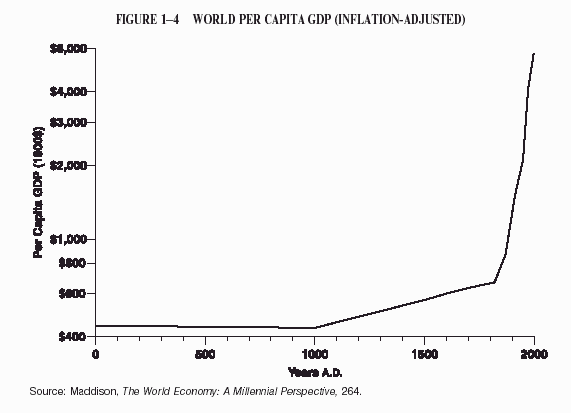
http://www.efficientfrontier.com/ef/404/CH1.HTM


After Goethe, the world changed drastically along with global development and deployment of the Industrial Revolution.  However, it has been supported by accumulated human efforts prior to it.


**** **** ****


Mar 7:22 Thefts, covetousness, wickedness, deceit, lasciviousness, an evil eye, blasphemy, pride, foolishness:

Tuesday, July 21, 2015

"unto many that were blind he gave sight" - Hebrews, Sumerians, Tamils and Japanese


High School Baseball Game Around Tokyo


Hebrews, Sumerians, Tamils and Japanese


The Japanese language is an agglutinative language like the Tamil language spoken in Southern India.

Another interesting thing is that Sumerians also spoke an agglutinative language more than 4,000 years ago.

The Bronze Age began 3,600 BC in the Sumerian world in Mesopotamia.  However Mesopotamia produced no copper and tin.  Copper was imported to Mesopotamia from Iran and coast areas of the Persian Gulf.  However, tin was imported from West Afghanistan through the Gulf as with lapis lazuli, blue precious stones.

Sumerians especially attached the importance to a location in the Persian Gulf called Dilmun.
Dilmun or Telmun[1] was a civilization in Eastern Arabia.[2][3] Dilmun was an important trading centre[2] which at the height of its power controlled the Persian Gulf trading routes.[2] The Sumerians regarded Dilmun as holy land.[4] The scholarly consensus is that Dilmun encompassed Bahrain, Kuwait,[5][6] Qatar and the coastal regions of the Eastern Province of Saudi Arabia.[7] Dilmun was mentioned by Mesopotamian civilizations as a trade partner, a source of the metal copper, and an entrepôt of the Mesopotamia-to-Indus Valley Civilization trade route.
https://en.wikipedia.org/wiki/Dilmun
Dilmun was a relay point for trade between Mesopotamia and India.

Taking all these factors into consideration, it is thought that Sumerians came to Mesopotamia from South India along with trade between Mesopotamia and South India.  The ancestors of Sumerians in South India must have been close to ancestors of Tamils.

And in a wider scope, some ancestors of Japanese and ancestors of Tamils/Sumerians must have been close to one another.

On the other hand, as Abraham came out around the Sumerian capital Ur, it is naturally thought that Hebrews were rooted in Sumerians.  In this context, Judaists, Tamils, and Japanese of today are regarded as descendants of one original language group of the ancient world established after mankind exited Africa 60,000 years ago.

In terms of DNA,  it is uniquely confirmed that the size of Y chromosome is the same between Japanese and Judaists of today.  However no other linkages have been confirmed between Japanese and Judaists of today, though some Japanese share part of DNA with Tibetans rather than Tamils.  But today we cannot find any descendants of Sumerians in the Middle East; Sumerians were absorbed by Arabic tribes.  Sumerian Hebrews must have been also absorbed by Arabic tribes, adopting an ancient Arabic language.  You cannot simply deny the above presented theory.  


A theory linking Sumerians to Japanese, though a little too quixotic
http://www.ne.jp/asahi/davinci/code/history/kuri/index5.html


**** **** ****


Luk 7:21 And in that same hour he cured many of their infirmities and plagues, and of evil spirits; and unto many that were blind he gave sight.


Monday, July 20, 2015

"In which time Moses was born" - No More Money-Based Economy


Around Tokyo


No More Money-Based Economy

Everybody is afraid all over the world of being poor.

If you have money, you can first of all get means to protect yourself and your family.  But without money, your safety is in the hand of other men who have money.  And to earn money you have to be employed by a rich man who might be very evil.  You might be even requested to commit a crime for your salary.  Being poor is a state of risk.

Of course, if you have money, you can satisfy your need and dream in addition to desires after securing your safety, a minimum requirement.  And, with money you can buy various products and services to improve material and psychological quality of your life.  What's more, you can harm the poor acting as an evil man.

Today money is created through banking systems of each nation or international organization.  Value of money is backed up by economic power of nations.  People are working in society producing goods and providing services, which is a basis of value of money.  Without real economic activities of people, money can have no value.

If all the people in the world have big money, they all try to live without working but based on power of money to buy goods and services from others or businesses.  But if no one works for money any more, there will be no goods and services.  Then money will lose its value.

Accordingly, the rich need the poor.  Rich countries need poor countries.  To secure value of money they have accumulated, the rich need laborers who work to produce goods and provide services.  Therefore we may regard money as the major source of evil.

The only solution to address this sinful effect of money is to change the meaning of economy or production of goods and provision of services.

People should not work to give value to money.  People should be engaged in production of goods and provision of services for mutual support for living.  Economic activities should not be linked with value of money but directly to welfare and well-being of people.

In this context, commercialism is the worst factor in human economy.  Commercialism arouses desires in human minds.  To satisfy desires people think they have to get money and big money.  But this flame of desires cannot be quenched any amount of money.  People just endlessly seek and stick to money.

Human matters must not be fixed with money.  Love and faith must solve every human problem.  The last revolution mankind should experience should be this shift from money-based economy to love/faith-based economy.

But what percentage of mankind should come to hate money for this revolution?


church-money
http://hypervocal.com/culture/2011/american-christianity-confuses-itself-with-commercialism/


**** **** ****


Act 7:20 In which time Moses was born, and was exceeding fair, and nourished up in his father's house three months:
Act 7:21 And when he was cast out, Pharaoh's daughter took him up, and nourished him for her own son.