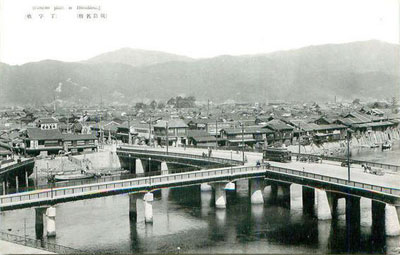
Monday, June 20, 2016

"treasures in heaven" - Complete Charity

Tokyo


Complete Charity

The more you are given, the more you are requested to contribute.

This teaching of Christ Jesus gives an answer to the question why God let the gap between the rich and the poor expand in human society.

If you earn $1, you have to contribute $1 to the society.  If you earn $100, you have to contribute $100 to the society.   If you earn $1 million, you have to contribute $1 million to the society.  If you earn $1 billion, you have to contribute $1 billion to the society.  For this premise, God allows men to be rich momentarily, since they would soon become as poor as others after such contribution.

But the underlying condition is love to others.  Without love to neighbors and the society, rich men will not contribute as much as possible to the society.

Being rich means to see the poor suffering due to a lack of money.  While they have money, they have to see the poor suffering due to a lack of money.  If a rich man has love to human beings, he or she would help the poor.  If he or she gives money to the poor but he or she is still engaged in a social system that generates poor people, his act is useless.  So, a rich man who has love to the poor would stop sustaining social structure and systems that allow him or her to become rich but make some others poor.

So, the true charity is not donation of 10% of one's wealth but 100% of one's wealth.  If a rich man become truly poor after donation or dispensation of charity, he is following the teaching of Christ Jesus.

It also applies to businesses.  Complete charity is what is required for them.


APPENDIX: Ranking of Countries in Terms of Added Values in their Financial Sectors

1. US
2. China
3. JAPAN
4. UK
5. France
6. Germany
7. Brazil
8. India
9. Italy
10. Canada
11. Australia
12. Russia
13. Spain
14. South Korea
15. Switzerland
16. Netherlands
17. Mexico
18. Argentina
19. Taiwan
20. Singapore
21. Saudi Arabia
22. South Africa
23. Indonesia
24. Belgium
24. UAE
26. Turkey
27. Jordan
28. Thailand
29. Malaysia
30. Ireland


**** **** ****

Mat 6:20 But lay up for yourselves treasures in heaven, where neither moth nor rust doth corrupt, and where thieves do not break through nor steal:

Saturday, June 18, 2016

"bound him in prison for Herodias' sake" - Know God is the Answer

Tokyo


Know God is the Answer

There are many people living in this world.

Each has his or her own internal world and existence conditions.  Each is unique, since each person occupies different space and is put in different time conditions, an age, timings for specific incidents, etc.

But there are some rules, laws, and truth that apply commonly to all the human beings, such as the fate of inevitable death, needs for foods, desire to satisfy pride, inclination to something attractive, etc.  Religion is related to it.  But money more strongly applies to everyone.

In study of the universe, scientists think about how the universe  was born.  They think with focus on the early stage of development of the universe to understand the truth of the universe where we live.

Like that, we have to think back the history of human beings to understand truth of the human species.  Maybe there is a certain time point in the history of the earth when the human species was definitely established, probably 250,000 years ago in Africa.

However, there is no need to take our eyes back to such a long past.  It is because it was just 2000 years ago that Christ Jesus appeared.  We must think about how human beings lived 2000 years ago.  It must show truth of human life that is buried in this modern, complex, and diversified world.

Though we can only refer to the Gospels, it tells what are essential elements in living conditions of human beings that can be found in any men living in any situations today.

And we can see the overwhelming theme for the mankind as is revealed in the Gospels: the relationship between God and a man.

All the other elements depicted and implied in the Gospels converge to this issue: the relationship between God and a man.  What Christ Jesus preached was all concerned with this point.  And from this condition, millions and billions of living conditions of human beings have been generated all through the history.

But it is natural, since it is God that created human souls and human beings.  Life of every member of the mankind was conditioned by God from the beginning.  Therefore, we have to live along the teaching of God.  Then we can address every problem and challenge in our lives.

We were directed and oriented by God from the beginning.  For us to live better or righteous, it is essential to learn the teaching of God and practice it.  This is the essence of the teaching of Christ Jesus.  Accordingly His teaching effectively applies to any men living in any different conditions in any countries in any era of the history..

Know God then we can understand ourselves and truth of our problems.  In other word, "Know god" is the answer to your specific and unique problems.


**** **** ****


Mar 6:17 For Herod himself had sent forth and laid hold upon John, and bound him in prison for Herodias' sake, his brother Philip's wife: for he had married her.
Mar 6:18 For John had said unto Herod, It is not lawful for thee to have thy brother's wife.

Wednesday, June 15, 2016

"if ye forgive not men their trespasses" - While We Can Understand the Gospels

Tokyo


While We Can Understand the Gospels 


Christ Jesus spoke and preached to people living 2000 years ago in a very specific part of the world.

But His words sounded so real even today.  His teaching did not miss the point even today.  It is as if He had been speaking to us directly.

In these 2000 years, the world changed so much.  Technology and science have developed so greatly.  Social systems and customs have changed drastically in any parts of the world.  But still his voices issued 2000 years ago touched our minds and heats so real.

In other word, there are some parts in the mankind that have not changed over a period of 2000 years.  For example, our DNA seems not to have changed in these 2000 years.  Apparently, the core of human minds and hearts has not changed.  Our attitudes to death must be the same as it was 2000 years ago.  Our concepts to God and Satan must be the same as before.

However, the Vatican has come to lose its influential power.  Many churches in Europe are losing believers.  Churches in the US have been influenced by commercialism.

In these 2000 years, human beings have kept the same fundamental spiritual structure, so that we can understand situations, words, and teachings of Christ Jesus depicted in the Gospels as real.  But, due to too fast progress of technology, we come to live in a too different mode of human life compared to the world where the Gospels were written.

Products and systems produced by application of modern technology have made it unnecessary for us to rely on God to fulfill our wishes.  We will not pray to God for foods, medicines, or any other necessities, but we will think about how we earn money.  Because our modern society will give everything we need if we pay prices with money.  In this context, this modern economy is a god for us.  We can obtain almost anything we wish if we have enough money.

If science and technology continue to develop at an ever faster pace, most of people living in the advances societies might have loose reasons for praying to and asking help from God.  Such a way of living must have an influence of DNA and the core of human minds and hearts.

Put simply, in this century, people living in the advanced nations might be evolving to a different type of the human species.  They might lose some ability to understand the Gospels, since they will have no need to pray to God or ask help from God.

In the long future, the breakthrough will come when development of science results in revolutionary longer life of human beings.  Human science will be concentrated to conquest of death.  And, people might cease to think about God.

Though we are not yet at such a level of advancement, we are moving toward the direction.  So, the question is whether such progress is authorized by God.  If not, a catastrophe must happen in the process of the progress.

While we can understand words and teachings of Christ Jesus and background situations depicted in the Gospels, we have to review our development of science and society.  It is because we are entering a new era where there is a possibility that God will be lost gradually or drastically from our civilization.

For this reason, we have to all the more put God at the core of our minds and heats but not power of money.


**** **** ****


Mat 6:14 For if ye forgive men their trespasses, your heavenly Father will also forgive you:
Mat 6:15 But if ye forgive not men their trespasses, neither will your Father forgive your trespasses.

"king Herod heard of him" - Removal of Tokyo Governor Masuzoe

National Parliament (Diet) Bldg., Tokyo


Removal of Tokyo Governor Masuzoe


In Japan, the biggest news item in these days is not the Orlando shooting but the state of the status of Tokyo Governor Yoichi Masuzoe.

Due to his irresponsible handling of public money and apparently illegal use of political funds, Tokyo voters, the Media, and other parties concerned are demanding his resignation.  However Governor Masuzoe is refusing to resign partly claiming that he has to attend the Rio Olympics stadium to receive Olympic flag as Tokyo is to host the 2020 Summer Olympics.

For the Tokyo metropolitan parliament to pass the official dismissal of the governor, the largest ruling party, the LDP, should join the opposition parties and another ruling party, the Komeito, that have already decided to fire Governor Masuzoe.

However, finally, around 11:45 P.M. of June 14, Tuesday (Japan Time), the LDP decided to join all the other parties for dismissal of Governor Masuzoe.

So, the Tokyo metropolitan parliament will pass votes of no confidence on the governor on Wednesday.


(Preceding Tokyo Governor Naoki Inose was also forced to resign two years ago for illegal money handling.  After Inose, Masuzoe was elected as governor with crucial support from Prime Minisiter Shinzo Abe of the LDP.)


###

June 15, Wednesday (JAPAN TIME):

This morning Governor Masuzoe has reportedly decided to resign voluntarily.  He is expected this morning to submit his resignation note to the chairman of the Tokyo metropolitan parliament.  He has finally yielded to millions of people who have requested his resignation through the Media, the Internet, direct calling and facsimiles to the Tokyo Metropolitan office.

In July or August at the latest, election for Tokyo Governor will be held.

Yoichi Masuzoe (1948-) was an ex-assistant professor of the University of Tokyo who however quit the university to be a popular critic and a conservative politician in 1990s.


**** **** ****

Mar 6:14 And king Herod heard of him; (for his name was spread abroad:) and he said, That John the Baptist was risen from the dead, and therefore mighty works do shew forth themselves in him.
Mar 6:15 Others said, That it is Elias. And others said, That it is a prophet, or as one of the prophets.

Friday, June 10, 2016

"Jesus said, Make the men sit down" - Nobunaga and Jesuit Missionaries to Japan


A Tokyo Subway Station


Nobunaga and Jesuit Missionaries to Japan


One of the most popular or interesting historical characters of Japan is Oda Nobunaga (1534-1582).
Oda Nobunaga was a powerful daimyo of Japan in the late 16th century who attempted to unify Japan during the late Sengoku period. 
The goal of national unification and a return to the comparative political stability of the earlier Muromachi period was widely shared by the multitude of autonomous daimyo during the Sengoku period. Oda Nobunaga however, was the first for which this goal seemed attainable. Nobunaga had gained control over most of Honshu (see map below), before his death during the 1582 Honnō-ji incident, a coup attempt executed by Nobunaga's vassal, Akechi Mitsuhide. It is not certain if Nobunaga was killed in the attack or if he committed seppuku. The motivation of Mitsuhide's betrayal was never revealed to anyone who survived the incident, and has been a subject of debate and conjecture ever since the incident.
https://en.wikipedia.org/wiki/Oda_Nobunaga
The era Nobunaga lived in was at the end of the age of provincial wars in Japan.  At the time, since the samurai class had taken political power from the imperial court, more than 300 years had passed.

The first samurai regime, the Kamakura feudal government, collapsed in 1333、and then the second samurai regime, the Muromachi feudal government, established in Kyoto in 1336, came to lose ruling power since the end of the 15th century.  Samurai feudal lords, called daimyos, independently occupied local territories while the emperor and the Muromachi shogun in Kyoto had no political power.  Japan had no unified power center, and this era was called  the age of provincial wars.  The concern was who among powerful daimyos would unify Japan again with his military power and become a new shogun, a kind of king of the samurai class.

In this situation, the first daimyo who looked like having power to unify Japan again was Oda Nobunaga originally from a region near Nagoya.  Nobunaga adopted, in a large scale, harquebuses or primitive rifles sailors of a wrecked  Portuguese ship brought to Japan.  His army defeated troops of rival daimyos one after another.  Nobunaga actually occupied Kyoto, which was going to pave the way for establishing his hegemony all over Japan.  He had already occupied most of the regions east of Kyoto, which is called the central Japan today, but some powerful daimyos with territories in west of Kyoto would not surrender to Nobunaga.  So, Nobunaga decided to launch a big military campaign with tens of thousands of samurai troops equipped with thousands of harquebuses.

But at night before starting from Kyoto, he was attacked and killed by one of his generals who mobilized 15,000 soldiers to surround a temple near Kyoto where Nobunaga happened to stay with just 150 entourage samurais.

So, though Nobunaga did not unify Japan or did not become a shogun or a top leader of all the samurais, his remarkable success of having occupied almost half of Japan by his military power made him a hero in the history, though he was originally a daimyo with a small territory around Nagoya.  It is also because almost for preceding 100 years no daimyos had come so close to unification of Japan like Nobunaga.

His popularity also came from his unique personality.  Nobunaga was so revolutionary in his way of thinking and behaviors.  That is why he adopted, in a large scale, the fire arms newly introduced to Japan by Europeans.  Nobunaga was also interested in Christian missionaries who started to come to Japan at the time.  Those Catholic missionaries brought some unique or advanced products to Japan in addition to information of the world.  Nobubaga loved them.  So, he allowed European missionaries to be engaged in their missionary work in his territory.  In fact, some Christian churches were built even in Kyoto of the 15h century under protection of Nobunaga.

Some missionaries wrote about Nobunaga in their diaries or letters as they were also so impressed by this rising future samurai king.  But as they came to know Nobunaga more, they started to be worried by strong samurai leader Nobunaga.  He loved Western products and liked to get information of the world from European priests, but he did not believe Christianity.  He was not even interested in the teaching of the Bible.  He was a kind of abusing Catholic missinaries.

So, according to one theory, some Jesuit missionaries found evil force in Nobunaga.  They decided to kill Nonbunaga.  And, eventually, they worked behind the scene of the assassination of Nobunaga in Hon-noji Temple in 1582.  But their plan was carried out so secretly.  Even Akechi Mitsuhide, one of Nobunaga's general who attacked and killed Nobunaga, did not realize why and how he could get a chance to take over power from Nobunaga who had sometimes insulted Mitsuhide enough to incur Mitsuhide's hatred.

The tragedy that Nobunaga was assassinated while he was about to seize hegemony all over Japan contributed to his popularity.  He looks like a kind of tragic hero.  He looks quite different from any other heroes in the Japanese history.  There is something in Nobunaga that appeals to the minds of Japanese people.  He was revolutionary in his mind set though he was so cruel in battle fields.  He must have looked very differently to different people even while Nobunaga was living.  And to some Jesuit missionaries, Nobunaga might have looked so dangerous to their future mission in Japan.  Maybe they worked secretly for the assassination of Nobunaga.

Even in Europe, in the late 16th century, the Vatican tried to assassinate Queen Elizabeth I who executed Mary, Queen of Scots.

Indeed, the world was so bloody in the 16th century.  So, Oda Nobunaga, the rising samurai daimyo in Japan who was abusing Catholic missionaries, might have been assassinated with involvement of Jesuit priests, though there has been no concrete evidence so far.


Oda-Nobunaga.jpg
Oda Nobunaga
https://ja.wikipedia.org/wiki/%E7%B9%94%E7%94%B0%E4%BF%A1%E9%95%B7


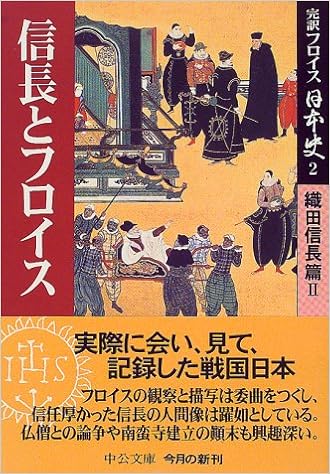
A book on Nobunaga and Missionary Luís Fróis
https://www.amazon.co.jp/%E5%AE%8C%E8%A8%B3%E3%83%95%E3%83%AD%E3%82%A4%E3%82%B9%E6%97%A5%E6%9C%AC%E5%8F%B2%E3%80%882%E3%80%89%E4%BF%A1%E9%95%B7%E3%81%A8%E3%83%95%E3%83%AD%E3%82%A4%E3%82%B9%E2%80%95%E7%B9%94%E7%94%B0%E4%BF%A1%E9%95%B7%E7%AF%87-2-%E4%B8%AD%E5%85%AC%E6%96%87%E5%BA%AB-%E3%83%AB%E3%82%A4%E3%82%B9-%E3%83%95%E3%83%AD%E3%82%A4%E3%82%B9/dp/4122035813?ie=UTF8&*Version*=1&*entries*=0


**** **** ****


Joh 6:9 There is a lad here, which hath five barley loaves, and two small fishes: but what are they among so many?
Joh 6:10 And Jesus said, Make the men sit down. Now there was much grass in the place. So the men sat down, in number about five thousand.
Joh 6:11 And Jesus took the loaves; and when he had given thanks, he distributed to the disciples, and the disciples to them that were set down; and likewise of the fishes as much as they would.

Wednesday, June 08, 2016

"what things ye have need of" - Mongol Invasion against Japan vs. Zen Buddhism

Around the Imperial Palace, Tokyo


Mongol Invasion against Japan vs. Zen Buddhism


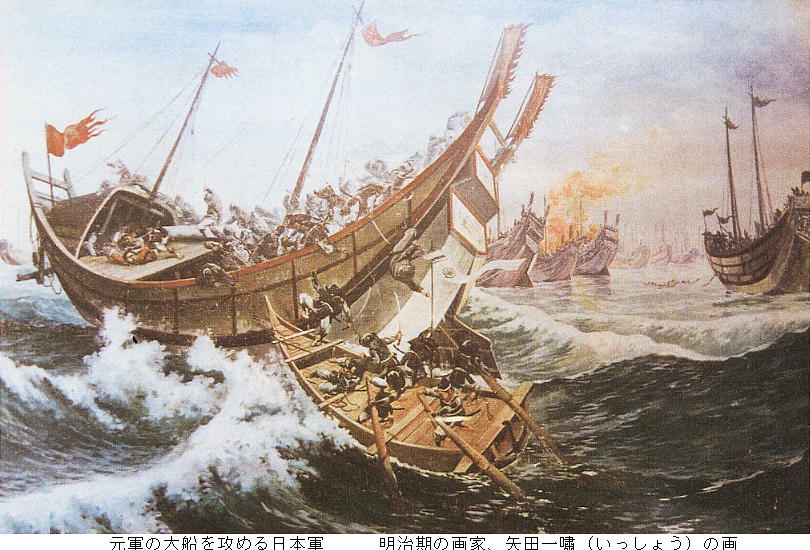
In 1274 and 1281, Kublai Khan (1215-1294), the Mongolian emperor of the Yuan dynasty of China, tried to invade Japan, sending more than 30,000 troops by 900 ships in 1274 and more than 150,000 troops by 4,400 ships in 1281.

These incidents are called Mongol invasion attempts against Japan.

At the time, Japan was governed by the first samurai regime led by the quasi-shogun from the Hojyo clan (the real shogun had no actual power).   The quasi-shogun, Hojyo Tokimune (1251-1284), was not intimidated.  He resolutely stood against the then super-power Yuan, calling for samurais all over Japan to come to Kyusyu, the closest area of Japan to the Korean Peninsula, and prepare for war.

Eventually, Yuan troops, consisting of Mongolians, Chinese and Koreans, were defeated twice.  The strongest nation in the world at the time could not occupy any part of Japan.  Since then no Chinese dynasties tried to invade Japan.

But what made Hojyo Tokimune so bravely encounter Mongolians?   Especially, in the second invasion, Emperor Kublai mobilized overwhelmingly larger troops than in the first invasion.  But, Tokimune was so determined to fight them.

It was one Chinese Buddhist priest who came to Japan to teach Zen Buddhism that supported Tokimune.  This priest Mugaku Sogen (1226–1286) himself had encountered Mogolian troops when he was still in China.  It was when Mongolians invaded southern China and Mugaku Sogen took shelter in a temple.  But, Mongolian soldiers came in the temple and tried to kill him.  However, as Mugaku Sogen chanted some Buddhist creed, soldiers were impressed and left the temple without killing him.

Afterward, Mugaku Sogen was invited to Japan by Hojyo Tokimune who expelled the first Mongolian invasion of 1274.  Mugaku Sogen  came to Japan in 1279 to settle in Kamakura, the capital of the samurai regime, and teach Buddhism to many samurais.

Before the Yuan dynasty started the second invasion of Japan, Mugaku Sogen predicted the coming war to Tokimune, saying to go ahead without looking back.  Encouraged by this word, Tokimune bravely mobilized samurais, made them prepare for the world strongest Mongolian troops, and took command of them.

Though it was true that a strong typhoon attacked Mongolian ships off the coast of Kyusyu and destroyed many of them, Japanese samurais successfully defended an area around Hakata Bay, the main battle field, of northern Kyusyu courageously for two months against hundreds of thousands of Yuan troops.  And, Hojyo Tokimune ascribed his victory to the spiritual support from Mugaku Sogen rather than to the typhoon.

Put simply, 150,000 troops Emperor Kublai Khan dispatched to Japan were defeated by one old Chinese Buddhist monk who helped Japanese samurais.

After the war, Hojyo Tokimune built a temple named Enkakuji as part of memorial services for fallen samurais.  And, Mugaku Sogen became the chief priest of Enkakuji Temple to live in the temple till his death.

Accordingly, Zen Buddhism became popular among Japanese samurais as well as in the general public.

But if Japan had been conquered in 1281 by the Yuan dynasty established by Mongolians in China, the history of Japan should have been quite different.  For this reason, Buddhism and especially Zen Buddhism became an essential part of Japan.


 .http://inoues.net/ruins/genkoh.html


イメージ 1
The Mogolian invasion route from the Korean Peninsula to Kyusyu.  They also came over the East China Sea.  Red dots show Hakata, Kyoto, and Kamakura from the left.
http://blogs.yahoo.co.jp/mqhdq538/62996264.html


**** **** ****


Mat 6:8 Be not ye therefore like unto them: for your Father knoweth what things ye have need of, before ye ask him.
Mat 6:9 After this manner therefore pray ye: Our Father which art in heaven, Hallowed be thy name.

Monday, June 06, 2016

"he marvelled because of their unbelief" - An Episode about Tokyo Founder in the 15th Century


Around the Imperial Palace, Tokyo


An Episode about Tokyo Founder in the 15th Century

Tokyo was originally developed around the Edo castle that is now used as the imperial palace.

The present imperial palace was built in the  premises of the Edo castle that was, generally speaking, built by Tokugawa Ieyasu, the leader of samurais who governed Japan and started the Tokugawa regime, in 1590.  However, the story was not so simple.

Well before Tokugawa Ieyasu, samurai Shigetsugu Edo first set his residence in the place where the imperial palace is today placed in the 11th century.  And, afterwards samurai Ota Dokan built a castle in the same place in 1457.  However, the Ota clan could not prosper and his castle was used by other samurais.  And finally,  150 years later, Tokugawa Ieyasu occupied it and expanded Dokan's Edo castle.

So, 400 years ago, Tokyo was neither a big city nor a big farming area.  In the coastal area facing Tokyo Bay, only old Dokan's castle stood.  Historically, the Kanto Plain in which Tokyo is situated was first developed in the northern area connecting to mountainous areas since the 6th century.  The coastal area of the Kanto Plain was not suitable for farming, or especially rice cropping.

But, Tokyo (then called Edo) started to become the largest city in Japan when Tokugawa Ieyasu set the capital of Japan there after he seized political power all over Japan in 1603, though the emperor still continued to live in Kyoto.

In the era of Ota Dokan, about 40 km inland from Tokyo Bay there were two key castles used by the samurai lord to whom Ota Dokan belonged.  And these castles were connected to Tokyo Bay through rivers.  Ota Dokan built a castle at the middle point between the estuaries of these rivers on Tokyo Bay.  This castle was expanded by Tokugawa Ieyasu more than 150 years after it had been used by other samurai lords who came to occupy the area after Ota Dokan.

When Tokugawa Ieyasu came to Edo, the area around Tokyo Bay had just one small town around the castle.  But, after 1603 when Ieyasu chose Edo as the capital of Japan, Edo expanded rapidly with population of 150,000 around 1603 to over 500,000 in the middle of the 18th century and more than one million in the early 19th century, though London had less than 900,000 population at the time.

When the Tokugawa clan was defeated by imperial samurais in 1868, Tokugawa shogun handed the Edo castle to the imperial samurais.  Then, the emperor moved from Kyoto to Edo that was renamed Tokyo.  Subsequently, Westernization and modernization of Japan started, putting an end to the samurai age.

So, the history of Tokyo virtually started with a samurai castle built by Ota Dokan in the middle of the 15th century.

When samurai Ota Dokan was travelling through the Kanto plain to his father's house, a rain suddenly started to fall.  Then he found a poor farmhouse.  Dokan wanted to borrow a straw raincoat there.  But when he asked a straw raincoat from the family, a girl of the house just presented a branch of yellow Japanese globeflower (called yamabuki in Japanese) to Dokan.  He was puzzled, receiving the flower and leaving the poor farmhouse.

Later, Ota Dokan told this episode about the strange girl to one of his subjects.  However, the subordinate samurai said, "The girl implied an old poem from an well known anthology:

The yamabuki flowers are flourishing,
double-flowered or more, though  
making me sad just with no fruits."

(Double-flowered Yamabuki produces no fruits.  And the Japanese word fruit is "mi" while the Japanese word for a straw raincoat is "mino." The girl indicated that her family was so poor that they had no "mino," by showing the yamabuki flower to Ota Dokan on the assumption that Dokan knew the above poem.  And she put her sorrow in referring to the poem.)

So, Ota Dokan felt shame that he did not even know the anthology of waka poems called the Goshui-wakasyu (compiled in the 11th century by an emperor).  Since then, Dokan started to learn waka or Japanese poems.  And, finally he became one of the representative writes of Japanese poems in the era.

But the end of Dokan's life was tragic.  The samurai lord whom Dokan served doubted that Dokan might someday attack him to seize the territory, since Dokan performed so well in battles against rival samurai lords.  So, the samurai lord invited Dokan to his castle, and accordingly Ota Dokan was foully murdered.

However, many Japanese still know that the imperial palace in Tokyo was originally a castle built by Ota Dokan in the middle of the 15th century, though it was expanded by Tokugawa Ieyasu around 1600.


Ota Dokan and a girl holding forth yamabuki flowers in the rain
http://www.kiku.com/electric_samurai/cobweb_castle/samurai_gallery/dokan.html


**** **** ****


Mar 6:5 And he could there do no mighty work, save that he laid his hands upon a few sick folk, and healed them.
Mar 6:6 And he marvelled because of their unbelief. And he went round about the villages, teaching.
Mar 6:7 And he called unto him the twelve, and began to send them forth by two and two; and gave them power over unclean spirits;

Sunday, June 05, 2016

"Lord also of the sabbath" - Confucianism and Samurais

Around the Imperial Palace, Tokyo


Confucianism and Samurais

Samurais of Japan were not simply warriors, though the sword was a symbol that proved a samurai status of each samurai.

They were originally from guards of the imperial court in Kyoto.  But they gradually took over power from the imperial court and the noble class to set up their own regime in the 12th century.

Since then, the samurai class governed Japan till 1860s when the last samurai regime led by the Tokugawa clan fell.  As leaders of the nation, they had to acquire some culture ranging from Japanese and Chinese classics, Buddhism, Confucianism, Shintoism, and various types of art.  As samurais also became bureaucrats in the central government and officials in office of local samurai lords, they also learnt financing and technology.

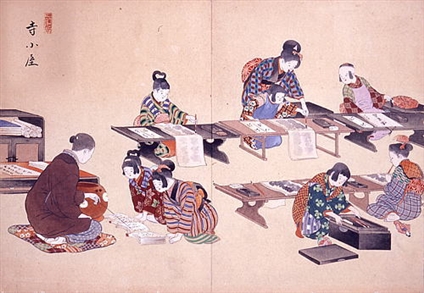
In the samurai era of Japan, intellectual persons belonged to the noble class living in Kyoto, the samurai class, Buddhist monks or Shinto priests, or rich merchants or farmers.  Especially in the Edo period of Japan (from the early 17th century to 1860s), 100% of samurais could read and write while 50% of other people, including farmers, could also read and write, since small private schools and temple schools were set up in almost every village and town.


A small private school for children of farmers, craftsmen, and merchants in the Edo era
http://www.edojidai.info/sikijiritu.html

When the Tokugawa clan seized political power and hegemony all over Japan after the age of provincial wars that lasted for one and half centuries, Tokugawa shogun adopted a school of Confucianism as de facto national learning.  They spotlighted an aspect of Confucianism that put emphasis on the relationships between the ruler and subjects, masters and servants, parents and children, and men and women to strengthen social order.  They put samurais at the highest position in the social hierarchy, farmers at the second position, craftsmen at the third position, and merchants at the fourth.  The Tokugawa shogun is situated at the top of the social structure almost in parallel with the emperor.  They used teaching of Confucianism to establish and fix the class society in Japan governed by samurais of various clans.

So, before Westernization and modernization of Japan that started in 1860s, Japanese had been cultivated by Confucianism in addition to Buddhism in terms of spiritualism.  Though Christianity was openly introduced to Japan after Meiji Restoration of 1868, this religion could not prevail due to deeply rooted Buddhism and Confucianism.

What is a point at issue is that Japanese samurais and especially the last samurai regime governed Japan not only by swords but also by Confucianism, though it was one unique school of Confucianism.

So, the moral code of the Japanese people of even today is rooted in Confucianism.  However, influences of Confucianism are different among China, Korea, and Japan.  So, these nations have not necessarily kept good relationships.  Yet, Japanese are spiritually closer to Chinese and Koreans who are also historically under influence of Confucianism than Europeans and Americans who have nothing to do with Confucianism.    

One of popular teachings of Confucius among samurais is: Masters should behave like masters; subjects should behave like subjects; fathers should behave like fathers and children should behave like children.

Of course, men should behave like men and women should behave like women.

Indeed, the Son of Man, Christ Jesus, behaved like the Son of God.

In addition, samurais were expected to die like samurais, so that they sometimes commit a suicide by disembowelment or perform hara-kiri (seppuku) if a need arose.

Incidentally, it seems that descendants of ex-samurais interestingly account for a majority of Japanese Christians of today for some reasons.


**** **** ****


Luk 6:5 And he said unto them, That the Son of man is Lord also of the sabbath.

Saturday, June 04, 2016

"a feast of the Jews, was nigh" - A Symbol of the Battle of Okinawa


The National Diet (Parliament) Bldg. of Japan, Tokyo


A Symbol of the Battle of Okinawa


The Battle of Okinawa was fought in the last stage of WWII between March 26 to June 23, 1945.

Okinawa Island situated between the mainland Japan and Taiwan has a length of 107 km and a width of 31 km.  The population was a little less than 600,000 before WWII.

To defend the Okinawa Islands, Imperial Japan deployed 116,000 troops while the US dispatched 548,000 army and navy soldiers.  The Battle of Okinawa took 200,000 Japanese lives among which 94,000 were Okinawa citizens.  Through the Battle, 12,500 US soldiers were also killed.

After WWII, the US occupied Okinawa.  It was in 1972 that administrative right on Okinawa Prefecture was returned to the Japanese Government.  For this reason, there are today still many US military bases in Okinawa whose total area accounts for 10% of all the area of Okinawa Prefecture.

Okinawa is the only prefecture of Japan where ground battles were fought between Imperial Japanese troops and US troops.  And, the scale of damage and the number of civilian deaths were so large that Okinawa people have been critical to the central government of Tokyo.  They still remember that in the Battle of Okinawa they were expected by the Imperial Japanese military to commit suicide before being captured by US troops.  Accordingly, most of Okinawa citizens were prepared for death when the US started to invade Okinawa Island by mobilizing 1,500 ships.

The battles were actually ended on June 23 with the collapse of the headquarters of the Japanese garrison troops on June 23, but some isolated Japanese soldiers continued fight.  Even Okinawa citizens hiding in caves and the like hesitated to come out.  Most of houses, buildings, and utilities of Okinawa were demolished through three-month fierce fight.

But on June 25, a seven-year old girl suddenly appeared from a devastated field near the shore.  She was alone walking among other citizens who were walking to American troops for help now that the battles were over.  A US cameraman paid attention to her and took some pictures of her because she was carrying a white flag.  She looked like symbolizing the tragedy of the Battle of Okinawa.

画像

http://boyaki-555.at.webry.info/200910/article_3.html
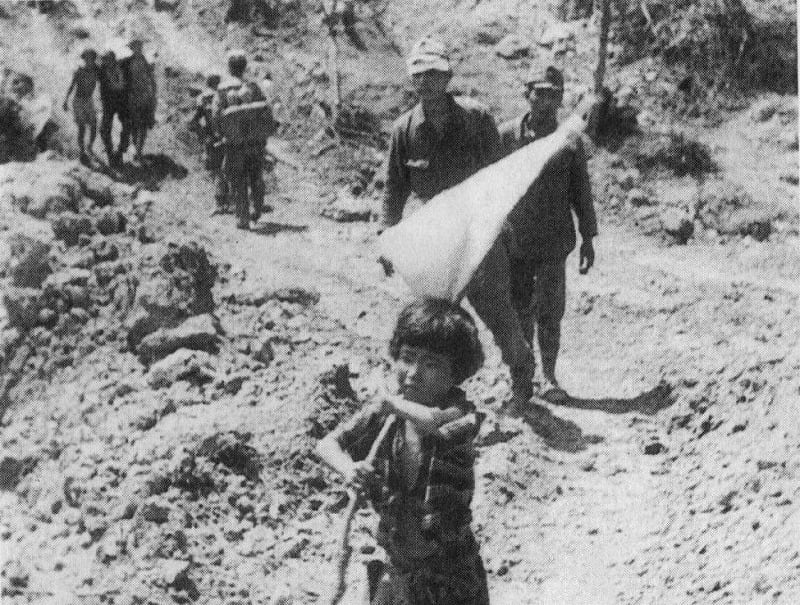


http://blog.goo.ne.jp/musshu-yuu/e/418cd021c4cf3bddd4e904565153c3e7

These pictures were included in some American picture books issued after WWII.  And, decades later, an Okinawa woman who happened to find one of the books in a book shop saw herself in these pictures.  But she did not come forward to claim that the little girl carrying a white flag was herself.

However, as time went by, these pictures came to be widely known among Japanese and Okinawa people, resulting in various rumors and stupid stories circulated.  So, in 1987, Tomiko Higa wrote a book to tell the true circumstances about the picture.

Tomiko's mother had been dead already before the Battle of Okinawa. When the Battle started, her father left their home to join some activities to support Imperial troops.  He said to his four children (three girls and one boy), "When you die, show your smile to the enemy!"  The children never saw their father since then.  Tomiko was the youngest children of the family.  She was following her siblings to run away from battles.  But her brother died as a stray bullet hit him.  And in a turmoil and confusion, Tomiko was separated from her elder sisters.

So, Tomiko alone wandered through battle fields and safe shelters that were mostly caves.  She was sometimes rejected when she entered a safe cave as too many people were in it or Japanese soldiers did not like to protect civilians.  So, she alone moved around battle fields and demolished villages to eventually come to a half-hidden cave near the shore.  She met two old people there, an old man who lost his hands and legs and a blind old woman who was taking care of him.  Tomiko was allowed to stay there with the poor old couple.  Weeks passed, but they did not realize that the battles were actually ended on June 23.

But on June 25, American soldiers found the cave where the three hid and lived.  They shouted to the cave, "Come out! If you don't come out, we will blast this cave!"

The old man said to Tomiko that he and the blind woman were determined to die there in the cave but Tomiko must live.  The disabled old man had the blind woman make a white flag from his underwear and tie it to a stick of wood.   Tomiko asked the old man to allow her to stay with them and die together.  But the old man scolded her: "You must live.  Life is precious.  This white flag is a universal symbol of surrender.  American soldiers would not shoot you."

So, seven-year-old Tomiko alone came out of the cave carrying the white flag tied to a stick.  She looked impressive to an American cameraman accompanying US troops, since there were no such children carrying a white flag to surrender.  He took pictures of Tomiko who realized it.  She thought that she might be shot.  And she remembered that her father had told to die with smiling to the enemy.  So, Tomiko smiled and waved to the cameraman.


https://ja.wikipedia.org/wiki/%E7%99%BD%E6%97%97%E3%81%AE%E5%B0%91%E5%A5%B3


And, this picture became well known after WWII as a kind of symbol of tragedy of the Battle of Okinawa, though the little girl was not covering her face from fear but was smiling and waving as she expected to be shot to death by an American cameraman.


https://ja.wikipedia.org/wiki/%E6%B2%96%E7%B8%84%E6%88%A6
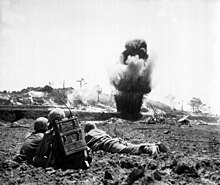

https://en.wikipedia.org/wiki/Battle_of_Okinawa


Note: The Imperial Japanese military virtually forbade its soldiers surrender, which meant to fight till death.  Accordingly, it was unthinkable that white flags were used for surrender by Japanese troops.  This paradigm was apparently forcibly applied to Okinawa citizens during the Battle of Okinawa.  White flags were what should not be used even by a poor little Okinawa girl.


**** **** ****


Joh 6:4 And the passover, a feast of the Jews, was nigh.
Joh 6:5 When Jesus then lifted up his eyes, and saw a great company come unto him, he saith unto Philip, Whence shall we buy bread, that these may eat?

"the brother of James, and Joses, and of Juda, and Simon?" - Traditional Formality in East Asia

Fukushima Station, Japan


Traditional Formality in East Asia


Formality and etiquette were major factors in the Chinese imperial courts that were first established in the Xia dynasty (called Ka in Japanese; c. 2070 – c. 1600 BC) and continued till the fall of the last Chinese classic empire Qing dynasty (called Shin in Japanese; 1644 to 1912).

It is thought that they were introduced for the king of Xia to manage noble people.  And then, they were developed as means to govern other tribes around the nation Xia.  They became a main theme in the teaching of Confucius and other schools of Chinese philosophy.

Influences of respect for formality and etiquette can be even today seen in China, North and South Koreas, Japan as well as Taiwan.  They are still a unique feature in East Asia since the region has been strongly influenced by ancient Chinese culture and philosophy.

However, Europe, the Middle East, India, and South East Asia, in addition to Africa, have no such a high degree of respect for formality and etiquette as is observed in East Asia.

So, God might have chosen an ancient Chinese man instead of Abraham or an East Asian tribe in lieu of Hebrews.  But the fact that God chose Abraham and Hebrews must mean there is something more important than formality and etiquette having been observed in ancient Chinese courts and subsequent East Asian societies.

Yet, to understand East Asians, it is important to learn the spirit that has supported this tradition in East Asia, though modern China looks like abusing this tradition while modern Japan moderately keeps it in its social system with the imperial family at its center.

Traditional formality deeply rooted in the minds of Japanese is also mixed with mildness of the Japanese natural climate, resulting in formation of  Japanese composition as it is observed.  However, it lacks austerity of monotheistic religion like Judaism, Christianity or Islam.

Therefore, the formality Muslims observe when praying to God looks uniquely impressive to the eyes of the Japanese people.  Maybe most of Japanese people might respect Muslims, though cultural aspect of Islam is so foreign to the Japanese.


**** **** ****

Mar 6:3 Is not this the carpenter, the son of Mary, the brother of James, and Joses, and of Juda, and Simon? and are not his sisters here with us? And they were offended at him.
Mar 6:4 But Jesus, said unto them, A prophet is not without honour, but in his own country, and among his own kin, and in his own house.

Thursday, June 02, 2016

"certain of the Pharisees said unto them" - A God of Baseball Coming Down


Around Tokyo


A God of Baseball Coming Down

Baseball was first introduced into Japan by an American who was teaching in a school in Tokyo in 1871.  The school later developed to be the University of Tokyo.

The most powerful player in the history of the Japanese professional baseball is Sadaharu Oh who delivered total 868 home runs, though his nationality is Taiwanese (he had been born in Japan between the Japanese mother and the Chinese father in 1940).

Oh, who played in the Tokyo Giants all through his career, became a superstar in the Japanese professional baseball since he hit 55 homers in 1964 when one season had 140 games.  Since then, many pitchers avoided confrontation with Oh by giving him a walk.  For example, in the 1966 season, Oh was given a walk 41 times in addition to drawing a walk 142 times.  But not all the pitchers of opposite teams took these safety measures.

In one game in 1968, an American pitcher hired by an opposite team beaned Oh, since Oh looked in very good conditions though he always looked so at bat in those days  The ball did not hit Oh.  But a coach of the Giants got angry and into a scrimmage with the American pitcher with other players joining the clash.  Finally, the coach and the American pitcher were ordered to leave the ball park.  But a Japanese pitcher who took over beaned Oh, too.  This time, the ball hit the head of Oh who fell over and was soon carried to a hospital from the ball park by ambulance.

The whole ball park was thrown into an extraordinary and eerie atmosphere.  The rivalry between the Giants and the opposite team was always so tense, since the Giants represents Tokyo and the opposite team, the Tigers, represents Osaka, the biggest rival city of Tokyo. .

The next batter was Shigeo Nagashima, who is the most popular and loved player in the history of the Japanese baseball.  Nagashima was a kind of big brother to Oh in the team.  And the spectators got nervous, though in quite silence, since the pitcher who had struck the head of Oh with bean ball was still on the pitching mound.

The dangerous pitcher threw a ball at Nagashima who hit it over the fence into the bleacher seats.  Then, all the spectators felt relived, giving Nagashima a great cheer.

At the moment, some news reporter felt, as he wrote later, a god of baseball coming down to the ball park.

Shigeo Nagashima made this kind of drastic performance many times in his career as the leading batter of the Giants along with Oh till he retired in 1974 (Oh retired in 1980).  So, Nagashima became the player who represented the Japanese professional baseball.  Even today, he enjoys a good name and reputation not only in the baseball community but also in the whole nation.

Anyway, this episode of a baseball game in Japan in 1968 is one of examples where some Japanese feel a god coming down from Heaven to the ground.


Scrimmage in the 1968 baseball game between the Giants and the Tigers with Oh, the fourth from the left 
http://column.sp.baseball.findfriends.jp/?pid=column_detail&id=001-20160314-16


**** **** ****


Luk 6:2 And certain of the Pharisees said unto them, Why do ye that which is not lawful to do on the sabbath days?
Luk 6:3 And Jesus answering them said, Have ye not read so much as this, what David did, when himself was an hungred, and they which were with him;

Monday, May 30, 2016

"the will of the Father" - Proof of Existence of God?

Tokyo


Proof of Existence of God?


God created this universe, including the sun, the earth, and the moon.

God set various physical conditions in the structure of the universe and physical laws that work in the universe so that life would be created on the earth and living things evolved ultimately to the mankind.  And God sent spirit from Heaven to each human being so that human beings could be different from other species and behave like angels in Heaven.

But, if you cannot accept this theory, you would live in a manner against the teaching of God.

If there is no God, you can deny existence of Heaven.  You can even deny existence of the hell.  You will surely deny life after death.  Then, you will concentrate on living in this world.  You will think that life is only once and there is nothing after your death.  So, you will try to be rich as much as possible using basically any means.  You will have no compassion to the poor.

You would think that this universe was created only by chance.  The sun, the earth, and the moon were created all by chance.  And, you think that you were born only by chance as a member of the human species that happened to have intellectual ability.  You would even think that your mind happened to emerge.  And you think that there is no God that punishes you if you don't follow the teaching of God.

To be against God, you use your mind and the ability of thinking you think that you happen to possess.  But, you cannot explain how you have come to your mind and the ability of thinking.  You think that they were created all by chance.

However, all these things those who do not believe existence of God think cannot be proved.  It cannot be proved that all these things have really happened by chance.  You cannot prove that your mind was created by chance.  You cannot prove that you came to exist in this world by chance.  You cannot deny that all these things have been all created and arranged by God.

A simple proof that God exists is that even a human being like you with a limited level of ability and intelligence can exist or enjoy living, God with a much higher level of ability and intelligence must be able to exist or enjoy living.  At least you, an entity at a lower level, cannot deny God, an entity at a much higher level.  Even you with limited ability can happen to achieve living; then God with unlimited ability can surely achieve living.

As you now absolutely exist, God can absolutely exit.  And you cannot deny that you are allowed to live by God.  To believe existence of God and assume that God gave life to you is more natural than suppose that you happen to exist all by chance.  "Natural" means having a higher possibility.

The moment you accept existence of God or a great possibility of existence of God, you cannot be rich, since God or Christ Jesus teaches that men cannot serve both God and Mammon.

Most of rich men feel existence of Satan that recommends them to do evil things to be rich.  If they believe existence of Satan, they implicitly admit that God exists,  Then those rich men have voluntarily decided to become enemies of God.

Incidentally, the possibility that this universe can have such physical characteristics and constants as assure the formation of galaxies, stars, the sun, the earth, and living things on the earth is almost zero.  And the possibility of life on the earth evolving to the human species is also almost zero.  This universe and the mankind were apparently created by God for some mysterious special purposes.  We do not exist on the earth by mere chance.

Anyway, how can you deny existence of God, or why do you deny existence of God?


img tag
This equation cannot be established by mere chance.
http://www.pbs.org/wgbh/nova/physics/legacy-of-e-equals-mc2.html


APPENDIX: The Universe Tuned by God
The fine-tuned Universe is the proposition that the conditions that allow life in the Universe can only occur when certain universal fundamental physical constants lie within a very narrow range, so that if any of several fundamental constants were only slightly different, the Universe would be unlikely to be conducive to the establishment and development of matter, astronomical structures, elemental diversity, or life as it is understood...

If, for example, the strong nuclear force were 2% stronger than it is (for example, if the coupling constant representing its strength were 2% larger), while the other constants were left unchanged, diprotons would be stable; according to physicist Paul Davies, hydrogen would fuse into them instead of deuterium and helium.[9] This would drastically alter the physics of stars, and presumably preclude the existence of life similar to what we observe on Earth. The existence of the diproton would short-circuit the slow fusion of hydrogen into deuterium. Hydrogen would fuse so easily that it is likely that all of the Universe's hydrogen would be consumed in the first few minutes after the Big Bang...
 
Epsilon (ε), a measure of the nuclear efficiency of fusion from hydrogen to helium, is 0.007: when four nucleons fuse into hydrogen, 0.007 (0.7%) of their mass is converted to energy. The value of ε is in part determined by the strength of the strong nuclear force.[13]If ε were 0.006, only hydrogen could exist, and complex chemistry would be impossible. According to Rees, if it were above 0.008, no hydrogen would exist, as all the hydrogen would have been fused shortly after the big bang.

https://en.wikipedia.org/wiki/Fine-tuned_Universe


**** **** ****


Joh 5:30 I can of mine own self do nothing: as I hear, I judge: and my judgment is just; because I seek not mine own will, but the will of the Father which hath sent me.

Sunday, May 29, 2016

"thy whole body should be cast into hell" - Material Body vs. Spirit

Tokyo


Material Body vs. Spirit


The human body is all made of cells.  A cell is made of molecules and atoms.  Physically or materially, there is nothing else in human bodies.

But, each mass of cells or molecules and atoms, that is, a human body, has a mind and a heart.  And its brain functions to generate self consciousness or sense of self.  And, the mind works to make a man live not only in the material world but also in the spiritual world.

Although no matter what a man thinks in his brain in the spiritual world, its results are linked to the material world, a man's mind is linked to the spiritual world where Heaven and the hell exist.

So, human beings are entities that are shifting from the material world to the spiritual world by their work in their minds.  Therefore, we have to think about the spiritual world more.  And, the teaching of Christ Jesus is intended to guide human beings correctly through this path from the material world to the spiritual world and eventually to Heaven.

Indeed, Christ Jesus said that God is spirit.  And spirit is coming down from Heaven into the mind of a person.  It also means that human minds can sense spiritual entities.  Traditionally, human beings assumed that there exist some spiritual entities that are not fixed in material bodies.  Those entities have been also called ghosts that have no material bodies but possess spiritual minds that work like human minds.

The human minds can sense the spiritual world, but if a man becomes greedy and always tries to satisfy his material desire, he will lose the ability to sense the spiritual world or receive an influence from Heaven.

And the degree of how much one is materialistic and far from an influence of the Heaven can be measured by how rich he is.  Because money and wealth are used to satisfy owners' material desire.  The more one enjoys riches, the less one can be influenced by Heaven.

That is why rich men must not be leaders in a community, a society, and a nation.  But in reality, poor men cannot be a prime minister, a president, or a king in the human world.  So, that is why this world is always full of problems, troubles, tragedies, conflicts, and wars.

It also tells why financial, monetary, and economic policies cannot be solutions in the world.

But can all the men abandon all of their material desires and live under influence of Heaven as God wishes?  Probably no.  Therefor souls of most of men go to the hell when their souls are separated from their physical bodies after their death.

Human beings are made of molecules and atoms that are material parts.  But, they are given spirit to their minds by Heaven.  While they are living, they develop their souls which are spiritual.  After their death, souls are separated from the material bodies.  And there are only two places for the souls to go: Heaven and the hell.

When material civilization was not so developed 100 years ago, 1000 years ago, or 2000 years ago, people had more time to think about spiritual matters.  But modern people busy manipulating smart phones have less time to think about the spiritual things.  And people who do not have enough contact to the spiritual world might do any evil things to satisfy their desire.

If science and technology continue to evolve more rapidly in future, human beings without enough faith in God might do very terrible things to themselves using advanced scientific knowledge.  One of advanced products based on advanced science is nuclear weapons.  And another may be gene engineering.


**** **** ****


Mat 5:29 And if thy right eye offend thee, pluck it out, and cast it from thee: for it is profitable for thee that one of thy members should perish, and not that thy whole body should be cast into hell.

Saturday, May 28, 2016

"If I may touch but his clothes" - Spirit of a Man with a Red Cap on

 The Tokyo Station


Spirit of a Man with a Red Cap on


When an essayist in Japan felt psychologically uncomfortable, he went to a hospital to be checked by a psychiatrist, though it was not the first time to consult the medical doctor.

The psychiatrist said to his patient, "Your condition might be related to the incident that your mother died early in this year."

The essayist had once told the psychiatrist about the death of his mother.  So, he said, "In the early morning of the day when my mother died, I had a dream that my mother died without knowing that she would die in the day.  Do you believe such spiritual epiphany?"  The doctor replied:"I don't know."  But the patient saw a face of a friend in the face of the psychiatrist.

When the essayist was leaving the hospital, he saw a man with a red cap on coming at the entrance.   As the hospital was operated in an open ward system, he suspected that the man might be a hospital inpatient.  Then to his surprise, the man with a red cap on suddenly extended his hand to him, saying, "Yeah!" in a high-spirited manner  So, in a natural manner, the essayist extended his arm to shake hands with him, saying himself, "Yeah!"

Later, his daughter living and working in New York happened to come back to Tokyo.  Then, she faced a trouble in returning to the US, since some immigration rule of America was changed.  She had to spend several months in Tokyo, arranging her reentry and filling out necessary applications.

Finally, her application was accepted.  Now she could fly back to New York.  But her father, the essayist, could not see her off to an international airport.  He had to make a business trip to some local place in Japan.  So, when he started to go out leaving in the house her daughter who would soon fly away during his trip, he wanted to say farewell to her.  He extended his hand to her, saying, "Yeah!" in a high-spirited manner.   She looked puzzled for a moment.  But she also extended her hand to hold the hand of her father, saying, "Yeah!"

So, a young Japanese woman came back to New York with spirit refreshed, though she never knew that the spirit she had been handed to by her father came from a hospital inpatient with a red cap on in a certain mental hospital.

Indeed there is nothing useless in this world that was created by God.


**** **** ****


Mar 5:27 When she had heard of Jesus, came in the press behind, and touched his garment.
Mar 5:28 For she said, If I may touch but his clothes, I shall be whole.
Mar 5:29 And straightway the fountain of her blood was dried up; and she felt in her body that she was healed of that plague.

"he said unto him, Follow me" - US President in Hiroshima

The Tokyo Station


US President in Hiroshima

US President Barack Obama visited today (May 27, 2016 in Japan Time) Hiroshima to show his concern about nuclear crises and nuclear threats.

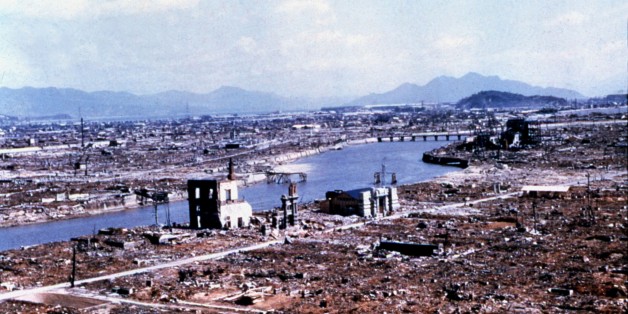
(Due to the air bombardment with just one atomic bomb by the US military on Hirohima on August 6, 1945, 140,000 citizens, soldiers, and prisoners of war who happened to be in the west Japan city died immediately or gradually due to radioactive influences till December 1945.)

The reason why nuclear weapons pose so great challenges to humanity is that as its demolition power is so huge that its use means a kind of annihilation of not only enemy troops but also enemy civilians.

But before the use of atomic bombs onto Hiroshima and Nagasaki in August 1945, belligerent nations in WWII had adopted a kind of annihilation tactics: a large-scale blanket or carpet bombings.
The bombing of Dresden was a British/American aerial bombing attack on the city of Dresden, the capital of the German state of Saxony, that took place during the Second World War in the European Theatre. In four raids between 13 and 15 February 1945, 722 heavy bombers of the British Royal Air Force (RAF) and 527 of the United States Army Air Forces (USAAF) dropped more than 3,900 tons of high-explosive bombs and incendiary devices on the city.[1] The bombing and the resulting firestorm destroyed over 1,600 acres (6.5 km2) of the city centre.[2] An estimated 22,700[3] to 25,000[4] people were killed.
https://en.wikipedia.org/wiki/Bombing_of_Dresden_in_World_War_II

The Bombing of Tokyo, often referred to as a series of firebombing raids, was conducted as part of the air raids on Japan by the United States Army Air Forces during the Pacific campaigns of World War II...
On the night of 9–10 March ("Operation Meetinghouse"),[12] 334 B-29s took off to raid with 279 of them dropping 1,665 tons of bombs on Tokyo. The bombs were mostly the 500-pound (230 kg) E-46 cluster bomb which released 38 napalm-carrying M-69 incendiary bomblets at an altitude of 2,000–2,500 ft (610–760 m). The M-69s punched through thin roofing material or landed on the ground; in either case they ignited 3–5 seconds later, throwing out a jet of flaming napalm globs. A lesser number of M-47 incendiaries was also dropped: the M-47 was a 100-pound (45 kg) jelled-gasoline and white phosphorus bomb which ignited upon impact. In the first two hours of the raid, 226 of the attacking aircraft unloaded their bombs to overwhelm the city's fire defenses.[13] The first B-29s to arrive dropped bombs in a large X pattern centered in Tokyo's densely populated working class district near the docks in both Koto and Chuo city wards on the water; later aircraft simply aimed near this flaming X. The individual fires caused by the bombs joined to create a general conflagration, which would have been classified as a firestorm but for prevailing winds gusting at 17 to 28 mph (27 to 45 km/h).[14] Approximately 15.8 square miles (4,090 ha) of the city was destroyed and some 100,000 people are estimated to have died.
https://en.wikipedia.org/wiki/Bombing_of_Tokyo
No matter if conventional bombs are used, the aerial bombardment on a city is actually targeting citizens.  So, there is no difference between an attack on a city using one atomic bomb and an attack on a city using thousands of conventional bombs.

However, an air raid using hundreds or thousands of conventional bombs in on a city was an extension of an air raid to military installations.  The paradigm was not annihilation of citizens but destruction of buildings, facilities and functions of a city and military installations around the city.  It was not assumed that carpet bombing could kill all the residents in a city, since bombing could not be so dense and concentrated, though the Bombing of Tokyo triggered large-scale fires in down towns of Tokyo that killed so many human lives in addition to burning hundreds of thousands of houses and buildings.

But an air bombardment using one nuclear bomb is a different paradigm.  As it is apparent that the huge blast of the bomb could surely kill tens of thousands of people, a nuclear bomb attack means annihilation of residents in a city rather than demolition of city functions and military facilities or making enemy citizens lose the will to fight.

The modern warfare is all-out war.  Warring nations mobilize all the industrial power they have.  Therefore they target industrial bases of enemy countries including cities.  And they would finally target citizens of enemy countries, since human resources are also resources of their industry.  Against this background, the atomic bombs were developed and used by the US military onto the two cities, Hiroshima and Nagasaki, of the Imperial Japan at the last stage of WWII.

Now any big city, such as New York, can be destroyed with hundreds of thousands of deaths by a few nuclear missiles, each of which is 100 times more powerful than the Hiroshima-type atomic bomb.  Therefore, the US and all the other nations in the world should stop keeping nuclear weapons and intimidating other nations with nuclear weapons.  The use of weapons imply not only the will to win a war but also an intention of killing children, women, old men, and all the noncombatants of cities and everywhere of an enemy country. 

And, it is absurd and evil for mankind to try to develop weapons more powerful than nuclear weapons.


Hiroshima after the atomic bomb attack in August 1945
http://www.huffingtonpost.com/setsuko-thurlow/70-years-after-hiroshima_b_7941322.html

Hiroshima before the atomic bomb attack

http://tsubaki352.at.webry.info/200808/article_1.html
Hiroshima before the atomic bomb attack
http://www.tooa.jp/hari-story.html
**** **** ****


Luk 5:26 And they were all amazed, and they glorified God, and were filled with fear, saying, We have seen strange things to day.
Luk 5:27 And after these things he went forth, and saw a publican, named Levi, sitting at the receipt of custom: and he said unto him, Follow me.
Luk 5:28 And he left all, rose up, and followed him.

Thursday, May 26, 2016

"the Father hath life in himself" - Aim in Life, Spiritual or Material

The Tokyo Station


Aim in Life, Spiritual or Material


People don't mind much how the world has been built through past decades, centuries, or tens of thousands of years.

It is as if one were thrown into a river and tried just to swim better without thinking about where the river came from and flowed to.  The person who has found that he is just in a river would just try to swim better so as not to die by drowning.  So, it is natural for men to try to tackle challenges posed to them in their daily life, which means for them to follow the norm and custom of the society where they were born in any era of history.

But of course people should think about why and how the world has developed to the present state without getting devoted to living better and earning money.

It means that people should learn history and traditions like even Christ Jesus sometimes referred to The Old Testament.  By learning the past history, men can judge a current situation meaningfully.

However, if one gets great knowledge about past things and a series of events along time, he may abuse it.  But to cope with such evil guys, people should learn history more.

Of course, without knowledge of history, one can avoid evil things and one may try to live as righteous as possible.  Conversely, with knowledge of history, evil one is still evil.  However, with right knowledge of history, most people can judge a present situation more correctly so as not to be misled by evil guys.

In this context, we have to know the origin of today's civilization, epoch-making events in the past, and specific historic incidents.

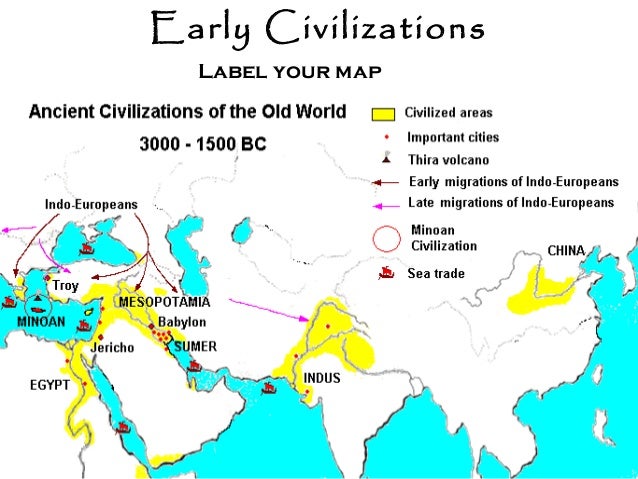
About 4600 years ago, great pyramids were built in Egypt, which might be regarded as the start point of the material civilization of the modern mankind.  About 4000 years ago, Abraham left the ancient city Ur in Mesopotamia, which might be regarded as the start of the spiritual culture of the modern mankind.  About 2500 years ago, Judaism, Buddhism, and Confucianism were established, which might be regarded as the start of religious conditions of the modern mankind.  About 2000 years ago, Christianity started to prevail.  About 1300 years ago, Islam started to emerge.  Today's world has been shaped in line with this history.

But the most decisive incident for the mankind in the past is that God sent His Son to the world who was called Christ Jesus 2000 years ago.

As God is almighty, the world today was conditioned by this unbelievable incident 2000 years ago.  Since the appearance of Christ Jesus means direct interference by God with the human world.  It cannot be neglected.

And, all these past great incidents tell us that men should not live simply pursuing wealth, happiness, and satisfaction of human desire.  Rather, these incidents suggest that we should be oriented more to spiritual matters rather than material matters.

Accordingly, an end of life of each man should not be realization of rich, safe, and happy life.

Rather, the aim in life for each man should be to understand why God gave life to him or her.  And, to realize the understanding, we have to be more spiritual with support from knowledge of our history. .


Early Civilizations 
Label your map
http://www.slideshare.net/jmseymour/world-history-characteristics-of-civilization-module-1


**** **** ****


Joh 5:26 For as the Father hath life in himself; so hath he given to the Son to have life in himself;
Joh 5:27 And hath given him authority to execute judgment also, because he is the Son of man.

Wednesday, May 25, 2016

"The hour is coming" - Poetry Composing Tradition of Japan

The Tokyo Station


Poetry Composing Tradition of Japan


From the middle of the seventh century to the middle of the eighth century, a project to compile poetry books was carried out in Japan, collecting poets created by people in various classes such as farmers to imperial house members.  This series of poetry books, called the Manyoshu, consists of 20 volumes including total 4500 poets. 
The Man'yōshū (literally "Collection of Ten Thousand Leaves", but see Name below) is the oldest existing collection of Japanese poetry, compiled sometime after 759 AD during the Nara period. The anthology is one of the most revered of Japan's poetic compilations. The compiler, or the last in a series of compilers, is today widely believed to be Ōtomo no Yakamochi, although numerous other theories have been proposed. 
The collection is divided into twenty parts or books; this number was followed in most later collections. The collection contains 265 chōka (long poems), 4,207 tanka (short poems), one tan-renga (short connecting poem), one bussokusekika (poems on the Buddha's footprints at Yakushi-ji in Nara), four kanshi (Chinese poems), and 22 Chinese prose passages. Unlike later collections, such as the Kokin Wakashū, there is no preface.
In addition to its artistic merits the Man'yōshū is important for using one of the earliest Japanese writing systems, the cumbersome man'yōgana. Though it was not the first use of this writing system, which was also used in the earlier Kojiki (712), it was influential enough to give the writing system its name: "the kana of the Man'yōshū". This system uses Chinese characters in a variety of functions: their usual logographic sense; to represent Japanese syllables phonetically; and sometimes in a combination of these functions. The use of Chinese characters to represent Japanese syllables was in fact the genesis of the modern syllabic kana writing systems, being simplified forms (hiragana) or fragments (katakana) of the man'yōgana.
https://en.wikipedia.org/wiki/Man%27y%C5%8Dsh%C5%AB
The Manyoshu is the oldest and largest collection of poetry in the world.  It is unique in that it includes poetry created not only by emperors and noble people but also by local farmers.  It shows a higher cultural standard in Japan before the eighth century.  It also tells that people were regarded as equal in the art of poetry in Japan in the eighth century.

One of the best poems in the Manyoshu is:
Tago-no-ura-yu uchidete-mireba mashiro-nizo,
fuji-no-takane-ni yuki-wa-furikeru

Stepping out to the Tago beach,
I can see the white high summit of Mt. Fuji,
with on the top snow just falling.

This was composed by Yamabeno Akahito who was an official travelling through a Pacific Ocean coast around Mt. Fuji in the eighth century.

Though letters used to write each poem in the Manyoshu were not Japanese unique kana letters but kanji characters imported from China, it is very rare in the world that not only noble men but also local farmers enjoyed composing poems for 1200 years.  This is one of unique aspects of the Japanese culture.

This tradition of composing poems developed to the art of poetry creation, call kado (the way of poet), that was established around 10th century.  Since then, composing poetry has been one of main arts in the Japanese society.  Even today, at the beginning of each year, the Emperor hosted a poetry party in the imperial palace in Tokyo.

Especially, the precedent emperor, called Showa Emperor, created 10,000 Japanese poems in his 88-year-long life.

There is one poem Showa Emperor (Hirohito) delivered on August 15, 1945, when the Imperial Japan surrendered to the US, which put an end to WWII.


Mi-wa-ikani narutomo-ikusa todomekeri,
tada-tafureyuku tami-o-omoite

No matter what I might become,
I have stopped this long war
Only for falling people I sorrow for.


No matter what role Showa Emperor played for the Pearl Harbor Attack in December 1941, he made his full efforts to stop the war against the US after the atomic bomb attacks on Hiroshima and Nagasaki in August 1945.

Therefore, Hirohito had been emperor of Japan from 1926 to 1989 (in the era of Showa in Japan) through the Second World War, while delivering 10,000 Japanese short poems, though only 900 of his poems have been made public so far as now.


**** **** ****


Joh 5:25 Verily, verily, I say unto you, The hour is coming, and now is, when the dead shall hear the voice of the Son of God: and they that hear shall live.

Monday, May 23, 2016

"all men should honour the Son" - Church Goers vs Non-Goers in Presidential Election

A Pacific Coast Beach, West of Tokyo


Church Goers vs Non-Goers in Presidential Election

When you meet a stranger, you will surely try to see how evil the man is.

When you are young, you cannot easily judge how evil a stranger is.  But with experiences in society, you will have ability to judge how much you can trust or you should not trust a specific stranger.  This ability is essential for men to live in society.  Otherwise, they may become friends of criminals who are disguising themselves as honest men.  And, this condition is universal in any countries and any communities.

But Christ Jesus said not to judge a person by his appearance.  But you must pay attentions to how much righteous or evil he is.

However, people tend to respect rich men, successful men, and men with status who are dressed up or wearing expensive clothes.  It is completely wrong and against the teaching of God.  To trust someone by his appearance is Satan's teaching.  Especially those who wear expensive clothes other envy are against the teaching of God, since making others envy something is a sin.

That is why essentially priests, clergymen, bishops, cardinals, and the Pope have to wear humble clothes none would envy.

In the 2012 presidential election, voters who go to church more than once per week voted for Romney (63%) rather than Obama (36%).

You cannot tell how pious a voter is only by observing his/her appearance, even though frequency of going to church cannot fully tell how pious he or she is.  But if Romney had been elected as US President in 2012 as more pious voters wanted, Donald Trump must have no chances to prevail in 2016 as we see today.


2012 Presidential Election, Vote by Groups
Obama Romney
RELIGION
Protestants 45 55
Catholics                    56 44
Attend weekly 40 60
Attend monthly 53 47
Seldom/Never attend 63 37

http://www.gallup.com/poll/139880/election-polls-presidential-vote-groups.aspx


**** **** ****


Joh 5:23 That all men should honour the Son, even as they honour the Father. He that honoureth not the Son honoureth not the Father which hath sent him.

"whosoever is angry with his brother without a cause" - 65% of 70% Non-Hispanic White Voters

The Pacific Ocean West of Tokyo


65% of 70% Non-Hispanic White Voters


Liberalism, like that pursued by the American Democratic Party, is sometimes dangerous because it can be anti-Christ.

Wealth is an enemy of God as Christ Jesus said, but anti-ethics liberalism is also against the teaching of God.  Leftist liberalism regards sometimes traditional customs as something wrong.  However, there are many important traditions for human beings to keep a necessary moral standard.

Evil caused by wealth can be easily understood.  Poverty is a major source of social problems and crimes.  But, liberalism that denies traditional value systems is also damaging humanity and human soundness.

In this context, the American Republican Party supported by wealthy Americans cannot improve society, but the American Democratic party supported by liberal and anti-Christ minorities cannot make people righteous before God.

Donald Trump is a very wealthy man contaminated by capitalism and commercialism.  But his evil characteristics are easy to comprehend.  On the other hand, Hillary Clinton is supported by African Americans and non-elite white Americans.  She might look like more Christian as she supports poor African Americans, Hispanics and other minorities, but she also supports Americans who are too liberal and progressive to be regarded as Christians or believers of God.  Besides, the Clintons are making big money, leveraging their social status, which makes them enemies of poor Americans.

Now, the key to the 2016 presidential election is how non-Hispanic whites vote.  They account for 70% of all the voters.  If Trump is supported by 70% of them, he can secure 49% of all the votes without counting minority's votes.  Then Trump will win, since he can probably get 5%.of 30% minority's votes, which adds necessary 1% to 49%.

But if Trump is supported by only 60% of non-Hispanic whites, he can secure only 42% without counting minority's votes, which make his victory in the general election impossible.

If Trump is supported by 65% of non-Hispanic whites, he can secure 45.5% without counting minority's votes.  Then if he gets 15% plus of 30% minority votes, Trump can get totally more than 50% of all the votes.  But if he can get only 10% of 35%, Trump cannot win.

So, the point at issue is whether 65% or more non-Hispanic whites vote for Trump in the general election.  Probably 50% of them would vote for Trump because he is a white rich man.  And, to be against anti-Christ liberal Democratic movement, 15% of them might vote for Trump.

In conclusion, it will be non-Hispanic Christian Americans that should decide the case.


(In the 2012 presidential election, 59% of non-Hispanic whites voted for Romney while 39% of then voted for Obama.  So, it is unlikely that Trump will get 70% of them.  But 65% might be possible.)


**** **** ****


Mat 5:22 But I say unto you, That whosoever is angry with his brother without a cause shall be in danger of the judgment: and whosoever shall say to his brother, Raca, shall be in danger of the council: but whosoever shall say, Thou fool, shall be in danger of hell fire.
Mat 5:23 Therefore if thou bring thy gift to the altar, and there rememberest that thy brother hath ought against thee;
Mat 5:24 Leave there thy gift before the altar, and go thy way; first be reconciled to thy brother, and then come and offer thy gift.