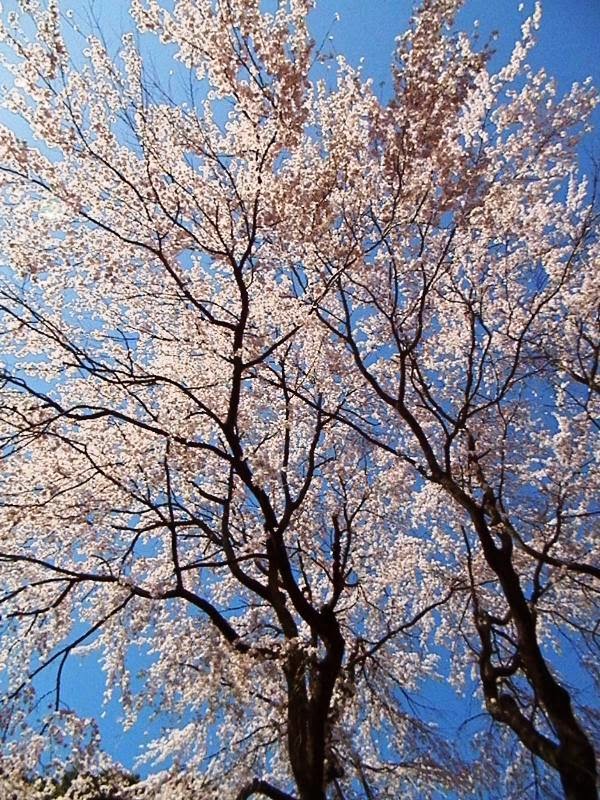
Saturday, April 12, 2014

"Now when Jesus had heard" - What is Abenomics?


Around Tokyo


What is Abenomics?

Whatever it is, it has increased financial assets of wealthy Japanese and foreign investors as the following figure on the trend of Nikkei Index of the Tokyo Stock Exchange tells.

This rise of the Tokyo Stock index by Abenomics has been a direct consequence of the drastic fall of the value of the yen against the US dollar.  As the Bank of Japan started to supply abundant yen to the financial market through purchase of government bonds circulated there in March 2013, the yen became weaker so suddenly from 85 yen to 100 yen per dollar.


So, Abenomics is not yet fully backed by an economic boom in Japan.  It is a result of monetary operation by the central bank of Japan.  Due to increase in financial assets of businesses, some major businesses have started to increase wages.

But, the policy focus of the Abe Administration is on ending 15-year-long deflation.  It means an increase in prices.  However, if financial assets have been multiplied and prices of goods have risen, Japanese consumers and taxpayers will not be satisfied without a sufficient increase in wages and incomes.

The yen has become weaker; stock prices have risen; prices are in the upward trend accelerated by a consumption-tax rate increase from 5% to 8%, but we will see if Japanese workers can enjoy a pay hike, which means ending of deflation for them in 2014.


*** *** *** ***


Mat 4:11 Then the devil leaveth him, and, behold, angels came and ministered unto him.
Mat 4:12 Now when Jesus had heard that John was cast into prison, he departed into Galilee;
Mat 4:13 And leaving Nazareth, he came and dwelt in Capernaum, which is upon the sea coast, in the borders of Zabulon and Nephthalim:
Mat 4:14 That it might be fulfilled which was spoken by Esaias the prophet, saying,
Mat 4:15 The land of Zabulon, and the land of Nephthalim, by the way of the sea, beyond Jordan, Galilee of the Gentiles;
Mat 4:16 The people which sat in darkness saw great light; and to them which sat in the region and shadow of death light is sprung up.

Friday, April 11, 2014

"the mystery of the kingdom of God" - Reality of Decontamination Work in Fukushima


Around Senso-ji Temple, Tokyo


Reality of Decontamination Work in Fukushima

Decontamination around the Fukushima Daiichi Nuclear Power Plant is going on.

It is unbelievably exhausting work by human hands.  The central government of Japan decided to carry out all-out decontamination work in roads, public facilities, agricultural facilities and fields, drainage structure, individual houses and affixed gardens, etc. around the Plant.  The Ministry of Environment issued a guideline for this work. (http://www.env.go.jp/jishin/rmp/attach/josen-gl-full_ver2.pdf)

The central government has been directly in charge of decontamination in 11 hard-hit cities, towns, and villages close to the Plant.  The Fukushima Prefectural office has taken responsibility in conducting or supervising decontamination projects in other 36 autonomous bodies.


They totally cover 235,208 houses, 5,335 km roads, 24,067 hectares of agricultural fields, and 4,085 hectares of forests and woods near residential areas or industrial areas.

Each decontamination task for a house, a field, or a section of a road is ordered to a vendor.  A vendor hires workers who are expected to carry out manual decontamination work using some tools.

In the guidance document, locations and corners in a house to be focused on in decontamination work are specified as below.


According to a rule the Government specified, each worker should record a dosage he has received in each work from radioactive materials.  The allowable limit of a dosage per man per year is 50 mSv.  In five years, the maximum limit is 100 mSv.  As an ordinary person is allowed to be exposed to radiation up to 1 mSv per year, decontamination workers take a big risk on their health.

But as a contractor uses a subcontractor that might also hire other companies, it is not expected that this rule is strictly applied.  What is worse, there is no legal penalty to violation of the request to correctly and honestly keep a record of an amount of exposure to radiation per worker.  If a vendor has come into a situation where all the workers it employs have exceeded the allowable exposure amount, it cannot contract to do contamination work.  Vendors would naturally put lower figures in their report to regulatory agencies.  

The total amount estimated for this large-scale decontamination work is about $50 billion.  Each worker is reportedly paid a day wage of $100 to $150.

In three years, many houses have been decontaminated or applied decontamination work to.  And some towns have started to lift a ban on living for their residences.  But, as a whole, decontamination in the Prefecture is delayed for various and practical reasons.  It is expected that the work will be completed around 2017.  Nonetheless, a decontaminated house does not show a state of decreased radiation at a level of a house, for example, in Tokyo. 

As an example, a house in Naraha Town marked 0.85 uSv before decontamination but showed a decrease to 0.44 uSv after decontamination (while Tokyo records less than 0.1 uSv nowadays).  They say that the work has lowered the dosage level by almost 48% in Naraha.  

So, some evacuees are starting to return to their old houses located 20 km or more from the Fukushima Daiichi Plant as radiation dosage has decreased to some extent.  But still there are 130,000 evacuees from their homes in Fukushima Prefecture due to the Fukushima Daiichi Nuclear Accident which was set off on March 11, 2011.


*** *** *** ***


Mar 4:11 And he said unto them, Unto you it is given to know the mystery of the kingdom of God: but unto them that are without, all these things are done in parables:

Thursday, April 10, 2014

"He shall give his angels charge over thee" - Apocalyptic Prophecy and Wealth Distribution


Tokyo Views

Apocalyptic Prophecy and Wealth Distribution  

In this money-controlled world, we can easily see how much and where wealth is exchanged and generated by focusing on major security exchanges in the world.


Each column of a stack exchange in the above figure shows an amount of transaction for each year between 1998 and 2013.  The right blue bar for each exchange indicates an amount for 2013.

Specifically, as of October 2013, the total of the market value in all the stock exchanges in the world reached $63 trillion.

Indeed, those who live on $1.25 per day accounted for 22% of the global population in 2008.  It corresponded to one billion 290 million, but the number of the poor in the world was one billion 940 million in 1981.  In 1981, a half of population in developing countries was poor.

This must be the reason why mankind can still survive on the earth.  Wealth has been distributed into more wider regions.  But detailed data tells that most of those who have escaped poverty are Chinese.

In this context, the US and China are the two most responsible nations in terms of responsibility of one who occupies a majority of wealth in the world, at least financial assets, and another who has been rising out of poverty.

As for Japan, it is also responsible, since it has been the key nation to economic development of China.  China has succeeded in development of its industries by importing and introducing technologies and funds from Japan legally and illegally.  It is apparent that without help from Japan in these decades China could not achieve that scale of economic success.
 
The US is the most Christian nation among the three at issue.  Its failure means also a failure of Christianity.  China is a country whose society was unified through adoption of the communist ideology and socialist systems that were both first formulated in Europe.  Chinese failure will mean that of those European-born philosophies.  In contrast, Japan has balanced itself on traditional Japanese spiritualism and American-style democracy introduced after WWII.  

However, it is impossible for only one strong nation or one block of nations survives in the 21st century.  The globalization economy has made all the nations share the same fate.  We have to take into consideration the global economy and politics from one level above that where we are used to observing the world so far.

The apocalyptic prophecy is concerned with the whole world.


*** *** *** ***


Luk 4:10 For it is written, He shall give his angels charge over thee, to keep thee:
Luk 4:11 And in their hands they shall bear thee up, lest at any time thou dash thy foot against a stone.
Luk 4:12 And Jesus answering said unto him, It is said, Thou shalt not tempt the Lord thy God.

Wednesday, April 09, 2014

"All these things will I give thee" - American Religion


Around Tokyo


American Religion


It is said that the Italian Mafia in the US had a wider ethnic support base but Jewish gangs did not have.

Rather the Jewish community in the US has had made a reasonable effort to stop bad influences of Jewish gangsters on the general Jewish community.

Of course Italian Americans must have a special feeling to the Vatican while Jewish Americans have a specific pride in their status in the human history.  Their views of the US society must be very different if the both group of people have a common sense of being not a main-stream group in the US.  But they have accepted the American way of living and social structure.  They have eventually adapted themselves to the society of American democracy and American Dream through unique ways, respectively.

According to the word of Christ Jesus, a new religion is needed in a new world.  So, Protestants have been given chances enough to fully expand their religious activities and thoughts in America since the era of Columbus.  The reason why the US has achieved great success in history consists in it.  The great freedom in religion assures great chances for academic and business success.

But for the US to have become a super-power in the world, it must have achieved a great degree of religious tolerance, tolerating Catholicism and Judaism, as well as elimination of racism.  This movement finally fuse together those religions and various denominations together into the American Religion, so to speak.    

Now under the American Religion, Protestantism, Catholicism, and Judaism are still active as critical elements of the society.  They all use the magic term God to show their spiritual ties.

But America must also take Islam into their society as a legitimate element of the American Religion.  It is the religious conclusion of the War on Terror that was triggered by the 9/11 Terror.  And, in future, it would need to take Taoism, Hinduism, and Buddhism if it should allow Chinese, Indians, and East or Southeast Asians to become fair members of the American society.

The last group of people in the world to be included in the American society with their own religious root must be Japanese.  Japanese Spiritualism is only meaningful in Japan.  In this context, there is a possibility that in the end in this world there will only remain the American Religion and Japanese Spiritualism.

But what is the Japanese Spiritualism?  Probably it is a religion that has significance of existence especially against the American Religion.


*** *** *** ***


Mat 4:8 Again, the devil taketh him up into an exceeding high mountain, and sheweth him all the kingdoms of the world, and the glory of them;
Mat 4:9 And saith unto him, All these things will I give thee, if thou wilt fall down and worship me.
Mat 4:10 Then saith Jesus unto him, Get thee hence, Satan: for it is written, Thou shalt worship the Lord thy God, and him only shalt thou serve.

Tuesday, April 08, 2014

"some thirty, and some sixty, and some an hundred" - Japanese Invented Flash Memory


Tokyo Views

 Japanese Invented Flash Memory

In 1980s, Japan became the number-one semiconductor country, though Intel was leading the microprocessor field.

However, today Japan cannot enjoy the status as it did before.  Major Japanese semiconductor manufacturers are also large electronics companies that deliver various electronic products for consumers and industry users, including TVs, refrigerators, and nuclear plant equipment.  They did not put the highest priority in semiconductors.  Those Japanese makers were also contaminated by red-tape management and bureaucratic processes.  They had almost nothing to do with the venture spirit.  Accordingly, some Japanese engineers in major companies, their subsidiary companies, or even their vendors became frustrated.

Accordingly, Chinese, Taiwanese, and South Korean businesses never turned a blind eye to this situation in the Japanese industry.  These Asian makers tried everything to gain access to Japanese advanced technologies, virtually stealing key technical information.
March 13, 2014 6:39 pm JST
Man arrested for allegedly giving Toshiba data to South Korean company

TOKYO (Kyodo) -- Tokyo police on Thursday arrested a man suspected of illegally providing a South Korean company with Toshiba Corp. research data from on flash memory.
     Yoshitaka Sugita, 52, from Fukuoka Prefecture in southwestern Japan, was an engineer at SanDisk Corp., a semiconductor maker that had formed an alliance with Toshiba in flash memory production, and was able to obtain research data, according to the police.
     It is rare for a technology leak to a foreign company to result in a criminal case.
     Toshiba said later in the day that it had filed a damages suit with the Tokyo District Court against SK Hynix Inc., the predecessor of which allegedly obtained the data from the suspect, asserting that the South Korean company wrongfully acquired and used its proprietary technical information.
http://asia.nikkei.com/Business/Comp    
 
The shares of world makers in sales of NAND-type flash memory in 2012 are as follows:

No. 1  Samsung (South Korea)...........37%

No. 2  Toshiba (JAPAN)........................31%

No. 3  Micron Technology (US)..........14%

No. 4  SK Hynix (S. Korea)...................11%

Others..............................................................7%


Truly the flash memory was invented by a Japanese engineer of Toshiba, named Fujio Masuoka.

Fujio Masuoka: Inventor of Flash Memory
BY RD BENTLEY ON AUGUST 26, 2011 IN TECHNOLOGY
 
Flash memory is a term that applies to two types of chips — the NAND and the NOR. The NAND is used in: memory cards, USB flash drives, solid-state drives, and more. Both NOR and NAND types were invented by Dr. Fujio Masuoka around 1980. 
Examples of both types of flash memory include: personal computers, PDAs, digital audio players, digital cameras, mobile phones, synthesizers, video games, scientific instrumentation, industrial robotics, and medical electronics. 
Flash memory turned out to be one of the greatest inventions of the 1980's. According to a Forbes report, approximately $76 billion of these chips were sold in 2001 alone. According to BusinessWeek, flash memory sales hit around $25 billion in 2006 alone. While these figures may not be totally accurate, it gives us a good idea how important this invention was. 
Toshiba and Samsung have been two of the world's top flash memory producers.
At the time Fujio Masuoka had discovered flash memory, he was working for Toshiba. However, because he lived in Japan and worked for a powerful company, he didn't get the full credit that was due.
 
...
Masuoka had been working on DRAM when he came across his discovery in the early 1980's. It was the year of 1984 when he would announce his invention, during an IEEE meeting in San Francisco, California. 
Dr. Masuoka eventually got promoted to the head of a department, but he would leave Toshiba in 1994. Masuoka later became a professor at Tohoku University in Sendai, Japan.  
http://thecyberdaily.com/2011/08/fujio-masuoka-inventor-of-flash-memory/
It is said Mr. Masuoka volunteered for sales business in the US when he was a young engineer of Toshiba.  It is because no matter high quality memory he designed in Toshiba office in Japan, sales of advanced memory products were low.  So, he wanted to promote sales in the US for himself.  But his business performance in the US was so poor, and thus soon Masuoka was called back to Japan to settle in his old R&D department.  But Masuoka learnt that US customers wanted inexpensive products with the minimum necessary functionality.  This experience led to his future invention of the flash memory.  A kind of technical rationalization was a key to the invention.  

However, Toshiba did not give more opportunities for research and development to Mr. Masuoka.  Later he became the deputy director of a research center of Toshiba but was not given resources enough to drive his own study on semiconductor.  So, he eventually left Toshiba, one of the best manufacturer in Japan to take a position in a university.    

Put simply, foolishness, arrogance, and even evil in the Japanese industrial community have triggered a large scale technology transfer, legally or illegally, or overtly or covertly, to Samsung and other South Korean countries as well as Chinese and other makers.


*** *** *** ***


Mar 4:8 And other fell on good ground, and did yield fruit that sprang up and increased; and brought forth, some thirty, and some sixty, and some an hundred.

Monday, April 07, 2014

"shalt thou not be accepted?" - Whale Flesh or Beef


Around Tokyo


Whale Flesh or Beef


The most important areas of human activities are related to foods (agriculture, fishing, etc.), medical care, housing, clothing, education, religious activities, and so on.

But the Gospels most impressively depict Jesus eating or being related to foods.
U.S. Places 21st in Ranking of World Food Systems 
BY JAMES ANDREWS | JANUARY 15, 2014 
Despite affordable prices and high food quality, the United States tied with Japan for 21st place in a ranking of the world’s food systems, according to the international advocacy confederation Oxfam. 
The report, released Tuesday evening, judged the food systems of 125 countries according to four major metrics: food quality, abundance of food, affordability of food and eating habits of citizens. 
High diabetes and obesity rates in the U.S. brought down the nation's score, ranking it just behind 20 European countries and Australia. 
The top 25 overall scores are listed below: 
1. Netherlands 
2. France and Switzerland (two-way tie) 
4. Denmark, Sweden, Austria and Belgium (four-way tie) 
8. Ireland, Italy, Portugal, Luxembourg and Australia (five-way tie) 
13. Spain, Greece, Germany, United Kingdom, Norway, Finland, Cyprus and Iceland (eight-way tie) 
21. United States and Japan (two-way tie) 
23. New Zealand and Israel (two-way tie) 
25. Canada, Brazil, Estonia, Slovakia and Hungary (five-way tie) 
http://www.foodsafetynews.com/2014/01/u-s-places-21st-in-ranking-of-world-food-systems/#.U0LAKvl_suc
Though the US and Japan are ranked the same, the ratio of food self-sufficiency is so different between them.

USA - 130%

JAPAN - 40%

That is why Japanese have to eat whale flesh, if it has become too poor to buy and import beef from the US.
 
Whale for Japanese are originally the same as cows for Americans.


*** *** *** ***


Gen 4:4 And Abel, he also brought of the firstlings of his flock and of the fat thereof. And the LORD had respect unto Abel and to his offering:
Gen 4:5 But unto Cain and to his offering he had not respect. And Cain was very wroth, and his countenance fell.
Gen 4:6 And the LORD said unto Cain, Why art thou wroth? and why is thy countenance fallen?
Gen 4:7 If thou doest well, shalt thou not be accepted? and if thou doest not well, sin lieth at the door. And unto thee shall be his desire, and thou shalt rule over him.
Gen 4:8 And Cain talked with Abel his brother: and it came to pass, when they were in the field, that Cain rose up against Abel his brother, and slew him.
Gen 4:9 And the LORD said unto Cain, Where is Abel thy brother? And he said, I know not: Am I my brother's keeper?

Sunday, April 06, 2014

"the time of my departure is at hand" - Dying People in Japanese Immigration Center


Mt. Fuji and Shinkansen Super-Express Lines


Dying People in  Japanese Immigration Center

People died over the Indian Ocean.

People died in Kiev.

People died in Chile.

People died in Afghanistan.

Some soldiers were killed in the US.

People are being killed in Syria.

But recently two people died in Higashi Nihon Immigration Center of Japan around the end of March.  They were a male Cameroonian in his 40's and a male Iranian in his 30's.

The Cameroonian man was applying for asylum, but he was most likely to be sent back to his home country.  Since he came to Japan in the last fall, he was detained in the Center while he was diabetic.  However the concerned Japanese authority did not allow him to fully receive medical care, though the Immigration Center is not a prison.  He evidently died of deterioration of the disease.

The Iranian man died as he choked in his food.  Officials of the Center carried him to a hospital, but it was too late.  The authority said that no criminal act was involved and no delinquency was found on the management of the Center.

Now there are 300 foreigners kept under restraint in the Immigration Center; they can freely communicate with the outside but cannot freely move around.

Higashi Nihon Immigration Center (East Japan Immigration Center aka. Ushiku Shuyojo, Ushiku Detention Center) http://www.bekkoame.ne.jp/~pyonpyon/fjc/visit/0401.htm
http://en.wikipedia.org/wiki/Higashi_Nihon_Immigration_Center


Of course there are some volunteer groups or NGOs/NPOs in Japan that help asylum seekers:
Japan Association for Refugees

Toll-free service for refugees/asylum seekers
0120-477-472 (toll-free; refugees/asylum seekers only.)
(if the toll-free number is not available, call 03-5379-6003)
Open: 10AM- 6PM Weekdays. 
ATTENTION: Regarding the organization called "International Association for Refugees (Kokusai Nanmin Shien Kyokai)" 
Japan Association for Refugees(Nanmin Shien Kyokai) is a non-profit organization that is officially registered in the Tokyo Metropolitan Government. We do not have any relationship with an organization called "International Association for Refugees (Kokusai Nanmin Shien Kyokai)". We never ask asylum seekers any payment for legal or social assistances we provide.

For lawyers and other legal personnel at law firms
About pro bono opportunities
We at Japan Association for Refugees (JAR) provide pro bono opportunities to lawyers and other legal personnel at law firms where they are able to utilize their professional and specific skills. 
Details
Refugees and JAR
Did you know
- there are refugees and asylum-seekers in Japan?
- very few people are recognized as refugees in Japan?
- there is no time framework set forth for the administrative procedures of refugee recognition, and there was such a case as taking 9 years (!) to reach a final decision?
- while the application for refugee status is processed, the status of an illegal stayer will not be regularized and hence she or he will not be subject to public social services?
Who is a refugee?
http://www.refugee.or.jp/en/#04
Though the Japanese Government plans to increase the number of foreign laborers, workers, and professionals in Japan, its policy on asylum seekers is not friendly and permissive at all.  While the population of Japan is decreasing, industries need more workers for various projects, including recovery work from the 2011 Great Tsunami and Fukushima Daiichi Nuclear Accident and construction projects related to the 2020 Tokyo Olympics.  But, humanity must come first in dealing with foreigners.

Jesus said to be kind to foreigners, since ancestors of Israelites, such as Abraham, had been once foreigners in Egypt.


*** *** *** ***


2Ti 4:6 For I am now ready to be offered, and the time of my departure is at hand.
2Ti 4:7 I have fought a good fight, I have finished my course, I have kept the faith:
2Ti 4:8 Henceforth there is laid up for me a crown of righteousness, which the Lord, the righteous judge, shall give me at that day: and not to me only, but unto all them also that love his appearing.

Friday, April 04, 2014

"I saw four and twenty elders sitting" - Japan as a Big Importer


Shinjuku Ward, Tokyo


Japan as a Big Importer

Due to the Fukushima Daiichi Nuclear Accident of 2011, Japan had to change composition of its energy sources for electricity generation.  Their ratios in the whole energy sources changed as follows:

In Fiscal 2010
Natural Gas..................29.3%
Nuclear Energy............28.6%
Coal................................25.0%
Crude Oil........................7.5%
Hydro-Energy...............8.5%
Renewable.....................1.1%

In Fiscal 2012
Natural Gas..................42.5%  
Coal................................27.6%
Crude Oil......................18.3%
Hydro-Energy..............8.4%
Nuclear Energy............1.7%
Renewable.....................1.6%

In FY2012, a few nuclear power plants were operated, though in FY2013 all of them were halted after periodic inspection.

It is apparent that Japan urgently increased use of natural gas and crude oil for electricity generation to compensate a loss of outputs from nuclear power plants.  But, as Japan has to import almost all of natural gas and crude oil it consumes, balance of trade suddenly turned to be red.  Compared with import statistics before 2011, the amount Japan paid for natural gas and crude oil in 2013 increased by $30 billion.

However the increased import of gas and oil is not the only major factor for Japan's deficit in trade.  Due to a drastic change in industrial environments triggered by the 2011 Great Tsunami and Fukushima Daiichi Nuclear Accident, Japanese export decreased.  Further, with a policy change of the Bank of Japan, a huge amount of supplied yen caused a sharp drop of the value of yen against the US dollar, leading to an increase in imports.  Now the amount of a trade deficit in Japan reached $100 billion.

The following figure shows the trend of the balance of trade of Japan since 1980.  It shows that in 2011 Japan experienced the first trade deficit since 1980 when the second oil shock occurred due to political situations in the Middle East.

Trade Balance of Japan (Unit: trillion yen)
http://www.nikkei.com/article/DGXNASFS2400G_U3A120C1000000/

So, the 2011 Great Tsunami and Fukushima Daiichi Nuclear Accident really changed the economic landscape of Japan.  When industries of Japan were recovering steadily from the 2008 Global Financial Crisis, it was again hard hit by the great natural disaster and the half-man-made nuclear accident.  One of the most decisive factors is that Japanese manufacturers moved production to their factories and plants in foreign countries due to difficult domestic conditions.

Generally, the weak yen is favorable to promotion of export from Japan.  But, it doesn't seem to work in the current conditions.  Japan might be really turning to a big importer like the US.


*** *** *** ***


Rev 4:4 And round about the throne were four and twenty seats: and upon the seats I saw four and twenty elders sitting, clothed in white raiment; and they had on their heads crowns of gold.
Rev 4:5 And out of the throne proceeded lightnings and thunderings and voices: and there were seven lamps of fire burning before the throne, which are the seven Spirits of God.
Rev 4:6 And before the throne there was a sea of glass like unto crystal: and in the midst of the throne, and round about the throne, were four beasts full of eyes before and behind.
Rev 4:7 And the first beast was like a lion, and the second beast like a calf, and the third beast had a face as a man, and the fourth beast was like a flying eagle.
Rev 4:8 And the four beasts had each of them six wings about him; and they were full of eyes within: and they rest not day and night, saying, Holy, holy, holy, LORD God Almighty, which was, and is, and is to come.

Thursday, April 03, 2014

"He left Judaea" - Fighters from Libya


Tokyo Scenes


Fighters from Libya

Recently 14 young Libyans decided to join the civil war in Syria.

However when they arrived at Syria, one of them started to do sightseeing casually.  So, they began to argue among themselves about their motivation and aspiration.  Then three of them returned to Libya.

Remaining eleven Libyans were engaged in battles as members of a nameless insurgent group.  They were fed by anti-government Syrian families.  There were also other foreign fighters from Tunisia, Egypt, etc.  Their group consisted of 60 members with mixed nationalities.  They decoyed soldiers of Syrian regular forces and attacked them.  But they ran away quickly before support arms of enemy forces came or their military planes started air raids.  The most well equipped group on the insurgent side was that associated with AlQaeda.  However, these Syrian fighters did not join AlQaeda as their religious code of conduct  looked so rigorous.

Among the 14 Libyans, three were killed in battles.  But they were relatively lucky, since another Libyan group consisting of 15 or so members was captured by Libyan Government troops to be executed.  Somebody betrayed them for money.

One of the Libyan fighters happened to be able to make a phone call to his home in Libya while he was stationed near the border to Turkey.  So, he decided to go back home.

This story was reported in a Japanese newspaper.  


*** *** *** ***


Joh 4:3 He left Judaea, and departed again into Galilee.
Joh 4:4 And he must needs go through Samaria.
Joh 4:5 Then cometh he to a city of Samaria, which is called Sychar, near to the parcel of ground that Jacob gave to his son Joseph.
Joh 4:6 Now Jacob's well was there. Jesus therefore, being wearied with his journey, sat thus on the well: and it was about the sixth hour.
Joh 4:7 There cometh a woman of Samaria to draw water: Jesus saith unto her, Give me to drink.

Wednesday, April 02, 2014

"he taught them many things by parables"


Around Tokyo Station


*** *** *** ***


Mar 4:2 And he taught them many things by parables, and said unto them in his doctrine,
Mar 4:3 Hearken; Behold, there went out a sower to sow:
Mar 4:4 And it came to pass, as he sowed, some fell by the way side, and the fowls of the air came and devoured it up.
Mar 4:5 And some fell on stony ground, where it had not much earth; and immediately it sprang up, because it had no depth of earth:
Mar 4:6 But when the sun was up, it was scorched; and because it had no root, it withered away.

Tuesday, April 01, 2014

"Then was Jesus led up of the spirit into the wilderness" - What Japanese Utilities Plan


What Japanese Utilities Plan

As all the nuclear reactors, roughly 50, are stopped in Japan in the wake of the 2011 Fukushima Daiichi Nuclear Accident, major utilities in Japan have decided to introduce more thermal electric power plants.

Specifically, Tohoku Electric Power Co. plans to build a 1.2 million kWh plant; Chubu Electric Power Co. 1 million kWh plant; Kansai Electric Power Co. 1.5 million kWh; and Kyushu Electric Power Co. 1 million kWh.  As one nuclear reactor outputs 1 million kWh, each of these regional major utilities is to add a capacity of power production from a thermal plant which is equivalent to one nuclear reactor.  They will totally cover about 5 halted nuclear reactors.

As for Tokyo Electric Power Co. (TEPCO), the owner of Fukushima Daiichi, it is going to introduce thermal plants that can totally deliver 6 million kWh.  So, TEPCO alone can compensate a loss of six halted nuclear reactors, making the grand total 11 of covered nuclear reactors.

So, the Japanese industry is expected to be busy, receiving orders for construction of new power generation plants from the utilities.

But what if the US with 100 nuclear reactors running for electricity generation has decided to stop use of nuclear energy for supply of electricity to the public?

Can US stop using nuclear power?
9:51 PM, Mar. 18, 2011 
 
According to the U.S. Energy Information Administration, nuclear energy accounted for 806,968,000 megawatt hours of electricity in the U.S. in 2010. That was about 19.6 percent of the total. Natural gas account­ed for 23.8 percent, and coal was the 800-pound gorilla at 44.9 per­cent. All other sources totaled about 11.7 percent.

Simply put, we just can't dam enough rivers or generate enough renewable energy sources to make up such a gap for any number of years. Yes, we have dramatically im­proved our use of renewable en­ergy, at an annual average rate of 7.6 percent since 2000. Even so, at that rate, it would take until 2032 to generate the same amount of electricity, with all non-hydroelectric renewable sources, as nuclear did last year.

Who knows what our energy demands will be in a couple of decades? If our population in­creases the way it has for the past 20 years, I imagine we will consume more energy as op­posed to less.

As a result, you don't have to have an advanced degree from M.I.T. to come to the conclusion that to wean ourselves off nu­clear, we would have to con­sume more coal and natural gas for some time. The only prob­lem is there currently isn't enough domestic supply of ei­ther.

Sure, there is a lot of coal un­der the ground in the United States, as well as a lot of natural gas. However, we actually run a sizable trade deficit in natural gas, with Canada supplying most of our shortfall. As for coal, we are a net exporter of the stuff, but nowhere near large enough to accommodate such a spike in domestic de­mand. It would be years before we could get enough mines and rigs up to full production, as well as jump through all the necessary environmental hoops and red tape to make it happen.

In the meantime, what do you think would happen to the price of coal and natural gas? Yeah, they would go up, a lot, meaning the cost of generating electricity would go up a lot as well. Guess who gets to eat a chunk of those cost increases?

If every nuclear facility went off-line tomorrow, existing ca­pacity at other facilities could accommodate a good amount of the shortfall, but not quite all of it. As a result, utilities across the country would have to put up a number of new generators, and that requires a lot of time, red tape and money. Guess who gets to bear the brunt of those costs as well?

In the end, yes, we eventually could wean ourselves off nucle­ar power and not ever have to worry about what is happening in Japan happening here. How­ever, there would be repercus­sions, both environmental and in cost to the consumer, poten­tially significant ones.

As it stands right now, few politicians want to make those hard decisions.

http://www.montgomeryadvertiser.com/article/20110319/BUSINESS/103190304/Can-US-stop-using-nuclear-power-    
However, they should have second thought about their future in terms of safety and soundness of men and environments not only economic efficiency and profits.


*** *** *** ***


Mat 4:1 Then was Jesus led up of the spirit into the wilderness to be tempted of the devil.
Mat 4:2 And when he had fasted forty days and forty nights, he was afterward an hungred.
Mat 4:3 And when the tempter came to him, he said, If thou be the Son of God, command that these stones be made bread.
Mat 4:4 But he answered and said, It is written, Man shall not live by bread alone, but by every word that proceedeth out of the mouth of God.

Monday, March 31, 2014

"There came then his brethren and his mother" - Haneda and Narita


Cherry Blossoms around Tokyo Today


Haneda and Narita


In 1964, Tokyo hosted summer Olympic Games.  In this year the Japanese Government lifted a ban on Japanese citizens traveling abroad for sight seeing.

However, basically one Japanese citizen was allowed to go abroad only once per year.  They could bring to foreign countries only $500 or less with themselves.

In 1966, the restriction on the number of times for overseas traveling was abolished.  In 1970, the Boeing 747 was introduced into the Japanese air transportation.  Jumbo jets drastically increased the number of Japanese who made overseas trip, though only a little less than 500,000 Japanese went abroad in 1969.

In 1978, Narita International Airport was opened after big delay.  The number of Japanese flying abroad continued to increase without stagnation to 17 million in 1995.  Since then after some ups and downs, it finally reached 18,490,000 in 2012.

Originally, Tokyo started international air transportation from Haneda International Airport in 1931.  Haneda is situated in Ota Ward, Tokyo Prefecture.  It takes about 30 minutes by train, monorail, or bus or taxi from Tokyo Railroad Station to Haneda Airport.

But, since 1978, Narita Airport (with only one 4 km runway till 2002) has been positioned as the main international airport for Tokyo while Haneda has become a hub airport for domestic flights. For reference, it takes about one hour by train from Tokyo Station to Narita Airport located in Chiba Prefecture northeast of Tokyo. 

However, recently with expansion of Haneda airport, more and more international air carriers have come to use Haneda.  Accordingly, foreigners visiting Japan are split into Narita and Haneda.


        Number of Visiting Foreigners at Two Main Airports in 2013
       
NARITA............4,263,463    

HANEDA..........1,293,083


Narita International Airport has a unique history.  In the aftermath of the anti-Vietnam War movement, Japanese leftist groups and students were violently against the opening of this new international airport in late 1960s and 1970s.  So, even today, anti-Narita Airport movement holds some plots within the area included in Narita Airport.  That is why Narita has still only one 4,000 meter runway in addition to one 2,500 meter runway.
Around 1966, a group of local residents combined with student activists and left-wing political parties formed a popular resistance group known as the Sanrizuka-Shibayama Union to Oppose the Airport, which remained active until fracturing in 1983.[7] Similar strategies had already been employed during the postwar era to block the expansion of Tachikawa Air Base and other US military facilities in Japan.[7] In June and July 1966, the Union sent formal protests to the mayor of Narita, the governor and vice-governor of Chiba Prefecture and the prefectural office of the Liberal Democratic Party.[7] In November 1967, when the Transport Ministry began surveying the perimeter of the airport, Union members set up roadblocks. The Zengakuren radical student union then began sending students to Narita to help the local farmers.[7] 
Eminent domain power had rarely been used in Japan up to that point. Traditionally, the Japanese government would offer to relocate homeowners in regions slated for expropriation, rather than condemn their property and pay compensation as provided by law. In the case of Narita Airport, this type of cooperative expropriation did not occur: some residents went as far as using terror by threatening to burn down new homes of anyone who would voluntarily move out.[citation needed] 
Under the 1966 plan, the airport would have been completed in 1971, but due to the ongoing resettlement disputes, not all of the land for the airport was available by then. Finally, in 1971, the Japanese government began forcibly expropriating land. 291 protesters were arrested and more than 1,000 police, villagers and student militants were injured in a series of riots, notably on September 16, 1971, when three policemen were killed in a riot involving thousands. Some protesters chained themselves to their homes and refused to leave.
http://en.wikipedia.org/wiki/Narita_International_Airport#Construction
So, for some old Japanese Narita is not an ear-pleasing name of a place.  However, if an inland earthquake occurs in or around Tokyo, Haneda Airport would be more damaged and dangerous.  You had better get in and leave Japan through other international airports than Narita or Haneda.  

http://turbos86.harowota.com/2013/08/traveling-from-the-airport-into-tokyo/


*** *** *** ***


Mar 3:31 There came then his brethren and his mother, and, standing without, sent unto him, calling him.
Mar 3:32 And the multitude sat about him, and they said unto him, Behold, thy mother and thy brethren without seek for thee.
Mar 3:33 And he answered them, saying, Who is my mother, or my brethren?
Mar 3:34 And he looked round about on them which sat about him, and said, Behold my mother and my brethren!
Mar 3:35 For whosoever shall do the will of God, the same is my brother, and my sister, and mother.

Sunday, March 30, 2014

"He hath an unclean spirit" - Providence for the First Emperor of China


Cherry Blossoms this Rainy Evening around Tokyo


Providence for the First Emperor of China

In 219 BC, the First Emperor of China, namely the king of Qin, conducted a special ritual at the summit of Mt. Tai all alone in order to glorify his great success of unifying the whole China.
Mount Tai is one of the "Five Great Mountains". It is associated with sunrise, birth, and renewal, and is often regarded the foremost of the five. Mount Tai has been a place of worship for at least 3,000 years and served as one of the most important ceremonial centers of China[4] during large portions of this period. 
Religious worship of Mount Tai has a tradition dating back 3,000 years, from the time of the Shang (c. 1600–1046 bc) to the Qing Dynasty (1644–1912). Over time, this worship evolved into an official imperial rite and Mount Tai became one of the principal places where the emperor would pay homage to heaven (on the summit) and earth (at the foot of the mountain) in the Feng (Chinese: 封; pinyin: Fēng) and Shan (Chinese: 禪; pinyin: Shàn) sacrifices respectively.  
In 219 bc, Qin Shi Huang, the first Emperor of China, held a ceremony on the summit and proclaimed the unity of his empire in a well-known inscription.
http://en.wikipedia.org/wiki/Mount_Tai 
However at the time this ritual was to be conducted by the First Emperor for the first time in 500 years.  It was because China had been in the so-called Period of Warring States since the Zhou dynasty (c. 1046–256 BC) lost its ruling power and hegemony to exist only as a nominal court.  It is also said that before the First Emperor 72 kings had conducted the Feng Shan (Ho Zen in Japanese) ritual on the Mt. Tai.

As records and knowledge about how preceding kings had conducted Fen Shan were lost already, the Fist Emperor consulted Confucian scholars about what to do on the holy mountain.  But those scholars could not satisfy the Emperor.  So, it is said that he performed his own version of the holy ritual, praying to the heaven and the earth.  And what exactly he did was not recorded.

Anyway, his empire of Qin collapsed soon after his death.  The Emperor died in 210 BC and the Qin dynasty fell in 206 BC through fierce battles against insurgents.

Though kings and lords in China, including  the First Emperor, did not behave like a man of virtue who followed teaching of Confucius, Mencius, Lao-tze, and other ancient philosophers, they at least showed their respect for the great spirits of the heaven and the earth.    
 
According to Chinese myths, there ware the legendary Three Sovereigns and Five Emperors in the holy era of the past history before the first known kingdom was built.

Records of the Grand Historian by Sima Zhen described the Three Sovereigns were Heavenly Sovereign (天皇), Earthly Sovereign (地皇), Tai Sovereign (泰皇). The Chinese expression of emperor, huangdi (皇帝) was created by combining the word Sovereign (皇) and the word Great King (帝) by the First Emperor of Qin.  (This kanji expression of Emperor is pronounced Koutei in Japanese.)

And, Japan adopted the kanji expression of Heavenly Sovereign (天皇) to express the title of the Japanese emperor.  Nonetheless, it is pronounced Ten-no in Japanese but not Koutei.

Anyway the supreme political power both in China and Japan is originally linked to the concept of heaven and providence.  It might be akin to the God of Hebrews.


*** *** *** ***

Mar 3:28 Verily I say unto you, All sins shall be forgiven unto the sons of men, and blasphemies wherewith soever they shall blaspheme:
Mar 3:29 But he that shall blaspheme against the Holy Ghost hath never forgiveness, but is in danger of eternal damnation.
Mar 3:30 Because they said, He hath an unclean spirit.

Saturday, March 29, 2014

"this my joy therefore is fulfilled"


Tokyo


*** *** *** ***


Joh 3:29 He that hath the bride is the bridegroom: but the friend of the bridegroom, which standeth and heareth him, rejoiceth greatly because of the bridegroom's voice: this my joy therefore is fulfilled.


"Say not unto thy neighbour, Go, and come again" - A Whole Set of Sutras


A Shinto Shrine in Tokyo


A Whole Set of Sutras

There was one remarkable Buddhist priest in the 17th century or in the Edo period of Japan under the rule of the Tokugawa samurai clan.  When he was a 36 year old Zen monk, he decided to accomplish a big deed of printing all the Buddhist sutras.
Tetsugen Dōkō (1630 – 1682) was a Japanese Zen Master, and an important early leader of the Ōbaku school of Buddhism.

The following story is told of Tetsugen's efforts to publish the sutras.

Tetsugen decided to publish the sutras, which at that time were available only in Chinese. The books were to be printed with wood blocks in an edition of seven thousand copies, a tremendous undertaking.

Tetsugen began by travelling and collecting donations for this purpose. A few sympathizers would give him a hundred pieces of gold, but most of the time he received only small coins. He thanked each donor with equal gratitude. After ten years Tetsugen had enough money to begin his task.

It happened that at that time the Uji River overflowed. Famine followed. Tetsugen took the funds he had collected for the books and spent them to save others from starvation. Then he began again his work of collecting.

Several years afterward an epidemic spread over the country. Tetsugen again gave away what he had collected.

For a third time he started his work, and after twenty years his wish was fulfilled. The printing blocks which produced the first edition of sutras can be seen today in Ōbaku monastery in Kyoto.
The Japanese tell their children that Tetsugen made three sets of sutras, and that the first two invisible sets surpass even the last.
http://en.wikipedia.org/wiki/Tetsugen_Doko
In China and Japan, a complete set of all the Buddhist scriptures is called Issai-Kyo (in Japanese pronunciation) or the whole set of sutras.  This set comprises 6,965 books.  They are divided into the three categories: Kyo (in Japanese), books of doctrines the Buddha taught, Ritsu (in Japanese), books of warnings and instructions about living of monks, and Ron (in Japanese), books containing teaching and explanation by the Buddha and his disciples about Kyo and Ritsu,

To produce Issai-Kyo, wood-block printing was applied.  Issai-Kyo was once printed and issued only twice separately in China and Japan.  But in Japan it is admitted today that it was Tetsugen Doko that made this whole set of sutras widely known to and learnt by the public.

Specifically, Tetsugen printed 7,334 books in 1,618 volumes in 1678, according to a record.  He dedicated them to ex-emperor with a Buddhist title Go-Mizunoo (1596 – 1680).  And in 1681, he officially made printed sutras available to the public, while the printing was made possible based on religiously goodwill donation from 8,000 people including farmers, townsmen, and samurai lords.

Any Buddhist scriptures any school of Buddhists uses are included in Issai-Kyo consisting of about 7,000 books.

Part of Tetsugen's Whole Set of Sutras
http://www.city.nishio.aichi.jp/index.cfm/8,17641,91,408,html


*** *** *** ***


Pro 3:27 Withhold not good from them to whom it is due, when it is in the power of thine hand to do it.
Pro 3:28 Say not unto thy neighbour, Go, and come again, and to morrow I will give; when thou hast it by thee.
Pro 3:29 Devise not evil against thy neighbour, seeing he dwelleth securely by thee.
Pro 3:30 Strive not with a man without cause, if he have done thee no harm.

Thursday, March 27, 2014

"but by the law of faith" - No More Execution


Shinagawa Ward, Tokyo


No More Execution 

A prisoner whose death sentence was finally fixed more than 30 years ago for a murder case which occurred about 50 years ago was released today from Tokyo Detention House.
Iwao Hakamada, the world’s longest-serving death row inmate, released after new DNA evidence revealed
AFP MARCH 27, 2014 5:34PM 
A JAPANESE court has decided to release a man on death row for more than 40 years in a high-profile murder case based on new DNA evidence. 
The Shizuoka District Court on Thursday suspended the death sentence for 78-year-old Iwao Hakamada and ordered him released after 48 years behind bars. Guinness World Records lists him the longest-serving death row inmate. 
He was originally sentenced to death in 1968 and the supreme court confirmed his death sentence in 1980. 
“The court suspends death sentence and confinement of the person who had been ruled guilty,” a court official said. 
Hakamada, a professional boxer, was convicted of killing a company manager and his family and setting fire to their central Japan home, where he was a live-in employee.
The court says DNA analysis obtained by his lawyers suggests investigators fabricated evidence. It also ordered a retrial.
http://www.theaustralian.com.au/news/iwao-hakamada-the-worlds-longestserving-death-row-inmate-released-after-new-dna-evidence-revealed/story-e6frg6n6-1226866659279
In 2013, Japan Federation of Bar Associations reported that those who support or do not deny employment of capital punishment accounted for 56%.  In fact, Japan has still the capital punishment system.

Indeed it is very absurd for the police to pick up somebody as a criminal for a murder case, where two or more victims were killed cruelly, after long and complicated investigations despite concrete and persuading evidence and for public prosecutors and judges to almost blindly accept his confession under coercion only to sentence him to death.

From a viewpoint of interest of mankind, it is necessary to prevent death of anybody, including a murderer, after a murder case, since too many people are to die.   Any act by human beings to increase a number of dead men must not please God, even if it is an execution based on due judicial procedures.

Now there are 130 inmates sentenced to death in Japan.  In the US there are about 3,300.  In China, death penalty is reportedly executed on about 4,000 people every year.  


The Supreme Court of Japan
http://www.courts.go.jp/about/sosiki/saikosaibansyo/


*** *** *** ***


Rom 3:27 Where is boasting then? It is excluded. By what law? of works? Nay: but by the law of faith.
Rom 3:28 Therefore we conclude that a man is justified by faith without the deeds of the law.
Rom 3:29 Is he the God of the Jews only? is he not also of the Gentiles? Yes, of the Gentiles also: