Saturday, August 15, 2015

"and the fever left her" - 70 Years since WWII


Around Tokyo


70 Years since WWII

This is the 70th year since the end of the Second World War.

However, what has happened in these 70 years is as important as what had happened during and before WWII, since we are living in the ear of 2000 years after the emergence of Christ.

As for Japan, every decade after 1945 has been so symbolic.

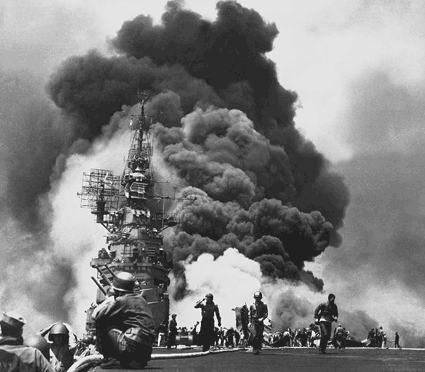
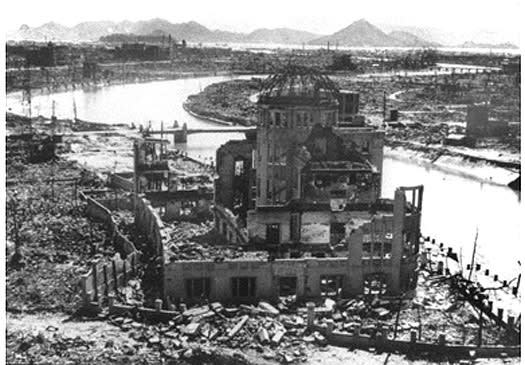
1945 - The End of WWII and the Empire of Japan with atomic bomb attacks on Hiroshima and Nagasaki

1955 - Sony (then called Tokyo Tsushin Kogyo) releases its first transistor radio; Toyota launches its symbolic upper-class car Crown.  The Liberal Democratic Part is established as the only major conservative/pro-American party to rule Japan till 1993.

1965 - The Anti-Vietnam War Peace Movement is launched in Japan; the Shinkansen bullet train, introduced in 1964, starts to connect Tokyo and Osaka (550 km) in 3 hours and 10 minutes; and the first full-scale inter-city expressway of Japan is completed between Nagoya and Kobe.

1975 - The Emperor and Empress of Japan officially visits the US; Sony release its first videotape recorder; and the Vietnam War ends.

1985 - A Tokyo-to-Osaka jumbo jet liner carrying more than 500 passengers (including major corporate employees) crashes in a mountainous area north of Tokyo; The Plaza Accord is reached among five major countries (the US, Japan, the UK, West Germany, and France) leading to the declining of the dollar value versus the yen by 51% from 1985 to 1987.

1995 - The Great Hanshin Earthquake occurs west of Osaka/Kyoto, sacrificing 6,000 people, while a cult launches a sarin gas attack in Tokyo subway lines, killing a dozen and injuring 6,000 commuters, etc.

The latter half of the 20th century of Japan started with some hope but ended with ominous incidents.

But in the 21st century a series of years to focus on may change.

2001 - The 9/11 Terror Attack in New York and Washington gravely affects Japan.

2005 - Large-scale anti-Japanese demonstrations erupt in major cities in China, since Beijing needs to make the Chinese people hate Japan to consolidate its domestic reign.

2008 - A large-scale financial crisis starts in Wall Street to gravely affect Japan, paving the way for Obama's winning in presidential election.

2011 - An M9.0 earthquake hits northeast Japan, killing almost 19,000 people, to trigger big tsunamis and the subsequent Fukushima Daiichi Nuclear Accident.

2015 - The Abe Cabinet is trying to expand the scope of operations of the Japanese Self-Defense Forces beyond restriction of the Constitution for the first time after WWII, in order to allow for more aggressive activities of the Forces mainly to cope with the Chinese military expansion.


Japan and the world are all the more facing wars, economic crises, natural disasters, industrial disasters, and political/diplomatic crises.  Truly Japan and the world are still around the end of the world.

Prophecies of Christ Jesus must come true in Japan and the world.


Personally, I think I have been somewhat connected to most of those incidents.


Hiroshima, Japan   Before & After USA nuclear bomb
https://www.pinterest.com/pin/362821313700142931/


**** **** ****


Mat 8:15 And he touched her hand, and the fever left her: and she arose, and ministered unto them.

"the disciples had forgotten to take bread" - Servants and Wallets


Just around Tokyo


Servants and Wallets

Christ Jesus said that those who want to be leaders of people must serve them as servants.

And to teach what being a servant means Christ Jesus cleaned and washed the feet of His disciples with wet clothes.  This is a well known episode in the Bible.

Shigeru Yoshida (1878-1967) who happened to become a counterpart to General MacArthur as prime minister of Japan after WWII between 1948 and 1954 once went to a social party where many leaders of various sectors of Japan gathered.  But as Yoshida met someone he didn't like, he left the party soon.  However, after having carried Yoshida to the party, Yoshida's car left the place as it was to come back around the time when the party would be over, so that he had to call a taxi.  Then, Yoshida went to a department store, one of the largest ones in Tokyo.  But when he got off the taxi, he had no money.  It is because Yoshida never had a wallet; he did not have a custom to carry a wallet with him.  So, Yoshida, probably at the time ex-prime minister, told a stuff member of the department shop at the entrance to pay the taxi fair for him.  Later his younger daughter called the president of the department store, apologizing Yoshida's rude attitude and promising to send money to the stuff member.

Ysohida's younger daughter married a rich businessman named Takakichi Aso.  The Aso clan accumulated fortune and wealth as a coal owner in Kyusyu.  Takakichi Aso liked his father-in-law, so that he also became a politician.  As a national lawmaker, Aso helped Prime Minister Yoshida who took a huge responsibility in the process of recovering war-torn Japan through difficult negotiations with General MacArthur, the supreme commander of US forces stationed in Japan after WWII.  But as a politician, Yoshida needed political money.  Yoshida had to distribute money to lawmakers of his political party to maintain his position.  It is Aso that supplied a huge amount of money for Yoshida's political machinations, since Shigeru Yoshida, an ex-diplomat, had no other source of big money.

Yoshida worked very well even as an intermediate between the Emperor and General MacArthur.  The good relationship between the Emperor and General MacArthur was one of Yoshida's feats.  And their relationship contributed to good relationship between Japan and the US after WWII.  General MacArthur showed necessary respect for the Emperor, though the General never visited the Imperial Palace.  The Emperor visited the US embassy in Tokyo where General MacArthur lived to directly talk with the General 11 times till his departure from Japan in 1951 to promote mutual understanding.  Especially, the Emperor never showed his grudge to the US, though the Empire of Japan was even attacked with atomic bombs by the US in WWII, which suggested to the Japanese people that Japan should become a friendly nation to the US, now that the war was over.  And the then PM Yoshida contributed to this good relationship between the Emperor and General MacArthur.

Probably, the Emperor had no wallet.  General MacArthur had no wallet, either.  They were the people who did not need money and wallets.  Accordingly, the three persons must have felt intimacy to one another.

And, in ancient days, servants must not have their wallets.  Though the Emperor, General MacArthur, and PM Yoshida were at the top of the social hierarchy in Japan under occupation by the US military after WWII, they had at least something common with ancient servants: they never carried wallets.

It is indeed very difficult for an emperor, a supreme commander of military forces, or a prime minister to become servants to the nation, soldiers, or voters.

(Note: It is not confirmed whether General MacArthur carried a wallet during his days in Tokyo.)

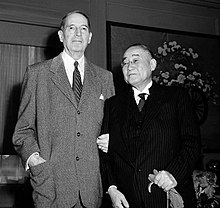
Anyway, the three main players in Japan under occupation of US military forces after WWII were the Emperor (of Showa), General Douglas MacArthur, and Prime Minister Shigeru Yoshida.


MacArthur and Yoshida in New York in 1954
https://ja.wikipedia.org/wiki/%E3%82%A6%E3%82%A9%E3%83%AB%E3%83%89%E3%83%AB%E3%83%95%EF%BC%9D%E3%82%A2%E3%82%B9%E3%83%88%E3%83%AA%E3%82%A2


**** **** ****


Mar 8:14 Now the disciples had forgotten to take bread, neither had they in the ship with them more than one loaf.
Mar 8:15 And he charged them, saying, Take heed, beware of the leaven of the Pharisees, and of the leaven of Herod.

Friday, August 14, 2015

"choked with cares and riches" - Controversial Kamikaze Attack on August 15, 1945


Around the Imperial Palace, Tokyo


Controversial Kamikaze Attack on August 15, 1945

There was an admiral of the Imperial Navy of Japan during WWII who carried out a kamikaze suicide attack after the Emperor announced his decision to surrender to the allied forces at noon of August 15, 1945, by radio to the general public of the Empire.
Matome Ugaki (1890–1945) was an admiral in the Imperial Japanese Navy during World War II, remembered for his extensive and revealing war diary, role at the Battle of Leyte Gulf, and kamikaze suicide hours after the announced surrender of Japan at the end of the war.https://en.wikipedia.org/wiki/Matome_Ugaki
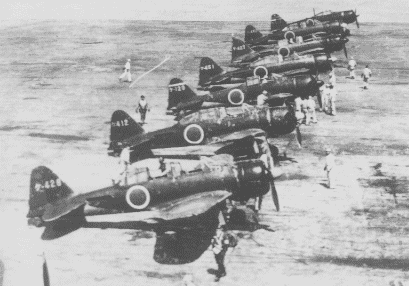
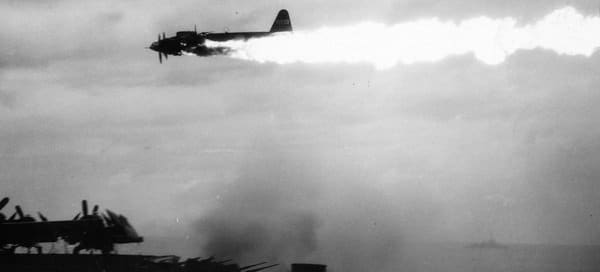
The controversy about his act is mainly related to the fact that Admiral Ugaki did not pilot a military plane by himself but he led 11 Imperial Navy bombers to the post-surrender kamikaze attack, though three bombers made emergency landing before reaching a target sea area around Okinawa.  Ugaki forced 16 airmen of the Imperial Navy to die in the post-surrender kamikaze attack.

At least two of those kamikaze bombers led by Ugaki reached an island of Okinawa, and crashed on rocks on the shore and the ground beside a US military base, respectively.  No American military's damage was confirmed.  Admiral Ugaki is believed to have been on the bomber that fell on the rocks on the shore.  Officers who piloted these bombers seem to have avoided hitting their planes to American military ships or troops on purpose.


Admiral Ugaki before his Kamikaze Attack
http://www.geocities.jp/torikai007/war/1945/ugaki.html

Admiral Ugaki, as Chief-of-Staff of the Combined Fleet under Admiral Isoroku Yamamoto, had been so close to Admiral Yamamoto.  Yamamoto was the planner of the 1941 Pearl Harbor Attack.  Following the direct order from Yamamoto, an imperial fleet with six aircraft carriers attacked US bases in Pearl Harbor, Hawaii, to start the war against America.

But, while Admiral Yamamoto was making an inspection tour to Solomon in the South Pacific in 1943, a plane he was on was shot down by US fighters.  (It is said that Yamamoto's flying plan had been known to the US military forces beforehand through decoding of secret messages having been sent by the Imperial Navy.)  Admiral Ugaki accompanied Yamamoto on this tour.  The plane carrying Ugaki was also shot down, but Ugaki survived.  Later, Ugaki received Yamamoto's dagger as a memento.
   
According to some report, some airmen mobilized for this post-surrender kamikaze attack led by Admiral Ugaki were not informed of the Emperor's radio address, and thus they did not realize the war was over.  Therefore, this kamikaze attack has been under criticism and not counted as a legitimate one carried out following an official order of the imperial military.

But what influence has this episode had on the Japanese people after WWII?

At least the Japanese people have come to abhor the rule by military after WWII.

When a war is being won due to brave acts of the military, the public naturally respect generals and bellicose politicians.  But even if a war is being lost due to poor management and planning by military leaders, it is difficult for the public to blame those generals and bellicose politicians.  People without knowledge and freedom would rather fight and die with leaders who are promoting war with confidence or madness.  Some would rather join a post-surrender kamikaze attack with a general they have been taught to respect unconditionally in the society under control by the military.

The lesson must be that a nation must not have its supreme leader or a monarch who is a military man by his nature.

(But was Hitler a military man by his nature?)

Luckily, successive emperors of Japan, except those in ancient days, have not been warriors but rather cultural figures.  It was unthinkable even during WWII that the emperor would directly command the military and plan operations.  The Emperor of Japan in WWII could not carry out a kamikaze attack, because without him, there was no reason for the imperial military to fight any foreign forces.  

Incidentally, if the Emperor directly ordered Admiral Ugaki no to conduct a kamikaze attack, Ugaki would not commit a suicide attack with other soldiers.  But, it is apparent that the Emperor had no intention and ability to directly plan any military operations and command any imperial forces, though he was the supreme commander of the Imperial military according to the Imperial Constitution.


APPENDIX.  Kamikaze Attack Related Pictures


76303
http://ameblo.jp/tubasanotou/entry-12025645730.html


http://www1.mahoroba.ne.jp/~ple/t071.html


http://www.geocities.jp/torikai007/1945/1944kamikaze.html


http://www.geocities.jp/torikai007/1945/1944kamikaze.html


http://www.rak2.jp/hp/rak2_pv.cgi?no=kamikaze0&prof_view=1


http://www.rak2.jp/hp/user/kamikaze0/


http://blog.goo.ne.jp/sakurasakuya7/e/2a659f51810048e6456c808adfe75879

神風_特攻隊01
http://plaza.rakuten.co.jp/grossblg05/diary/200707180000/

img_0
http://ameblo.jp/tubasanotou/entry-12025645730.html


**** **** ****


Luk 8:14 And that which fell among thorns are they, which, when they have heard, go forth, and are choked with cares and riches and pleasures of this life, and bring no fruit to perfection.

Wednesday, August 12, 2015

"no sign be given" - A Case of Soseki Natsume, Great Author of Japan


Just around Tokyo


A Case of Soseki Natsume, Great Author of Japan

The purpose of preaching by Christ Jesus is to invite the Kingdom of God.  But what is the Kingdom while Christ Jesus said that it would come as intangible?

Simply we may think that any community in this world includes evil men.  If the population of a community is ten, there would be surely nine bad men and three of them should be evil.

But in the Kingdom of God, if its population is ten, there would be no bad men and evil men among the ten; all the ten people should be good and righteous.  And, this must be the final target of mankind.  It is not to attain the highest status possible materially, scientifically, technologically, and economically what mankind should target.  To wipe out all the evil men from the world must be the ultimate end of mankind.

It is a process of purification of souls.  Every year a ratio of evil men to all the population of any human community must be decreased to reach zero eventually.  And then, we may say that the Kingdom of God has come.


There living was one very successful author in Japan 100 years ago.  Soseki Natume (1867-1916) is still today counted as one of the most popular and praised authors in the modern era of Japan.

Natsume had one close disciple, among a dozen or so who periodically gathered in his home for friendly talks about literature and so on, that often borrowed money from him.  This young disciple, named Hyakken Uchida (1889-1971), graduated from the Imperial University of Tokyo to be a German language teacher in schools of the Imperial Army and Navy and a certain private university.  Uchida, who admired Natsume since his collage days, even became himself a popular author in 1930s.  But, despite these social conditions, he was uniquely poor or needed money more than he earned.  So, he sometimes went to Natsume's house to borrow money, often a big amount of money.

As Natsume contracted with a major newspaper company to write novels for its readers, he was somewhat affluent.  But, he never rejected requests from Uchida for money, though there seems to have been no other close followers of Natsume who would ask him for money.

Once, Soseki Natsume was spending his holidays in a hot-spring hotel in Yugawara on the Pacific coast, 100 km west of Tokyo, since Natsume had a chronic gastric disorder.  But, one night suddenly Uchida came to the hotel to borrow money without prior notice.  Though railroad services were available from Tokyo to Yugawara even 100 years ago, Uchida had to make hard travelling as he had almost no money but a train ticket.

When Uchida somehow arrived at the hotel at night, Natsume warmly accepted him.  Natsume arranged a room and a supper for Uchida at his expense.  And, after hearing a request for money, Natsume told Uchida to go back to Natsume's house in Tokyo and receive the money from Natsume's wife next day, though he would continue to stay in the hotel.  In this way, Uchida borrowed money from great author Soseki Natsume so many times; however Uchida seems to have never returned money.

When Soseki Natsume died, Uchida went to the funeral service hall.  There were many notable authors and parties concerned in the ceremony.  But when Uchida was entering the hall, he saw a strange gentleman, though looking neat and tidy or even dignified, uttering strange words outside the entrance to the hall like a mad man.  He sometimes expressed words such as those of Soseki Natsume.  And before the mad man, a strange dog was hotly barking at him.  Nobody else seemed to mind the mad man and the dog.  Maybe only Uchida could see them.

I think that the mad man was the soul of Soseki Natsume and the dog was Satan.  It proves that Natsume wrote some great novels against the evil spirit of Satan.  Natsume gave money so many times unconditionally to young, poor, and strange followers such as Uchida, which must be an act that Satan most dislikes.


Like in Nastume's case, the Kingdom of God can be realized by giving one's money generously to the needy.


**** **** ****


Mar 8:12 And he sighed deeply in his spirit, and saith, Why doth this generation seek after a sign? verily I say unto you, There shall no sign be given unto this generation.

Tuesday, August 11, 2015

"with Abraham, and Isaac, and Jacob" - What Newton Said about Truth


Government Office District, Tokyo


What Newton Said about Truth


Issac Newton (1642-1727) wrote: It is not a location but a state that is important.

Newton studied orbits and movements of celestial objects.  He then found those objects followed some laws.  He further found these laws could be expressed in simple equations mathematically.  It was as if they had been controlled by God but not randomly behaving like stupid men.

No matter wherever you may go, if a state in your mind did not change, it must be useless from a viewpoint of human value.  The main part is the state of your mind and the subject part is the location.  Accordingly, Newton never traveled far from the zone between the University of Cambridge and London.  But the state of his mind dynamically changed as his mind traveled across the solar system.

Newton also wrote: In a small area under our feet, there are a great number of living things; therefore in the great space above our heads, there must be a great number of spiritual entities looking down on us.

No matter how much successful you are, you are just small kings in small domains.  If you conquered the whole world, your empires would last only for a few years, days, or hours.  If your kingdom continued for 2000 years, your family would be able to occupy only a small area on the earth.  Your pride should be shattered when some superior existence shows you truth of the universe and history.

But how can we access truth so that we don't look like a fool with only $1 trillion before God who created all the gold and silver in this universe?   Newton indicated that the keys are the state of our mind and our humility before God.


No matter how stupid and lazy you are, you can travel the world.  You don't have to make any efforts and take any responsibility when you are sigh-seeing the world.  You just enjoy interesting scenery and landscapes, while enriching your knowledge about the world without any pains.  Then when you return to your home town, you can proudly tell others what you have experienced in the world.  You may even feel like a hero.  What a smart man you are to travel the world!

But truth is that you lack some knowledge and experiences about your hometown which you must have fully comprehended if you staid in your hometown without travelling.  And among what you lose, there might be some crucial elements needed to understand the world.  To understand the world, you need a steady base.  And, your hometown can be a better base than any other locations you travel to.

Accordingly, the more you travel, the less you understand the world at deeper levels.  Meaning of information and experiences can be only deepened if you take necessary time to analyze and reflect them.  But when you are absent in your hometown, you cannot have such enough time for understanding your hometown, the place from which or through which you can best understand the truth of the world.

If you understand 10% of Tokyo, 10% of New York, and 10% of London, your understanding of your hometown will be 70%.  You cannot even win somebody in your hometown who understands 100% of your hometown.  Accordingly, you have to belong to a community, where your experience of 10% for each major city works well.  It is the global economy and the money market.  But, you will be lost in your hometown that is your home where you can protect your soul and humanity.

In other word, rich people traveling the world so busily are dangerous people.  They have already lost their spiritual hometowns.  They would sell even their countries as well as their consciences for meager additional wealth or entertainment.  They despise what is called love, ethics, fairness, or friendship.  They are servants of Satan.


In addition, Shakespeare did not travel much, either.  What he tried to secure finally in his life is his tomb as he engraved the following word on his tomb stone:
Good frend for Iesvs sake forbeare,
To digg the dvst encloased heare.
Bleste be man spares thes stones,
And cvrst be he moves my bones. 
(Modern spelling: Good friend, for Jesus' sake forbear, / To dig the dust enclosed here. / Blessed be the man that spares these stones, / And cursed be he that moves my bones.)
https://en.wikipedia.org/wiki/William_Shakespeare#Later_years_and_death

Truly, if people should stop travelling all over the world or from London to New York and from New York to Tokyo, the global warming can be alleviated.  Energy consumed accompanying peoples' travelling all over the world is enormous.  Goods and services used for such travelling need also a huge amount of energy in their production and provision.  If 1.3 billion Chinese should start to travel like rich Americans and Europeans, energy needed and consumed for their terrible travelling would quickly invite the Jurassic period again.

And no matter how rich you may be, you cannot be another Newton or another Shakespeare.  You will be at most just another Judas Iscariot who earned 30 or so silver coins by betraying Christ Jesus.


http://backreaction.blogspot.jp/2011/05/cube-of-physical-theories.html


You must fix the origin in any observation of phenomena.  To establish an effective origin, you have to put in, at least, a necessary and minimum required time as our brain and mind are so designed by God.


**** **** ****


Mat 8:11 And I say unto you, That many shall come from the east and west, and shall sit down with Abraham, and Isaac, and Jacob, in the kingdom of heaven.

Monday, August 10, 2015

"came into the parts of Dalmanutha" - The 1972 Election for Japanese PM


To Summer Fireworks Event around Tokyo


The 1972 Election for Japanese PM

I was walking in a city, wishing for a sign God would benevolently give.

Then I saw a car with the license plate number 11-11.  So, I found what to write here.

The most famous past prime minister of Japan seems to be Kakuei Tanaka (1918-1993). Tanaka was elected as PM in 1972 and forced to resign in 1974 for some money scandals and the like. However, it was Tanaka who realized the normalization of diplomatic relations between Japan and China after WWII.  After President Nixon visited Beijing in February in 1972, PM Tanaka flew to China in September 1972 to meet Chairman Mao Tse-tung and Chinese PM Chou En-lai.

It is interesting that in their meeting in Beijing, Tanaka took on a subject of the Senkaku Islands.  But Chou said, "I don't want to discuss it.  As crude oil was found in the East China Sea, even Taiwan claimed sovereignty over the Senkaku Islands."  Tanaka did not request further discussions on this territorial issue, though Japan is confident that the international community, including the US, admits Japan's claim.

After leaving the prime minister office, Tanaka faced a personal crisis: the Lockheed Scandal.
Later, Lockheed hired right-wing nationalist underworld figure Yoshio Kodama as a consultant in order to influence Japanese parastatal airlines, including All Nippon Airways (ANA), to buy the Lockheed L-1011 TriStar instead of the McDonnell Douglas DC-10. On February 6, 1976, the vice-chairman of Lockheed told the Senate subcommittee that Lockheed had paid approximately $3 million in bribes to the office of Japanese Prime Minister Kakuei Tanaka for aid in the matter.

Lockheed paid ¥2.4 billion to earn the contract from ANA. ¥500 million of the total was received by the Prime Minister. ¥160 million was received by ANA's officials. ¥1.7 billion was received by Kodama.[11] On October 30, 1972, ANA announced its decision to purchase 21 Lockheed L1011 Tristars, which cost approximately $5 million each, even though it had previously announced options to purchase the DC-10.[12]
In March 1976, in a protest at the scandal, actor Mitsuyasu Maeno made a suicide attack on Kodama's Tokyo home by crashing a light aircraft onto it.

Tanaka was arrested on July 27, 1976 and was released in August on a ¥200 million ($690,000) bond. He was found guilty by a Tokyo court on October 12, 1983 for violations of foreign exchange control laws but not on bribery. He was sentenced to four years in prison, but remained free on appeal until his death of a stroke in 1984.
https://en.wikipedia.org/wiki/Lockheed_bribery_scandals#Japan
Tanaka was arrested to be the only prime minister of Japan against whom criminal charges have been ever filed for his conduct during the term of premiership.  Tanaka was adjudicated guilty in the first instance, but he appealed the conviction.  And, the litigation was finally brought to the Supreme Court of Japan.  But before the case was ruled definitely, Tanaka died in 1993.

However, Tanaka continued to lead the strongest and largest faction in the ruling Liberal Democratic Party even after he was indicted to become the accused.  He lost his political influence only when he fell in cerebral infarction in 1985.

Kakuei Tanaka was and is still so popular among the Japanese but not because he claimed that he was victimized by US CIA but rather because Tanaka was a self-made man without graduating from an elite university and working in government as an elite official.  Tanaka was the prime minister of Japan whose official educational history stopped at an elementary school, though he learnt in a private vocational school in Tokyo to become a first-class architect.  And, there have been no such prime ministers of Japan after WWII.

Tanaka was born poor in a village of Niigata Prefecture on the Sea of Japan.  When he was a teenager, he came to Tokyo to work and learn.  He started his professional life as a residential worker of a small company.  However, his efforts and talent allowed him to succeed in business to be a president of a medium-size construction company in Tokyo during WWII.  Only this successful story of a young man coming to Tokyo from a local village without academic qualifications or noble lineage before the end of WWII can be a great episode.  But, Kakueia Tanaka was a very ambitious and smart guy.

After WWII, Tanaka started to seek a political career to run for a national election in 1946.  But he failed to be elected.  Nonetheless, he learnt a lesson to succeed in the election next year to be a Diet lawmaker when he was 29 years old.  His voting district was a heavy snowfall area without big industry.  Voters expected young and energetic Tanaka to contribute to economic development of their communities.  And Kakuei Tanaka promoted public works in the area by acquiring budgets from the central government.  His electoral power base was firmly consolidated.  The local economy was improved, but Tanaka also became rich.

For example, Kakuei Tanaka became a president of a local railway company that could benefit from public works he arranged as a member of the parliament or a minister-class official in the government.  It is even said that Tanaka got some big money by acting as an intermediate when a utility company purchased a land to build a nuclear power plant in Niigata Prefecture where his constituency was situated.

As time went by, Tanaka became an influential politician.  He belonged to a faction led by Prime Minister Eisaku Sato who assumed office of prime minister between 1964 and 1972.  As a matter of fact, Kakuei Tanaka became the next PM after Sato, but the process was not so simple.

Eisaku Sato, from an established family, had been an elite official of the Imperial Government.  He continued to shape his career after WWII till he became a Diet member.  So, Sato liked another ex-elite bureaucrat lawmaker Takeo Fukuda to succeed him as PM.  Sato even told Tanaka to wait for another chance to allow Fukuda to become prime minister after Sato.  However, lawmakers who had been financially helped and supported by Tanaka requested him to run for the election for the president of the ruling Liberal Democratic Party, though Tanaka was relatively young for the prime minister.  In addition, the general public also wanted a self-made prime minister as most of prime ministers after WWII were ex-elite officials of the central government.

The competition was so much heated.  Big money was handed to almost every lawmaker of the Party.  (At the time, namely 40 years ago, there were no such effective laws and regulations to regulate political funds as those observed in Japan today.)  And finally Tanaka was elected as the president of the Party and then as prime minister of Japan in 1972.

However, Tanaka alone could not finance the intra-party election campaign that lasted for months.  Tanaka reportedly distributed about 10 billion yen (probably $300 million for present value) in total to lawmakers of the Party who had voting rights as well as influential people in the Media and so on.  But how could Tanaka collect the huge amount of money?

It is said that Tanaka had a very intimate friend who had become a billionaire after WWII.  The man named Kenji Osano (1917-1986) was also a self-made man.

Osano first succeeded as a transport service provider for the Imperial Army.  After WWII, Osano became further rich by supplying transportation services for US military forces stationed in Japan.  When Tanaka became a candidate for next PM, Osano was already a very successful businessman, managing bus companies, hotels (including those in Hawaii), and many real estates.  Osano even bought up stocks of a certain air carrier.  His personnel association and connection even covered leaders of major gangster syndicates and right-wing political fixers such as Yoshio Kodama.  Before Osano died in 1986, he successfully became chairman of the Imperial Hotel.

Osano himself once said that he had spent 15 billion yen or so to make Tanaka the prime minister of Japan.  Some author wrote a book to claim that Osano provided 6 billion yen for Tanaka during the LDP presidential election in 1972.  Of course, Osano must have been helped in return by influential lawmaker Tanaka in many times as he and his companies were sometimes investigated by the police for dubious business activities.

Tanaka reportedly said that democracy depended on a number of voters, and a number of voters depended on money; thus democracy depended on money.  Indeed, Kenji Osano bought Kakuei Tanaka the Japanese premiership in 1972, though it seems to be the only case, as widely believed, that big money supplied by one individual really counted in the election directly linked to selection of the prime minister of Japan.


By the way, the car with the license plate number of 11-11 today I encountered had also a description of its registration location on the plate.  The location belonged to an area associated with Osano's home town.
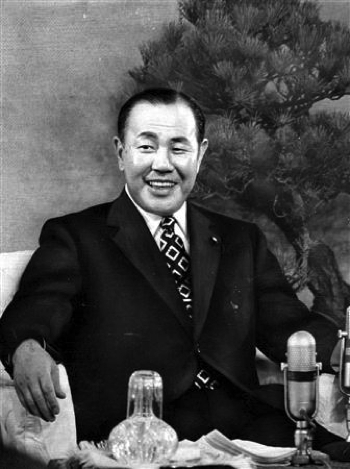


田中角栄
Kakuei Tanaka

小佐野賢治
Kenji Osano
http://co-smart.net/?p=5430


**** **** ****


Mar 8:10 And straightway he entered into a ship with his disciples, and came into the parts of Dalmanutha.
Mar 8:11 And the Pharisees came forth, and began to question with him, seeking of him a sign from heaven, tempting him.
Mar 8:12 And he sighed deeply in his spirit, and saith, Why doth this generation seek after a sign? verily I say unto you, There shall no sign be given unto this generation.

Saturday, August 08, 2015

"they took up of the broken meat" - Trial of 40 Days or 40 Years


Fireworks Event around Tokyo


Trial of 40 Days or 40 Years

Nobody cannot live alone in this world, though there have been some exceptions like Robinson Crusoe.

But most of people think that if they don't obey the regime or the mainstream of society, they cannot live in the society at a reasonable living standard.  If you deny commercialism and the rule of money, you will lose your job or will be fired from your job.

If you don't obey any rules other than those taught by Christ Jesus, corporate management, which is a servant of Satan, will dismiss you from the company.  If you don't obey any moral codes other than those taught by Christ Jesus, communities where you live will expel you.  In that case, you have to be another Robinson Crusoe but not in a solitary island far off in the ocean but in the middle of a city or a village.  You must become homeless surrounded by enemies everywhere.  So you might be afraid and you might obey Satan that controls this world through money economy.

So, if you want to be a follower of Christ Jesus, you have to first go into the wilderness to live there for 40 days without money, status, and friends or a family.  If you can survive for 40 days, you will have self-confidence to live in a city or a village as a follower of Christ Jesus, fighting Satan.

Indeed, Christ Jesus Himself experienced this trial as the Bible depicts.

But, as a tribe, Hebrews had to live in the wilderness for 40 years after having exited Egypt, being led by Moses.

Maybe you can judge a nation, such as Japan, the US, the UK, China, and Russia, based on what they had achieved in 40 years after WWII, though it is 70 years today after the War.


**** **** ****


Mar 8:7 And they had a few small fishes: and he blessed, and commanded to set them also before them.
Mar 8:8 So they did eat, and were filled: and they took up of the broken meat that was left seven baskets.
Mar 8:9 And they that had eaten were about four thousand: and he sent them away.

"bare fruit an hundredfold" - Wall Street Judaists vs Holocaust Judaists


Imperial Palace Plaza, Tokyo


Wall Street Judaists vs Holocaust Judaists

As the Second World War ended on August 15, 1945 for Japan, the Japanese Media are presenting related articles, discussions, and opinions to the general public in these days.

Before the end of WWII, the world was divided mostly due to the Great Depression that had started in the US in 1929.  Each of major countries in Europe was also affected by this economic crisis, thus trying to recover by sacrificing other countries and territories.  The Empire of Japan was also hit hard.  But the Japanese economy showed earlier recovery than the US and Europe.

To cope with the great slump of economy after the Depression, the UK, France and other European countries, as well as the US, with colonies and overseas territories set up their own economic blocs to exclusively maintain and control their own economic zones and markets for their industries.  Accordingly, the global trade shrank.  And they could not well succeed in ending the recession.

On the other hand, Germany, the Empire of Japan, and the Soviet Union tried to get through recessions by applying strong control to their economy.  And they succeeded in overcoming the Depression in 1930s.  Especially the Empire of Japan was supported by its new colony or tribute country, Manchuria or Manchukuo.  In 1934, the GDP of the Empire of Japan returned to the level before the Great Depression.  For example, the US could not stabilize its GDP above the level before the Great Depression till 1941.

However, through the process of the recovery from the great recession, the Japanese society had to under go a bloody political crisis.  In 1930s, four prime ministers, including two ex-prime ministers, were assassinated in Japan by nationalists and nationalist-associated military officers and soldiers.  As a result, the military came to have a strong influence in the imperial government.   Though there were political parties and a fairly democratic parliamentary system in the Empire of Japan, militarism came to have strong momentum, leading to the wars with China and the US/the UK eventually.

In Germany, the Great Depression resulted in disunity among political parties, paving the way for Hitler's rise.
Overnight, the middle class standard of living so many German families enjoyed was ruined by events outside of Germany, beyond their control. The Great Depression began and they were cast into poverty and deep misery and began looking for a solution, any solution. 
Adolf Hitler knew his opportunity had arrived. 
In the good times before the Great Depression the Nazi Party experienced slow growth, barely reaching 100,000 members in a country of over sixty million. But the Party, despite its tiny size, was a tightly controlled, highly disciplined organization of fanatics poised to spring into action.
http://www.historyplace.com/worldwar2/riseofhitler/begins.htm
Put simply, the Great Depression caused the tragedy of European Judaists in WWII.

And the Great Depression had been caused by greed greed of Wall Street businesses where many Judaists were selfishly working to obtain great wealth.

Therefore, sinful and wealthy Judaists in New York eventually brought down the Holocaust in WWII through the Great Depression that started in 1929.

The issue at point is that there are still many sinful and wealthy Judaists in New York.

It is related by Sereno S. Pratt that in 1792 there was a little office at No. 22 Wall Street for the public sale of stocks. A number of men, engaged in the business of buying and selling, were accustomed to meet near a large buttonwood tree which stood near 68 Wall Street. In 1817, the New York Stock Exchange, about as present constituted, was organized. 
The Stock Exchange is private institution. It is practically a commission club in private hands. It is not incorporated.
Its membership is strictly limited to 1,100 men.
...

It is interesting to tabulate the growth of Jewish membership as shown by the old directories of the Exchange.
 
In the year 1872, with a total of 1,009 members there were 60 Jews.
In 1873, with a total of 1,006 members, the Jewish membership decreased to 49.
In 1890, with membership limited to 1,100 there were 87 Jews.
In 1893, with the same limit of membership, there were 106 Jews.
 
At the present time, still with the same rigid limitation of membership, there are 276 Jewish members. 
It is said that the Jewish membership is really somewhat larger than the last figures indicate, owing to the fact that some of the Jewish members bear non-Jewish names and have adopted some phase of the Christian faith and have cut themselves off, outwardly at least, from the Jewish community. 
The figures show, therefore, that Jewish membership increased from 5 7/8 per cent of the total in 1872 to 25 per cent in 1919. 
In its reference to the Stock Exchange under the head of “Finance,” the Jewish Encyclopedia states that Jewish membership is “only 128,” “a little more than 10 per cent.” The date of these Jewish statistics is not given. The article quoted has, however, an argumentative as well as informative purpose. The statement concerning the 10 per cent membership on the Exchange is made to call attention to the fact that “Jews form at least 20 per cent of the whole population of New York, and much more than that percentage of the business section.” The Jewish population of New York City has since increased to 25 per cent of the whole, and the membership on the Stock Exchange has increased to the same point. 
But it has taken 47 years for the Jews to gain that 25 per cent membership. Their control of the Exchange, at the given rate of progress, is only a question of time.
http://www.jrbooksonline.com/intl_jew_full_version/ij23.htm

However, some people think that the Great Depression realized a process for American Judaists to become truly Americans.
New York Jews and Great Depression: Uncertain Promise (Modern Jewish History) Paperback – October 1, 1999
by Beth Wenger (Author)

Editorial Reviews
From Publishers Weekly
In the 1930s, the two million Jews living in New York City represented the largest ethnic group in the city. Jewish immigrants had established themselves as successful professionals and entrepreneurs during the prosperous '20s, but with the crash of 1929 and the ensuing years of the Great Depression, they were faced with more than just economic crisis. Wenger, a professor of Jewish history at the University of Pennsylvania, offers an informative history in which the Depression became the catalyst that transformed the Jewish immigrant into the American Jew. She puts a positive, though not altogether convincing or reassuring, spin on a process of acculturation through which "New York Jews ensured the persistence of Jewish identity and community by tailoring Jewish ethnicity to American norms." Challenged by rising anti-Semitism, employment discrimination and college quotas, New York Jews drew upon a tradition of private philanthropy and communal responsibility to establish "informal networks for economic assistance and personal support." In the New Deal era, the Jews of New York found that public welfare and social legislation were at one with this tradition, and forged a lasting bond with the Democratic Party. Wenger provides valuable detail on the history of philanthropy, social services and political activism in the Jewish community, though there is less than one would like on the personal and social lives of these first- and second-generation immigrants. But readers interested in the history of Jews in New York will appreciate the author's thorough treatment of a decade of transition. Photos.
Copyright 1996 Reed Business Information, Inc. --This text refers to an out of print or unavailable edition of this title.
http://www.amazon.com/New-York-Jews-Great-Depression/dp/0815606176


**** **** ****


Luk 8:8 And other fell on good ground, and sprang up, and bare fruit an hundredfold. And when he had said these things, he cried, He that hath ears to hear, let him hear.

Thursday, August 06, 2015

"But Jesus stooped down" - A Look-alike of Oswald


National Diet Bldg. and Tokyo Metropolitan Police Dept. Bldg, around the Imperial Palace


A Look-alike of Oswald


If you plan to kill JFK and set up Oswald as the sole assassin, how would you build up the whole scheme?

It is not difficult to shoot and kill JFK as proven in the RFK and Rev. King cases.  But it is not easy to set someone up for a murderer of a big guy such as JFK, RFK, or King.  However, if you had known Oswald since he had been stationed in Atsugi, Japan, as a marine, or he had defected to the Soviet Union to live there for a few years (as a CIA agent), the final element for the planned assassination would be just in your hand.

You persuade Oswald to set a sniper's nest in the 6th floor of the Texas School Book Depository building after sending him to the workshop through a network of secret agents. And you also tell Oswald to stay at the entrance to the 6th floor so as to prevent anybody from entering the room till the JFK motorcade passes the Dealey Plaza.  You can take alibi from Oswald this way.  In addition, you surely make him leave three shell casings and a rifle around the sniper's nest, though Oswald might forget to place the rifle at a proper location.

Then, you tell Oswald to leave the TSBD building and return to his rooming house to fetch a revolver.  A car will come around the house to pick Oswald up and send him to the Texas Theater.  Now you have Oswald in the movie theater, but you have to lead the police there and kill him.  But how?

If the police is informed that police officer Tippit has been killed by a man like Oswald who is now in the Texas Theater, they would surely rush to the theater.  And, if Oswald resisted with his gun, he must be shot to death by some police officers.

But why do you have to choose officer Tippit?  Maybe it is a recommendation of Jack Ruby.  Ruby is the only guy who actually and openly killed a man in the JFK case.  He is a dangerous guy.  If Ruby could kill Oswald, an alleged assassin of a US President, he could most probably recommend killing of Tippit.  Indeed, Ruby had a direct connection with the Mafia, and Tippit was shot four times and he received the fatal bullet at his temple, which looks like a Mafia shooting.

But to complete this scheme, you need a look-alike of Oswald who is supposed to shoot Tippit (probably with another killer with an automatic gun).

Even if Oswald arrested had been true Oswald, an Oswald whose shooting Tipit was witnessed must have been a look-alike.

This scenario is based on the following analysis:
Killing Tippit and Capturing Oswald, http://lookbackpublications.com/killing.tippit.html

But your plan fails as the fact was:
After searching two other theater patrons, Patrolman M.N. McDonald reached Oswald and told him to get on his feet:
Oswald rose from his seat, bringing up both hands. As McDonald started to search Oswald's waist for a gun ... Oswald then struck McDonald between the eyes with his left fist; with his right hand he drew a gun from his waist. McDonald struck back with his right hand and grabbed the gun with his left hand. They both fell into the seats.
Three other officers, moving toward the scuffle, grabbed Oswald from the front, rear and side. As McDonald fell into the seat with his left hand on the gun, he felt something graze across his hand and heard what sounded like the snap of the hammer. McDonald felt the pistol scratch his cheek as he wrenched it away from Oswald. Detective Bob K. Carroll, who was standing beside McDonald, seized the gun from him.
 
... As Oswald, handcuffed, was led from the theatre, he was, according to McDonald, 'cursing a little bit and hollering police brutality.' 
This photograph depicts Oswald on his way to the police car:
At 1:51 p.m., police car 2 reported by radio that it was on the way to headquarters with the suspect [for the murder of Officer Tippit, not for the assassination of the President].
https://www.awesomestories.com/asset/view/Oswald-Arrested-at-the-Texas-Theater0


Oswald was arrested alive.  You have to use Ruby, though some people should realize that it is a large-scale conspiracy, involving the Mafia, and Ruby might betray you later.

Apart from numerous conspiracy theories presented by various people after the assassination of Oswald by Ruby, Ruby conveniently died in a jail.
Ruby died of a pulmonary embolism, secondary to bronchogenic carcinoma (lung cancer), on January 3, 1967, at Parkland Hospital, where Oswald had died and where President Kennedy had been pronounced dead after his assassination. He was buried beside his parents in the Westlawn Cemetery in Norridge, Illinois. 
https://en.wikipedia.org/wiki/Jack_Ruby#November_24:_The_killing_of_Oswald


And in 1968, Martin Luther King Jr. and Robert Kennedy were assassinated.  You might well apply a lesson learned from the JFK case in 1963 to these cases in 1968, since you were clean now with the death of Jack Ruby in 1967.  Nobody could refer to Ruby anymore.


http://www.orwelltoday.com/jfkoswaldmagicroute.shtml

(It seems that Oswald under tension was rushing to the Texas Theater by taxi, but he realized that he had to retrieve a pistol from his residential room.   He got off the taxi to walk back to the rooming house.  And then a car having watched the house appeared to pick him up.)


To make sure, there seems to be a chain of conspiracies in some part of US elite communities that has stretched from the Pearl Harbor of 1941 to the JFK Assassination in 1963 and further to the 2001 9/11 Terror.  In my view, to cope with the dark force behind these conspiracies without clearly being aware, Americans finally chose Barack Obama as US President in 2008.


**** **** ****


Joh 8:6 This they said, tempting him, that they might have to accuse him. But Jesus stooped down, and with his finger wrote on the ground, as though he heard them not.

Wednesday, August 05, 2015

"preached Christ unto them" - Miracles before the Hiroshima Day


A Tokyo Subway Station


Miracles before the Hiroshima Day


It was a very hot day, today.

I was walking to a railroad station, wishing that God would show me a miracle.   I looked up at the sky, and there were no clouds at all, even no drifting ones.   "This is the very blue sky of August," I thought.  On a raised path between buildings, I checked Mt. Fuji, 100 km far.  The air with summer vapor hindered the view of the mountain.  Only a lower slope of Mt. Fuji was seen.

When I was returning from the station, I found that one big clump of clouds occupied a part of the west sky.  It was dark in the evening sky.  Then without sounds, the whole clump of clouds flashed.  The instant strong light from the inside of the clouds showed detailed structure of the clump, though it was fairly far.  It was not yet a huge cumulonimbus cloud, but it had a similar momentum in a way of overlapping various gray clouds to form the one big clump in the western sky.

A flash of lightening repeated in an interval of about 5 seconds.  I stopped walking to observe them many times untiringly.  It is as if huge bombs had been exploding endlessly in the dark clouds without sounds.  However only a few pedestrians realized the mysterious show in the sky around Tokyo.

Later I checked a newspaper and found some articles about Japan-related WWII stories, including the 1941 Hiroshima atomic bomb:

Some Americans were promoting a project to return Japanese flags US soldiers had collected in battle fields in the Pacific Ocean in WWII to families of fallen Japanese soldiers who had possessed the flags when they died.  Some members of the project visited the Prime Minister Office to hand over scores of old Japanese flags to PM Shinzo Abe.

Another article introduced two women who suffered the Hiroshima atomic bomb attack in August 1941: one died in 2011 and another still alive.  They are just ordinary Japanese women but they wrote books about their experiences in Hiroshima.

Ms. Teiko Okuda was 31 years old at the time.  She was not directly exposed to the blast of the atomic bomb, but she ventured into Hiroshima City to look for a child of her brother who had been sent overseas as a soldier.  Ms. Okuda walked through the devastated city for eight days from the day when Hiroshima was attacked.  She was carrying some foods and water, which she gave to suffering children whenever she encountered them on the destroyed streets of Hiroshima.  Every child dying in her arms wished to give foods and water they were being provided for by Ms. Okuda to their dying family members.  Ms. Okuda later wrote a book on this tragic experiences to publish it at her own expense.  The circulation of copies of the book was thus limited.  But last year a producer of a major publisher found this book to decide its release from the company, though Ms. Okuda died at the age of 96 in 2011, while her self-published book reached the fourth edition.  

Ms. Shizue Inada, 95 years old, issued a book last year on her Hiroshima experiences.  She was working as a 24-year old public heath nurse in a town 6 km far from the center of Hiroshima City.   In a house where she visited for her duty in the morning of August 6, 1941, she witnessed a huge mushroom cloud of the atomic bomb.  She returned to the town office while watching the weird cloud.  Then she started to help and treat victims of the atomic bomb attack in a first-aid station set up in a primary school.  Six days after the tragic day, she went to the center of explosion to look for acquaintances.  After that, her whole body exhibited purple blotches; she though she was dying, too.  But she survived to date.  Next year she married and moved to a prefecture near Tokyo to work and raise three children.  She joined some anti-nuclear movement managed by exposed persons.  She even traveled to the US and Switzerland for peace activities.  And, though she is very old now, she decided to issue a book last year.

Indeed, it is August 5 today, and it will be August 6 tomorrow: the Hiroshima Day.

Finally as part of a miracle of today, I am writing this report.

A uranium gun-type atomic bomb (Little Boy) was dropped on Hiroshima on August 6, 1945, followed by a plutonium implosion-type bomb (Fat Man) on the city of Nagasaki on August 9. Little Boy exploded 2,000 feet above Hiroshima in a blast equal to 12-15,000 tons of TNT, destroying five square miles of the city. Within the first two to four months of the bombings, the acute effects of the atomic bombings killed 90,000–166,000 people in Hiroshima and 39,000–80,000 in Nagasaki; roughly half of the deaths in each city occurred on the first day.
https://en.wikipedia.org/wiki/Atomic_bombings_of_Hiroshima_and_Nagasaki#Hiroshima
(According to Hiroshima City, at the time 350,000 soldiers and citizens, including Taiwanese and Koreans and American prisoners of war, were living or passing the city.  It is not yet known precisely how many people were killed in Hiroshima, though it is thought that 140,000 people died due to the atomic bomb attack by the end of December 1941.

The number of fallen Japanese soldiers in Hiroshima is believed to be between 10,000 and 30,000.  In addition, the number of American prisoners of war killed in Hiroshima was 23, though only 17 of them were identified with their names.)


広島産業奨励館と平和公園の原爆投下前の姿.JPG
Near the Center of Explosion, Hiroshima City, before the Atomic Bomb Attack
http://blog.goo.ne.jp/nak2006/e/3c3f5c246a86582fa7f016bd1360200a


After the Blast of the Atomic Bomb
http://blog.goo.ne.jp/raymiyatake/e/eda6395faa79938f08f52d9194104ccb


**** **** ****


Act 8:5 Then Philip went down to the city of Samaria, and preached Christ unto them.

Tuesday, August 04, 2015

"upon the mountains of Ararat" - Aesop's Fish


A Tokyo Railroad Station


Aesop's Fish

It is very interesting that 500 years before Christ the world had seen great philosophers or persons of religion: Daniel, Socrates, the Buddha, Confucius, etc.

But the most interesting one that seems to have had an influence on Christ Jesus is Aesop.
Aesop (c. 620–564 BCE) was an Ancient Greek fabulist or story teller credited with a number of fables now collectively known as Aesop's Fables.

From Aristotle and Herodotus we learn that Aesop was a slave in Samos and that his masters were first a man named Xanthus and then a man named Iadmon; that he must eventually have been freed, because he argued as an advocate for a wealthy Samian; and that he met his end in the city of Delphi.

https://en.wikipedia.org/wiki/Aesop
So, it is no wonder that Judaists and Christ Jesus heard some stories created by Aesop.
The following Bible verses may have been taken from Aesop:
1. The Fighting Cocks and the Eagle 
Proverbs 16:18 "Pride goeth before destruction, and an haughty spirit before a fall."
2. The Mouse and The Bull 
Ecclesiastes 9:11 "The race is not to the swift, nor the battle to the strong… but time and chance happeneth to them all."
3. The Kingdom of the Lion 
Isaiah 11:6-9 "The wolf also shall dwell with the lamb, and the leopard shall lie down with the kid... And the cow and the bear shall feed; their young ones shall lie down together… They shall not hurt nor destroy in all my holy mountain..."
4. The Raven and the Swan 
Jeremiah 13:23 "Can the Ethiopian change his skin, or the leopard his spots? then may ye also do good, that are accustomed to do evil." 
5. The Two Pots 
Douay-Rheims: Ecclesiasticus 13:3 "What agreement shall the earthen pot have with the kettle? for if they knock one against the other, it shall be broken."
6. Wolf in Sheep's Clothing 
Matthew 7:15 "Beware of false prophets, which come to you in sheep's clothing, but inwardly they are ravening wolves."
7. The Quack Frog 
Luke 4:23 "And he [Jesus] said unto them… Physician, heal thyself."
8. The Fisherman and His Pipe 
Luke 7:32 "They are like unto children sitting in the marketplace, and calling one to another, and saying, We have piped unto you, and ye have not danced; we have mourned to you, and ye have not wept."

http://www.answers.com/Q/Where_is_aesop_found_in_the_bible


It is so interesting that Christ Jesus adapted The Fisherman and His Pipe.
Luk 7:29 And all the people that heard him, and the publicans, justified God, being baptized with the baptism of John.
Luk 7:30 But the Pharisees and lawyers rejected the counsel of God against themselves, being not baptized of him.
Luk 7:31 And the Lord said, Whereunto then shall I liken the men of this generation? and to what are they like?
Luk 7:32 They are like unto children sitting in the marketplace, and calling one to another, and saying, We have piped unto you, and ye have not danced; we have mourned to you, and ye have not wept.
Luk 7:33 For John the Baptist came neither eating bread nor drinking wine; and ye say, He hath a devil.
Luk 7:34 The Son of man is come eating and drinking; and ye say, Behold a gluttonous man, and a winebibber, a friend of publicans and sinners!
However the original story regrading The Fisherman and His Pipe is as follows:
THE FISHERMAN AND HIS PIPE  
There was once a fisherman who saw some fish in the sea and played on his pipe, expecting them to come out onto the land. When his hopes proved false, he took a net and used it instead, and in this way he was able to haul in a huge catch of fish. As the fish were all leaping about, the fisherman remarked, 'I say, enough of your dancing, since you refused to dance when I played my pipe for you before!'
http://mythfolklore.net/aesopica/perry/11.htm

It is a little hard to find relevance between Aesop's story and Christ's saying.  But, even if fish or people didn't act as expected by God, God would take a decisive step to realize what He has expected.

We should dance and weep, when we are expected to do so by God.  But the minds, hearts, and souls clouded and soiled by desire and money cannot dance and weep if they see a sacred man being executed.

So, I have to liken people of our generation to those fish.


Additionally, Aesop's Fables were first introduced into Japan in the late 16th century by Catholic missionaries to Japan.  The Fables had some influences on the Japanese literature in later centuries.


アリとキリギリス(The Ants and the Grasshopper)
http://hukumusume.com/douwa/pc/aesop/03/31.htm


**** **** ****


Gen 8:4 And the ark rested in the seventh month, on the seventeenth day of the month, upon the mountains of Ararat.